What to Plant in November: 7 Best Things Before the Ground Freezes
If you are asking what to plant in November, the answer is shorter than October’s list but far from empty. Garlic, tulips and other spring bulbs, bare-root and container trees and shrubs, and dormant grass seed can all go in this month in most of the country. The one rule that ties them together is simple: plant while you can still dig.
November planting has a reputation as too late, and for many crops it is. Lettuce sown outdoors now will not size up before deep cold in the North. Cover crops have mostly missed their window. But the plants on this list do not need warm weather to succeed. They need a cold winter in the ground, and they are often better off planted late than held in a garage until spring.
The questions below came from gardeners in Minnesota, Michigan, Oregon, Maryland and Delaware who were running behind in fall. The Extension answers show what is still worth planting, what is a gamble, and what to do with a box of bulbs if the ground beats you to it.
Key takeaways
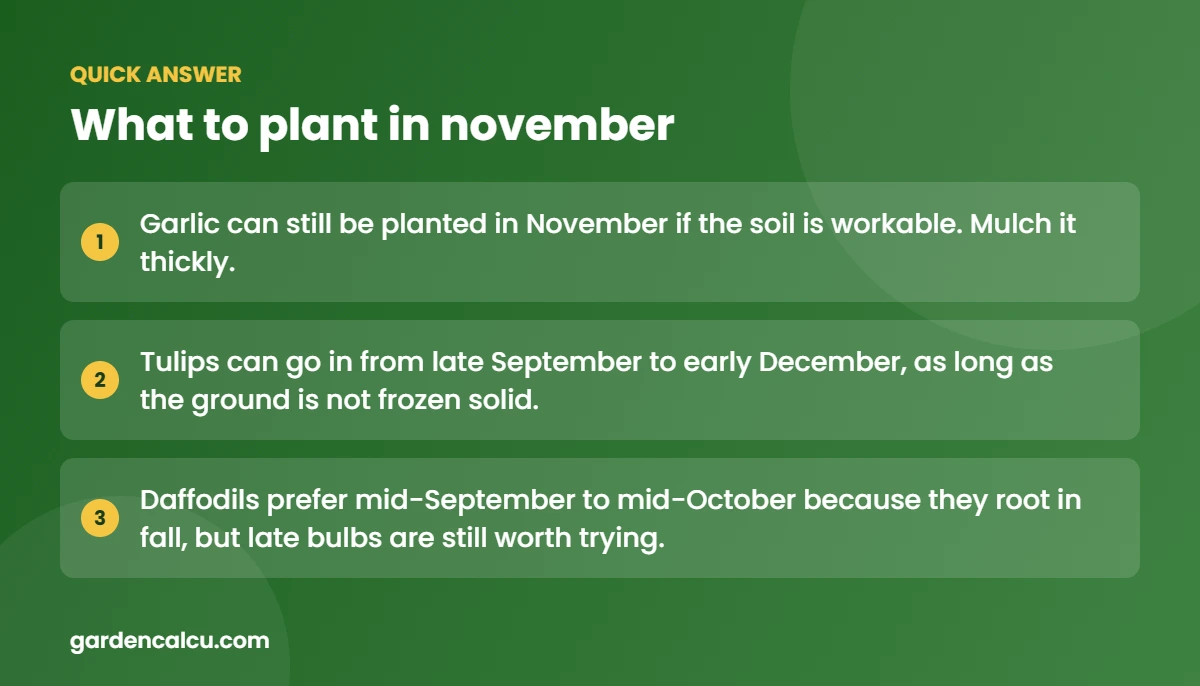
Quick answer to “what to plant in november” in three points.
Real questions gardeners asked
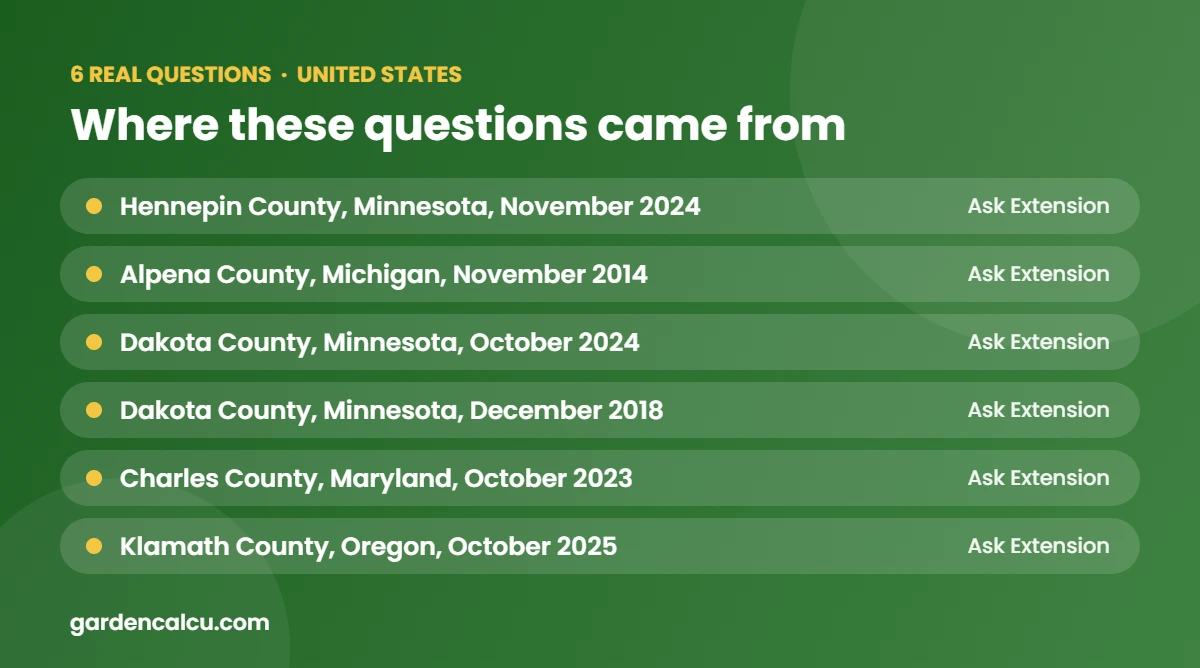
These are real questions sent to Ask Extension, the free service run by US land-grant universities. Each card shows where and when the gardener asked, and links to the full answer.
“Can I still plant garlic?”
The question: I have a raised garden bed that is 7.5ft x 4ft x 20 inches high in which I grow organic vegetables and herbs. Is it too late for me to plant garlic cloves for my spring/summer 2025 harvest?
What the expert said: The question came in on November 22. A Minnesota Master Gardener answered that it is pretty late, but garlic probably will not keep well enough to plant in the spring. It is not a big investment, so if you plant it there is a chance you will get garlic. She advised mulching thickly, leaving the papery skin on the cloves, and taking the mulch off when shoots emerge in spring.
“Still time for tulips and daffodils?”
The question: I’ve been so busy lately. I was wondering if I could still plant tulips and dafs this coming week?
What the expert said: The expert replied on November 8 that tulips can be planted from late September to early December as long as the ground is not frozen solid. Daffodils benefit from earlier planting, mid-September to mid-October, because they need to produce roots in the fall. There is always the possibility the daffodils would survive, so if you have the bulbs, you could try.
“Warm falls and tulip timing”
The question: With wild swings in the temperatures and such warm days well into October, it seems the cold weather sets in later and later each year. If the bulbs I plant sprout in the fall, will they still bloom in the spring?
What the expert said: A Hennepin County Master Gardener advised holding off until no more warm days are expected, meaning days in the upper 70s to 80. If the bulbs sprout this fall they will not grow again in the spring. You can plant them quite late, as long as you can still dig a hole.
“100 tulip bulbs that never got planted”
The question: I have about 100 tulip bulbs that I was unable to get in the ground this fall. Currently they are in a box in my heated garage, which I keep at a constant 45 degrees. Is there a way to keep them until they can be planted next year?
What the expert said: The expert said overwintering unplanted bulbs seldom works. They tend to dry out, and if you put them in something moist, they rot. The best thing to do is plant them in pots and force them, keeping the pots in a cool spot and moving them into the warmth one at a time for a succession of blooms.
“Can onion sets be planted in fall like garlic?”
The question: Can I plant onion sets in the fall for next year’s big bulb onion harvest? Does onion grow like the garlic (put in ground before first frost and harvest next summer)? I live in MD zone 7a.
What the expert said: University of Maryland Extension explained that garlic, leeks, shallots and perennial onions handle cold winters well when planted in fall. Standard onions usually are not fall planted there, because temperatures below 20 degrees F can damage plants and cold exposure can encourage bolting. With a warm November, sets might root before cold weather, and a row cover adds protection.
“Anything to grow with garlic for a winter harvest?”
The question: Is there anything to plant with my garlic for harvest in winter months? I have raised beds. I was thinking along the lines of beets etc.
What the expert said: The expert said it was probably a little late, with below freezing temperatures expected that week. Lettuce, spinach and arugula can be grown until there is a deep freeze if planted in late August or early September, but plants only have hardiness once they are mature and exposed to cold gradually. Late in the season, the opportunity is much reduced.
What to Plant in November at a Glance
What | Still worth planting? | The condition |
|---|---|---|
Garlic | Yes | Soil still workable; mulch thickly |
Tulips | Yes, through early December | Ground not frozen solid |
Daffodils and other spring bulbs | Worth a try | Earlier is better; they root in fall |
Trees and shrubs | Yes | Ground not frozen; water in well |
Dormant grass seed | Yes, in cold regions | Soil too cold for seed to sprout until spring |
Onion sets, shallots | Mild regions only | Risk below 20 degrees F |
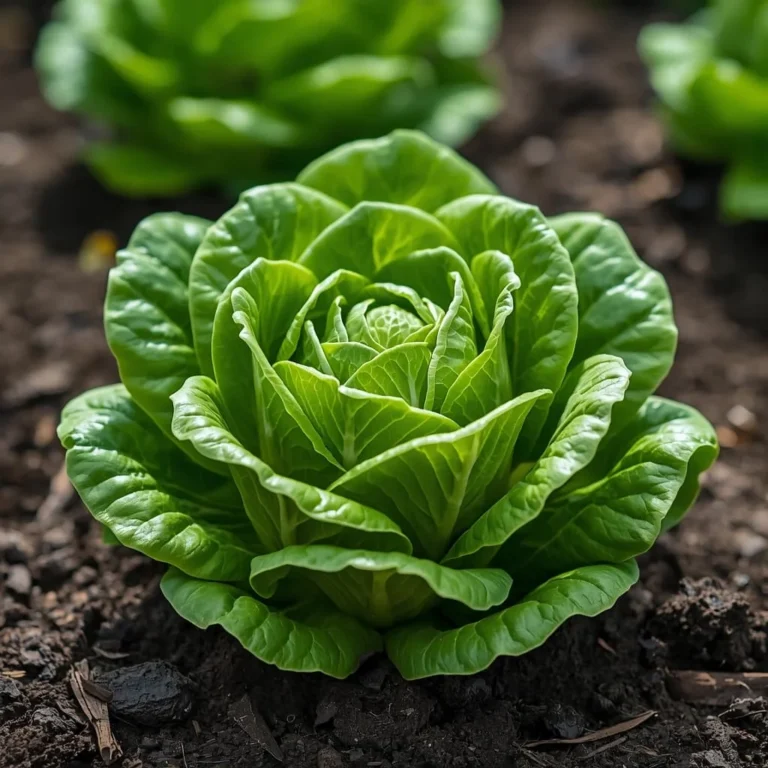
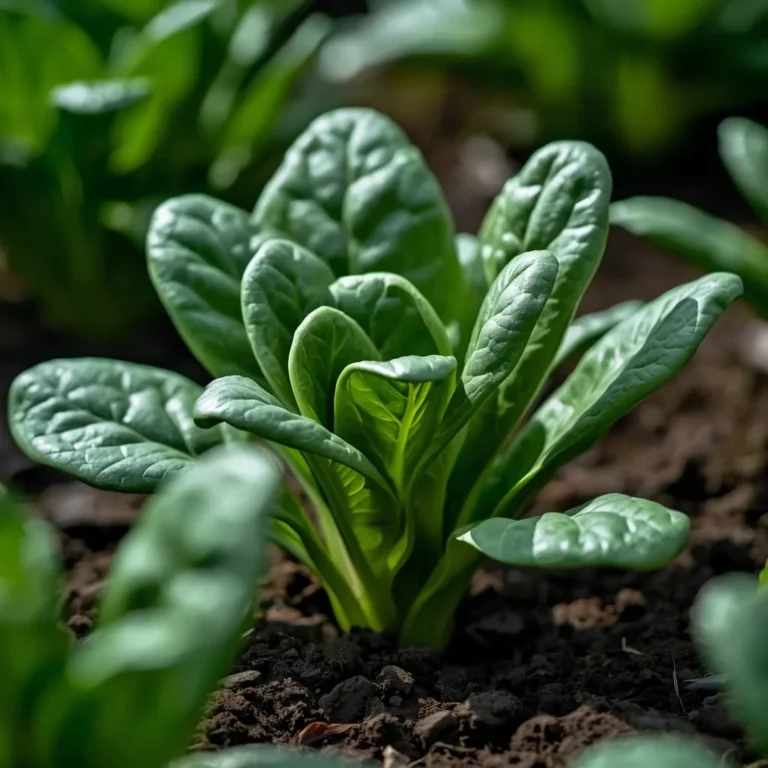
Lettuce, spinach, beets | No in cold regions | Needed a late summer start |
Cover crops | Mostly too late | Early November is the cutoff even in the South |
Where you live changes the list. In the upper Midwest and New England, November is about getting bulbs and garlic in before the ground locks up. In the mid-South and Pacific Northwest lowlands, the soil stays open for weeks longer. In the warmest zones, November is prime planting time for cool-season vegetables. If you are unsure which group you are in, start with what hardiness zone you are in and your first frost date.
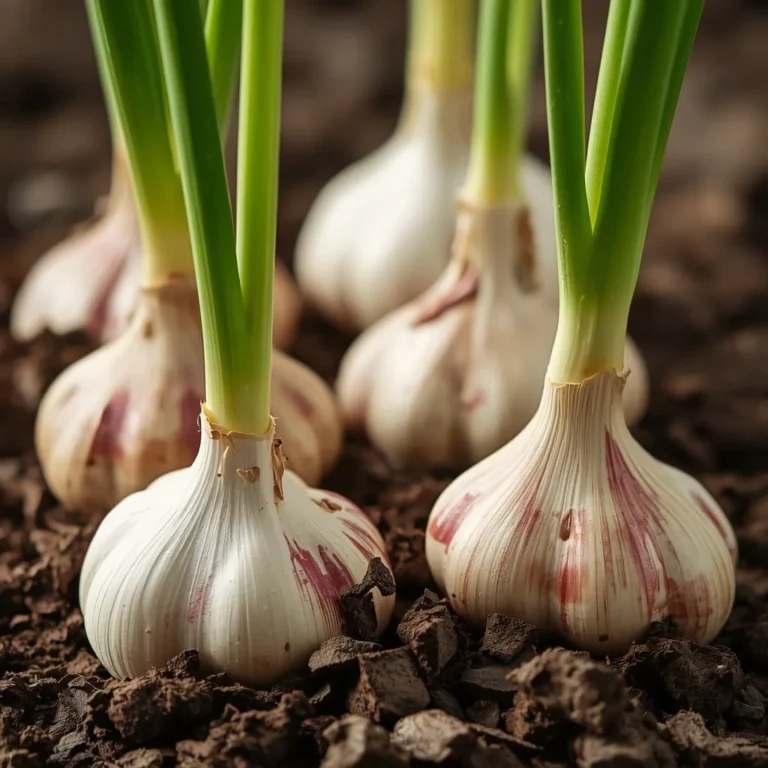
1. Garlic
Garlic is the classic late-fall crop. A Delaware Extension answer gives the ideal window: garlic is best planted in fall between October 1 and November 1, and takes up to 9 months to mature. That makes early November right on time in the mid-Atlantic, and only a little late farther north.
What if it is later than that? The Hennepin County, Minnesota gardener asked on November 22. The answer was honest and practical. It is pretty late, but garlic probably will not keep well enough to plant in spring, the cloves are not a big investment, and there is a chance of a crop. In other words, late garlic in the ground beats garlic in the pantry.
Our full guide, when to plant garlic, covers timing by region and what to do if the ground has already frozen.
2. Tulips
Tulips are the most forgiving bulb for late planters. The Alpena County, Michigan answer sets out the window clearly: late September to early December, as long as the ground is not frozen solid.
In fact, tulips are one of the few things where late can be better than early. The same expert said to make sure cool weather has set in so that bulbs do not begin to grow in fall. The Minnesota Master Gardener went further. Wait until there are no more days in the upper 70s to 80, because bulbs that sprout in fall will not grow again in spring. After that, you can plant them quite late, as long as you can still dig a hole.
That last phrase is the working rule for all of November. For depth and spacing, see how deep to plant tulip bulbs.
Tip: If a hard freeze is coming and you still have bulbs to plant, spread a few inches of leaves or straw over the bed now. The mulch keeps the soil workable for another week or two.
3. Daffodils and Other Spring Bulbs
Daffodils are less flexible. The Michigan expert explained that they benefit from earlier planting because they need to produce roots in the fall, and gave mid-September to mid-October as the ideal time.
That does not mean giving up in November. The same answer added that there is always the possibility the daffodils would survive, so if you have the bulbs, you could try. A New Hampshire Extension answer makes the same general point: hardy spring bulbs such as daffodils should be planted by late fall in order to ensure root growth and bloom. Late bulbs may bloom short or skip a year, but they usually settle in.
4. Trees and Shrubs
Deciduous trees and shrubs can be planted after leaf drop for as long as the soil can be dug. They are dormant above ground, and the roots get a head start before spring. Water them in thoroughly and mulch the root zone. Our guides to the best time to plant trees, how often to water new trees and mulch around trees cover the details, including which evergreens are better left until spring.
5. Dormant Grass Seed
November is too late for normal lawn seeding in cold regions, but it is the right month for a different technique. Dormant seeding means spreading grass seed after the soil is too cold for it to sprout, so that it sits through winter and germinates at the first chance in spring. See dormant seeding for the rules on timing and seed rates.
6. Onion Sets, Shallots and Their Relatives
The Maryland answer sorts the onion family neatly. Garlic, leeks, shallots and perennial onions tolerate cold winters well when planted in fall. Standard bulb onions usually are not planted in fall there, because temperatures below 20 degrees F can damage the plants and exposure to cold can encourage bolting.
So shallots and perennial onions are reasonable in November wherever garlic is. Bulb onion sets are an experiment suited to mild regions. The Maryland expert thought it might work in a warmer than normal November, with sets rooting before cold weather sets in, and suggested row cover for protection.
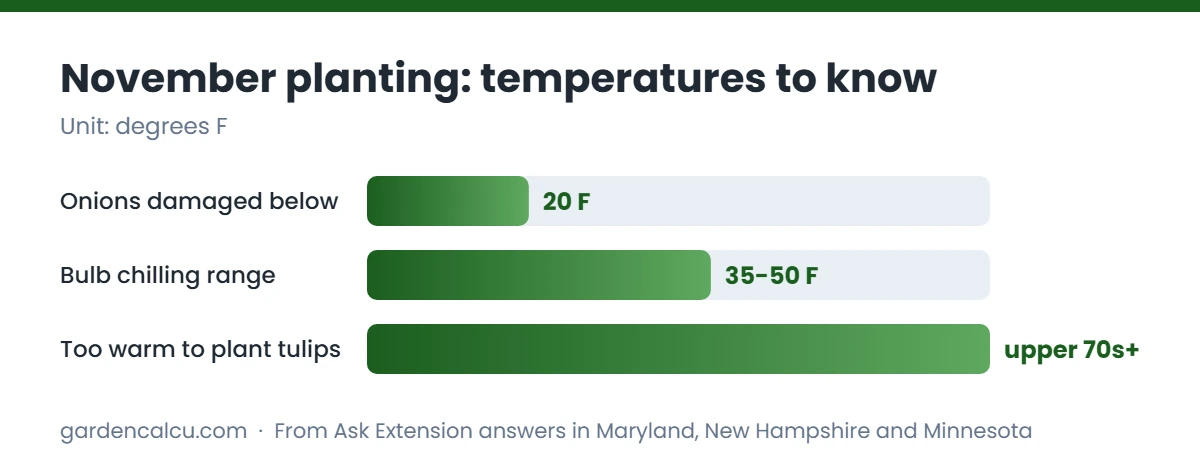
Temperature thresholds mentioned in Ask Extension answers: onion damage below 20 degrees F, a 35 to 50 degree chilling range for stored bulbs, and days in the upper 70s as too warm for planting tulips.
7. Pots of Bulbs for Forcing
This is the answer for anyone who runs out of time or daylight. Do not put leftover bulbs back in the box. Pot them.
The Dakota County gardener with 100 unplanted tulips in a 45 degree garage was told that overwintering unplanted bulbs seldom works. They dry out, or they rot. The better plan was to plant them in pots and force them, moving pots into the warmth one at a time for a succession of blooms, or giving some away as gifts.
Bulbs need a long cold period to bloom. A New Hampshire Extension answer about daffodils left in a garage assumed storage between 35 and 50 degrees F for at least 14 weeks. An unheated garage, a cold cellar or a spare refrigerator can supply that. Pot the bulbs in November, keep the mix barely moist, and bring pots into a bright room from late winter.
Watch out: Advice on storing dry bulbs for a whole year is mixed. One Michigan answer said properly stored bulbs, kept dry, dark and in a single layer, should survive 12 months. A Minnesota expert said overwintering unplanted bulbs seldom works. Planting late or potting up is the safer choice.
Check Your Planting Windows
Use the free Planting Calendar to see what can still go in the ground this month and when spring planting begins for each crop.
What Not to Plant in November
In frost-free and nearly frost-free areas, this section does not apply. Gardeners in the Deep South, southern Texas, Florida and coastal California plant lettuce, spinach, peas, carrots and beets right through November.
Other Useful November Garden Jobs
If the ground is already frozen where you live, there is still plenty to do that sets up next year.
For the full autumn checklist, see prepare garden for winter.
A Simple Rule for Late Planting
Every answer in this article comes back to the same test. Can you still get a spade in the ground? If yes, garlic, tulips, trees and shrubs can go in. If the soil is frozen solid, switch to pots, mulch and planning.
Soil condition | What to do |
|---|---|
Soft and workable | Plant garlic, bulbs, trees and shrubs; water in |
Crusted on top, soft underneath | Break through and plant; mulch afterward |
Frozen solid | Pot up bulbs for forcing; wait on everything else |
Too cold for seed to sprout, not frozen | Dormant seed the lawn |
Frequently asked questions
Short answers to the questions that come up most often.
Quick recap
So, what to plant in November? Garlic with a thick mulch, tulips right up to early December, late daffodils if you have them, trees and shrubs while the soil is open, and dormant grass seed once it is cold. In mild regions, add shallots, onion sets and cool-season vegetables.
The test is always the same: if you can still dig a hole, you can still plant. And if the ground wins the race, pot the bulbs, chill them, and enjoy tulips on the windowsill in March.
Get your exact number
See what can be planted now and what is coming next with the free Planting Calendar.
Related guides
Sources
The facts in this guide to “what to plant in november” come from these university Extension pages and public questions: