
Plant Spacing Calculator
Determine how many plants fit in your garden bed based on recommended spacing guidelines.
Plant Spacing Calculator
One of the most common mistakes beginner gardeners make is planting too close together. It seems like a good idea at first, more plants in less space means more food, right? Actually, the opposite is true. Crowded plants compete for sunlight, water, and nutrients, and they end up producing less while becoming more vulnerable to disease. That is exactly why a plant spacing calculator is such a valuable tool for any home gardener.
A plant spacing calculator tells you how many plants fit in your garden bed based on the size of your growing space and the recommended spacing for each crop. It takes the guesswork out of layout planning and gives you a clear, accurate picture of how to arrange your garden before you ever put a seed in the ground. Whether you are planning a raised bed, a traditional in-ground garden, or a container setup, this tool helps you use every inch of your space wisely.
This guide covers everything you need to know, how a plant spacing calculator works, the right spacing for popular vegetables, common spacing mistakes to avoid, and practical tips for laying out the most productive garden possible.
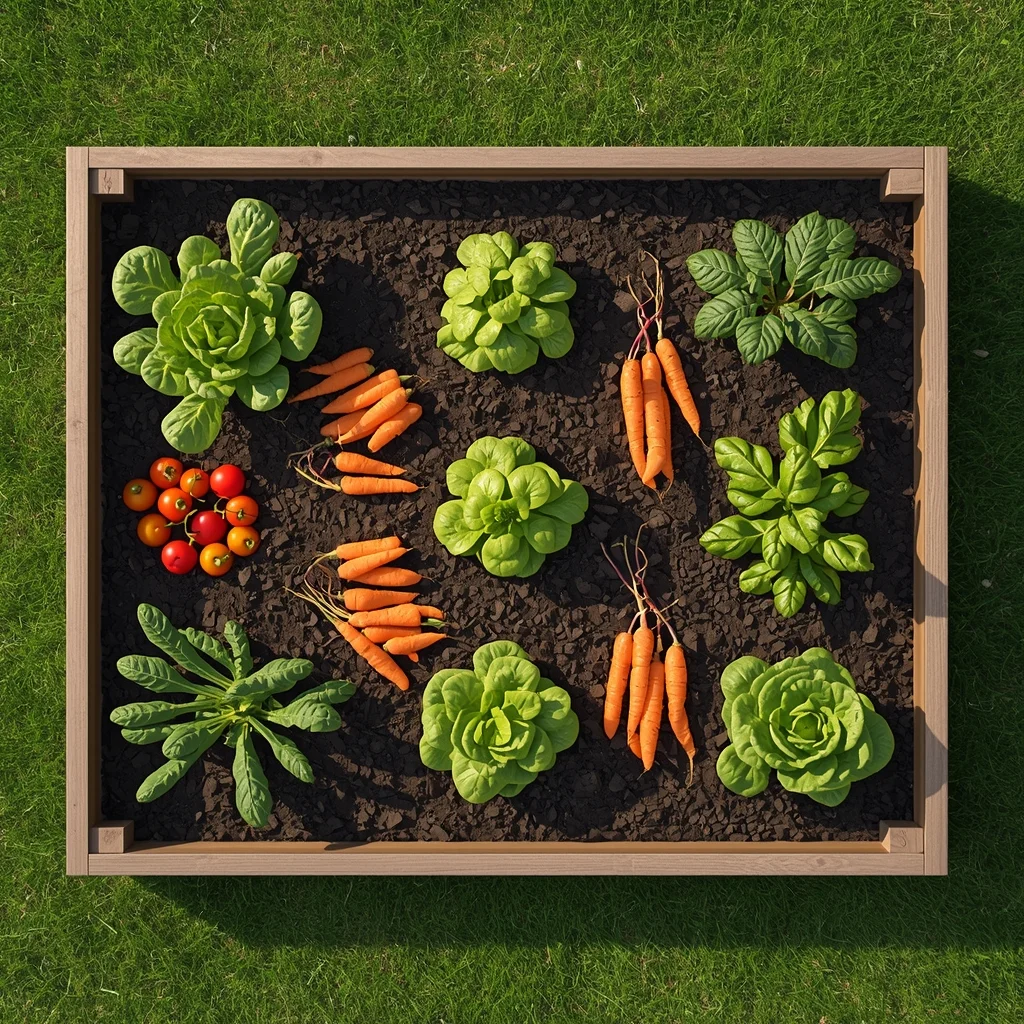
What Is a Plant Spacing Calculator?
A plant spacing calculator is a simple tool, available online, as a mobile app, or as a manual formula, that figures out how many plants fit in a given garden space based on the recommended distance between each plant.
You enter the dimensions of your garden bed and select the crop you want to grow. The calculator uses the recommended spacing for that crop to determine how many plants fit in the space, arranged in a grid or offset pattern. The result gives you a planting map so you know exactly how many plants to buy or start from seed and where each one should go.
It is essentially a garden layout planner built around real horticultural spacing data. No more eyeballing rows and hoping for the best.
Who Should Use It?
A plant spacing calculator is useful for gardeners at every level. It is especially helpful for:
- Beginner gardeners who are not sure how far apart to plant different vegetables
- Raised bed gardeners who want to maximize every square inch of limited growing space
- Home gardeners planning a new garden bed from scratch and wanting to get it right the first time
- Gardeners switching to square foot gardening who need exact plant counts per square
- Anyone buying seedlings or seeds who wants to know exactly how many to purchase before heading to the nursery
If you have ever ended up with too many seedlings and not enough space, or too much empty space after planting, this tool solves that problem permanently.
Why Proper Plant Spacing Matters
Plant spacing is not just a suggestion on the back of a seed packet. It is based on real research into how much room each plant needs to grow to its full potential. Getting it right makes a measurable difference in plant health, productivity, and overall garden success. This plant spacing calculator help you in accurate plant spacing.
Better Plant Growth
Every plant needs a certain amount of root space to access water and nutrients from the soil. When plants are crowded together, their root systems compete and none of them get everything they need. Properly spaced plants have room to develop full, healthy root systems that support strong above-ground growth and maximum fruit or leaf production.
Air Circulation
Good airflow between plants is critical for keeping them healthy. When plants are packed too closely together, the air between them becomes stagnant and humid, exactly the kind of environment that fungal diseases love. Proper spacing allows air to move freely through the garden, keeping foliage dry and dramatically reducing the risk of common diseases like powdery mildew, blight, and botrytis.
Disease Prevention
Many of the most destructive garden diseases spread through water splash, physical contact between leaves, or movement of spores on the air. Crowded plants touch each other constantly, creating easy pathways for disease to jump from one plant to the next. Proper garden bed spacing creates a physical barrier between plants that slows the spread of disease significantly.
Higher Yield
This is the part that surprises most beginners, planting fewer plants with proper spacing actually produces more food than cramming in as many plants as possible. When each plant has the space it needs to thrive, it reaches its full productive potential. Crowded plants stress each other out and nobody wins. Properly spaced plants produce at full capacity, and the total harvest is almost always higher.
Free Garden Calculators for Accurate Planting & Harvest Planning
How a Plant Spacing Calculator Works
The math behind a plant spacing calculator is straightforward. It divides your available garden space by the area each plant needs based on its recommended spacing. The result is the maximum number of plants that will fit comfortably in that space.
Garden Bed Length and Width
The first input is always your garden dimensions. Measure the length and width of your bed in feet or meters and enter those numbers. The calculator determines your total growing area in square feet or square meters.
Plant Type Selection
Next, you select the crop you want to grow. The calculator uses a built-in database of recommended spacing values for each plant type. These values are based on USDA guidelines, university extension research, and standard horticultural practices. Each crop has a specific spacing recommendation, for example, tomatoes need 24 to 36 inches between plants while lettuce can be spaced as close as 6 inches apart.
Recommended Spacing
The spacing value is the distance required between the center of one plant and the center of the next. Some calculators use a simple grid pattern (plants in straight rows), while others use an offset or triangular pattern that fits slightly more plants into the same space by staggering alternate rows.
Output — Number of Plants
The final output is the number of plants that fit in your bed. Many calculators also generate a visual grid showing exactly where each plant goes, which is incredibly helpful when you are physically laying out your garden before planting.
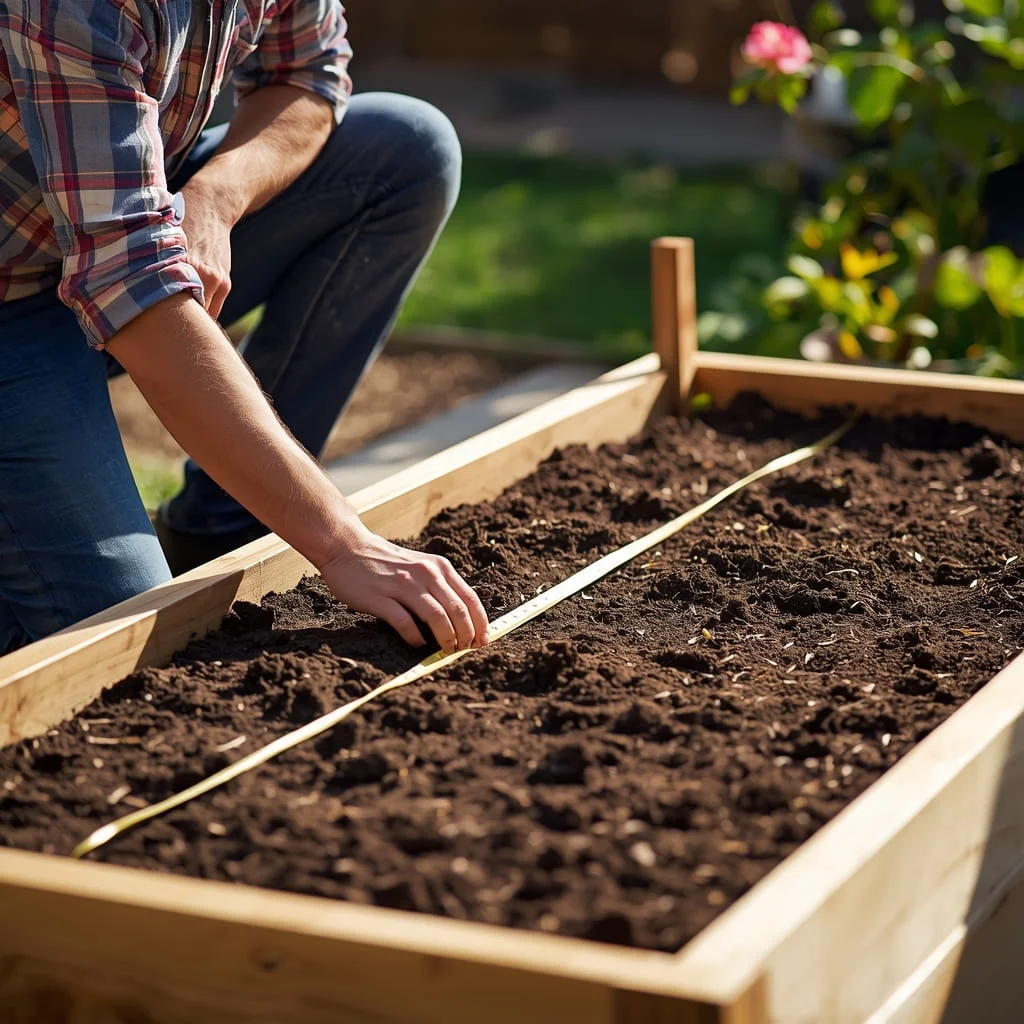
Information Needed Before Using a Plant Spacing Calculator
Before you use a garden spacing calculator, gather a few simple pieces of information. Having these ready makes the whole process quick and accurate.
Bed Measurements
Measure the length and width of every garden bed, container, or growing area you plan to plant. Use a tape measure and write down the numbers. If your bed is an unusual shape, break it into rectangles, calculate each section separately, and add the plant counts together.
Units of Measurement
Most plant spacing calculators in the USA work in feet and inches. Make sure you are consistent — do not mix feet with meters or inches with centimeters in the same calculation. If your measurements are in meters, convert them to feet first (1 meter equals approximately 3.28 feet) or use a calculator that offers metric options.
Crop Selection
Know exactly which vegetables, herbs, or flowers you plan to grow in each bed. If you are growing multiple crops in one bed, divide the bed into sections and calculate each crop separately. Having your plant list ready before you start saves time and gives you a complete picture of your whole garden layout in one session.
Step-by-Step Guide to Using a Plant Spacing Calculator
Follow these steps and you will have a complete planting plan for your garden in just a few minutes.
Step 1: Measure Your Garden Bed Use a tape measure to find the exact length and width of your growing area. Write the numbers down. Example: a raised bed that is 4 feet wide and 8 feet long gives you 32 square feet of growing space.
Step 2: List Your Crops Write down every vegetable or plant you want to grow and roughly how much space you plan to give each one. Example: 16 square feet for tomatoes and 16 square feet for lettuce in a 32-square-foot bed.
Step 3: Look Up or Enter the Recommended Spacing Find the recommended spacing for each crop. You can use the vegetable spacing chart in this article, check the seed packet, or let an online plant spacing calculator pull the data automatically when you select the crop.
Step 4: Enter Your Data into the Calculator Type your bed dimensions and spacing value into the calculator. If you are using the manual formula, divide your bed length by the spacing distance to get the number of plants per row. Then divide the bed width by the spacing distance to get the number of rows. Multiply those two numbers together for the total plant count.
Example calculation:
- Bed size: 4 feet x 8 feet
- Crop: Lettuce, 6-inch spacing
- Convert spacing to feet: 6 inches = 0.5 feet
- Plants per row: 8 ÷ 0.5 = 16
- Number of rows: 4 ÷ 0.5 = 8
- Total plants: 16 x 8 = 128 lettuce plants
Step 5: Review the Output Check the plant count the calculator gives you. Does it match your expectations? If the number seems too high or too low, double-check your measurements and spacing value.
Step 6: Adjust if Needed If the plant count is higher than you need, for example, if 128 lettuce plants is far more than your family will eat — reduce the space allocated to lettuce and use the remainder for another crop. A plant spacing calculator makes it easy to experiment with different layouts until you find the right balance.
Step 7: Mark Out Your Garden Once you have your plant counts, use stakes and string or a garden marker to lay out the rows and plant positions in your actual bed before planting. This physical dry run prevents mistakes and makes the planting process much faster.
Recommended Spacing for Popular Vegetables
Here is a practical vegetable spacing chart for the most common home garden crops. These recommendations are based on standard horticultural guidelines and work for both in-ground and raised bed gardens.
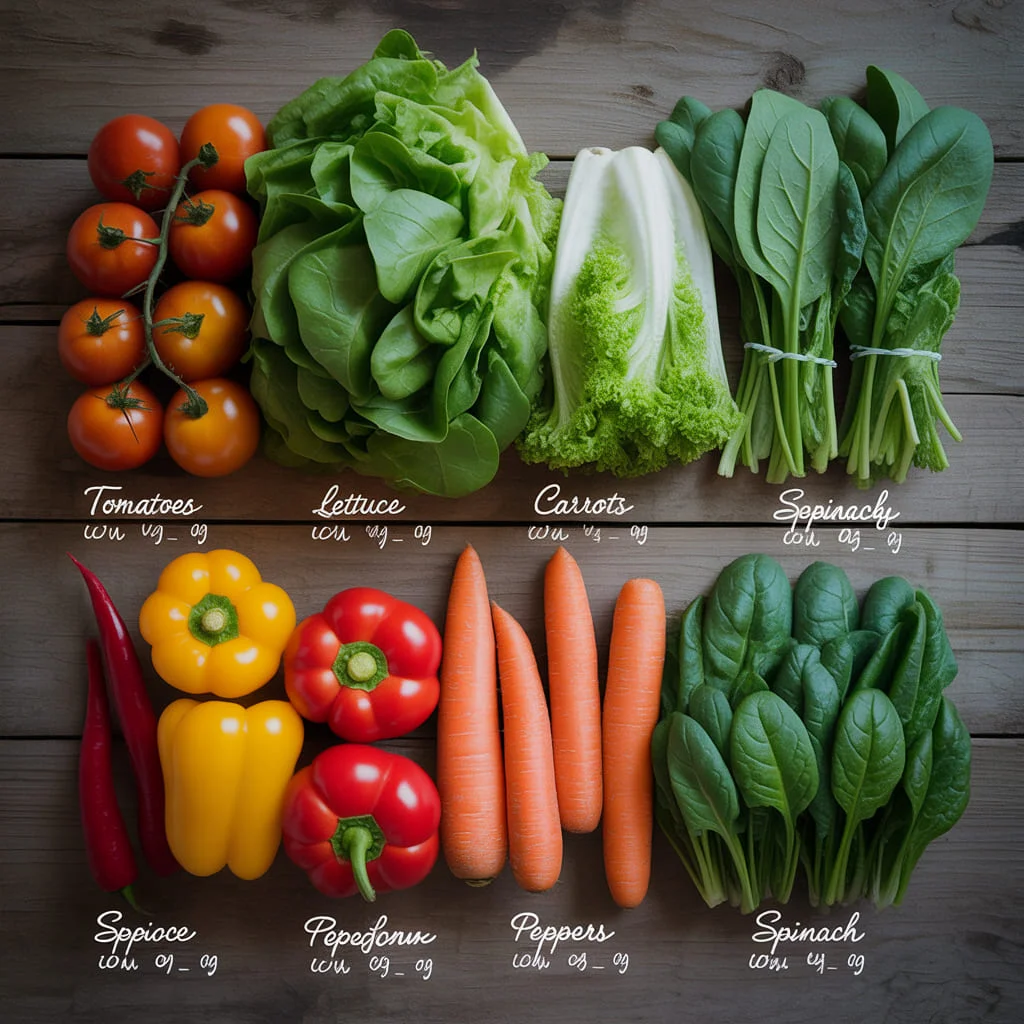
Tomatoes
Tomatoes need significant space because they grow large and need good air circulation to stay healthy and productive.
- Determinate varieties: 18 to 24 inches between plants, 36 inches between rows
- Indeterminate varieties: 24 to 36 inches between plants, 48 inches between rows
- In a raised bed: 1 plant per 4 square feet minimum
Giving tomatoes adequate space is one of the most important things you can do to prevent blight and maximize fruit production. Crowded tomato plants are significantly more disease-prone.
Lettuce
Lettuce is one of the most space-efficient crops you can grow. Its compact size and fast growth make it ideal for intensive planting.
- Leaf lettuce: 6 inches between plants, 12 inches between rows
- Head lettuce: 10 to 12 inches between plants, 18 inches between rows
- In a raised bed (square foot method): 4 plants per square foot for leaf lettuce, 1 plant per square foot for head lettuce
Lettuce can also be grown as a cut-and-come-again crop, where leaves are harvested regularly rather than whole heads, allowing tighter spacing.
Carrots
Carrots are thin root vegetables that can be planted relatively closely together, but they still need enough room for roots to develop without forking or crowding.
- Standard spacing: 2 to 3 inches between plants, 12 inches between rows
- In a raised bed: 16 plants per square foot
- Thin seedlings to the correct spacing after germination, carrot seeds are small and almost impossible to place precisely, so thinning is a normal part of the process
Peppers
Peppers are medium-sized plants that need moderate spacing for good airflow and root development.
- Standard spacing: 12 to 18 inches between plants, 24 to 36 inches between rows
- In a raised bed: 1 plant per square foot for compact varieties, 1 plant per 2 square feet for larger varieties
- Bell peppers need more space than hot pepper varieties because they develop larger canopies
Spinach
Spinach is a fast-growing leafy green that can be planted fairly densely, especially when grown for baby leaf harvests.
- Standard spacing: 3 to 6 inches between plants, 12 inches between rows
- In a raised bed: 9 plants per square foot for baby leaf harvest, 4 plants per square foot for full-size plants
- Succession plant spinach every 2 to 3 weeks for a continuous harvest throughout the cool season
Spring Herb Plant Count Calculation
To calculate your spring herb plant count, first measure your garden bed and divide the total square footage by the recommended spacing for each herb (e.g., basil needs 12 inches apart, so 1 plant per square foot). Multiply the number of plants by a 10–15% buffer to account for seedling failure, pest damage, or poor germination. Finally, group herbs with similar water and sunlight needs together to maximize space efficiency and simplify care.
Benefits of Using a Plant Spacing Calculator
Using a plant spacing calculator before planting season transforms how you approach your entire garden setup. The benefits go well beyond just knowing how far apart to plant things.
Avoid Overcrowding
Overcrowding is the number one cause of underperforming gardens. When you calculate spacing before planting, you eliminate the guesswork that leads to cramming too many plants into too little space. Every plant gets the room it needs to grow to its full size and productivity.
Efficient Use of Space
A garden spacing calculator helps you fill your available space as efficiently as possible, not too crowded, not too sparse. You can experiment with different crop combinations and layouts before committing to a plan, making sure every square foot of your garden is working as hard as it possibly can.
Healthier Plants
Plants grown at the correct spacing are healthier in almost every measurable way. They have better root development, stronger stems, more efficient nutrient uptake, and greater resistance to disease and pests. Healthy plants also respond better to fertilizing and watering, making every input to your garden more effective.
Plant Spacing for Raised Beds
Raised beds are where plant spacing calculators really shine. Because raised beds have fixed dimensions and defined boundaries, the calculations are precise and the results are easy to apply directly to the physical bed.
The most popular raised bed system in the USA is square foot gardening, developed by Mel Bartholomew. In this system, the bed is divided into a grid of 1-foot squares, and each square holds a specific number of plants based on their recommended spacing. A plant spacing calculator built around this system makes planning incredibly simple.
Here are some common square foot gardening plant counts:
- 1 plant per square foot: Tomatoes, peppers, broccoli, cauliflower
- 4 plants per square foot: Lettuce (head), Swiss chard, basil
- 9 plants per square foot: Spinach, beets, bush beans
- 16 plants per square foot: Carrots, radishes, onions
Raised beds also allow for slightly closer spacing than in-ground gardens because the soil is typically looser, better amended, and more fertile — meaning plants can access nutrients more efficiently in a smaller space.
Plant Spacing for Container Gardening
Container gardening follows the same spacing principles as raised beds, but the limited volume of soil in a container makes it even more important to get spacing right. In a container, overcrowding does not just reduce yield, it can cause plants to fail entirely because root competition is so intense in a confined space.
For containers, choose one of these approaches based on the container size:
- Small containers (under 5 gallons): Grow a single plant of a compact variety, one cherry tomato, one pepper, or one herb plant per container
- Medium containers (5 to 10 gallons): One standard-size vegetable plant with companion herbs or edging plants around the perimeter if space allows
- Large containers (15 gallons or more): Two or three plants of smaller crops like peppers or small-fruited tomatoes, spaced at the recommended distance
When using a plant spacing calculator for containers, measure the planting surface area of the container, not the total pot size, and enter that as your garden dimensions. This gives you an accurate plant count for the usable growing space available.
Common Spacing Mistakes to Avoid
Even gardeners who know better sometimes fall into these spacing traps. Being aware of them ahead of time protects your garden from predictable, avoidable problems.
Ignoring the spacing on seed packets — The spacing recommendations printed on seed packets and plant tags are not just suggestions. They are based on real research and represent the minimum space that plant needs to thrive. Treating them as guidelines to work around almost always leads to disappointment.
Planting at the nursery spacing, not the mature plant spacing — Young seedlings look tiny and the space between them seems wasteful. But that space is calculated for the mature plant size, not the seedling. Resist the temptation to tighten the spacing because the plants look small — they will not stay small.
Forgetting about vertical growth — Tall plants like indeterminate tomatoes, climbing beans, and cucumbers can shade out shorter plants nearby if spacing and layout are not planned with height in mind. Always consider mature plant height and the direction of shadows when laying out a mixed garden.
Skipping thinning for direct-sown crops — Crops like carrots, beets, and spinach are usually direct-sown by scattering seeds. The resulting seedlings always come up too thick and need to be thinned to the correct spacing. Skipping this step leads to crowded, stunted plants with poor yields. Thinning is not optional — it is part of the process.
Using the same spacing for all crops — Every crop has a different spacing requirement. A common mistake is choosing one spacing distance and applying it to everything in the garden. Always look up the specific recommendation for each crop rather than using a one-size-fits-all approach.
Tips for Planning Your Garden Layout
Good spacing is part of good garden planning. Here are some practical tips that go hand in hand with using a plant spacing calculator to get the most out of your garden.
- Draw your garden on paper first — Sketch your beds to scale on graph paper before you plant anything. Mark out the spacing grid and fill in plant positions. This simple exercise catches mistakes and layout problems before they cost you time and money.
- Plant tall crops on the north side — In the USA, placing tall plants like tomatoes and corn on the north side of the garden prevents them from casting shade on shorter crops. Sun travels from south to east in the Northern Hemisphere, so northern placement keeps tall plants out of the light path.
- Use companion planting to maximize space — Some plants grow well together and can share space more efficiently than when grown alone. Basil and tomatoes, carrots and onions, and spinach under taller plants are all classic combinations that make smart use of spacing.
- Try succession planting in the same space — Once a cool-season crop like lettuce or spinach finishes in late spring, that space becomes available for a warm-season crop. Calculate spacing for both the spring and summer crops to make sure the same bed serves two full growing seasons.
- Use a physical grid in the bed — A simple DIY grid made from dowels and twine laid across a raised bed makes it easy to follow your spacing plan exactly when planting. Remove it after planting or leave it in place to guide future maintenance.
- Keep a garden journal — Record what you planted, the spacing you used, and how the plants performed. Over time, this data helps you refine your layout decisions and get better results every season.
Conclusion
A plant spacing calculator is one of the most practical and beginner-friendly tools you can use to plan a productive home garden. It removes the guesswork from one of the most important decisions in gardening and gives you a clear, data-backed plan before you ever pick up a trowel.
Getting plant spacing right is not complicated, it just requires knowing the recommended distance for each crop and having a simple way to apply that to your specific garden space. A plant spacing calculator does exactly that in minutes. The result is a healthier garden, a better harvest, and a more efficient use of the space and resources you invest each season. To ensure your garden has the best airflow and root room, you can refer to these expert guidelines on vegetable planting and spacing provided by the Iowa State University Extension.
Use a plant spacing calculator every time you plan a new planting. Measure your beds, pick your crops, run the numbers, and go into planting day with a plan you can trust.
Frequently Asked Questions (FAQ)
A plant spacing calculator is a tool that figures out how many plants fit in your garden bed based on the size of your growing space and the recommended spacing for each crop. It helps you avoid overcrowding, plan your layout before buying seeds or seedlings, and make sure every plant has enough room to grow to its full potential. It is especially useful for raised bed gardeners and beginners who are planning a garden for the first time.
It depends entirely on what you are growing. A 4×8 raised bed (32 square feet) can hold approximately 8 tomato plants at 4 square feet each, 32 head lettuce plants at 1 square foot each, or 512 carrots at 16 per square foot. Most gardeners grow a mix of crops in a single bed, so the actual count varies based on the combination of plants and how much space is given to each one.
Planting too close together leads to competition for sunlight, water, and nutrients. Plants end up smaller and less productive than they would be with proper spacing. Overcrowding also reduces airflow, which creates humid conditions that encourage fungal diseases like powdery mildew and blight. In most cases, properly spaced plants produce a larger total harvest than the same number of crowded plants.
The recommended spacing values are similar for both, but raised beds often allow for slightly closer spacing because the soil is typically looser, more fertile, and better draining than in-ground soil. Square foot gardening, which uses intensive raised bed spacing, is based on this principle. However, even in raised beds, the minimum spacing recommendations for each crop should be respected to maintain good airflow and root development.
Recommended spacing is printed on most seed packets and plant tags at the nursery. You can also find detailed vegetable spacing charts from your local university extension office, the USDA, or on reliable gardening websites. Many online plant spacing calculators include built-in spacing databases that automatically apply the correct spacing when you select a crop, making the whole process even faster and easier.
48 ÷ 6 = 8 plants per row