
Dormant Seeding: 6 Easy Rules for Sowing Grass in November
Dormant seeding is sowing grass seed in late fall, after the soil is too cold for it to sprout, so that it lies dormant over winter and germinates as soon as the soil warms in spring. The timing is usually November, once soil temperature is below 50°F and before the ground freezes solid.
It is the answer for everyone who missed the September seeding window and does not want to wait for spring mud. It is also, as one Minnesota Extension expert put it, a highly effective procedure that can be tricky. Too early and the seed sprouts and dies. Too late and it cannot work into frozen ground.
This guide is built from seven real questions sent to university Extension services in Minnesota, Michigan, New York and Ohio. The experts agree on the method and are honest about where it fails.
Key takeaways
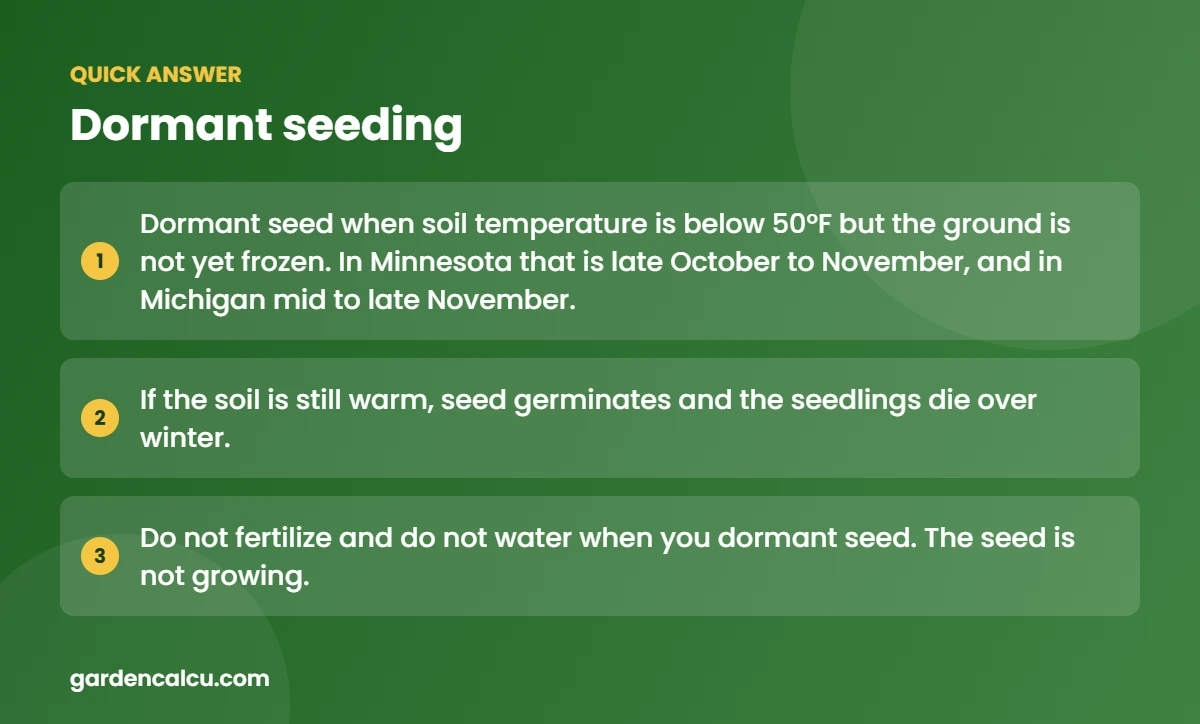
Quick answer to “dormant seeding” in three points.
Real questions gardeners asked
Every November, people who missed the fall window ask about dormant seeding. We read seven real questions and the replies, including one from a gardener who tried it and did not know what to do next. Here is each in our own words, with a link to the original.
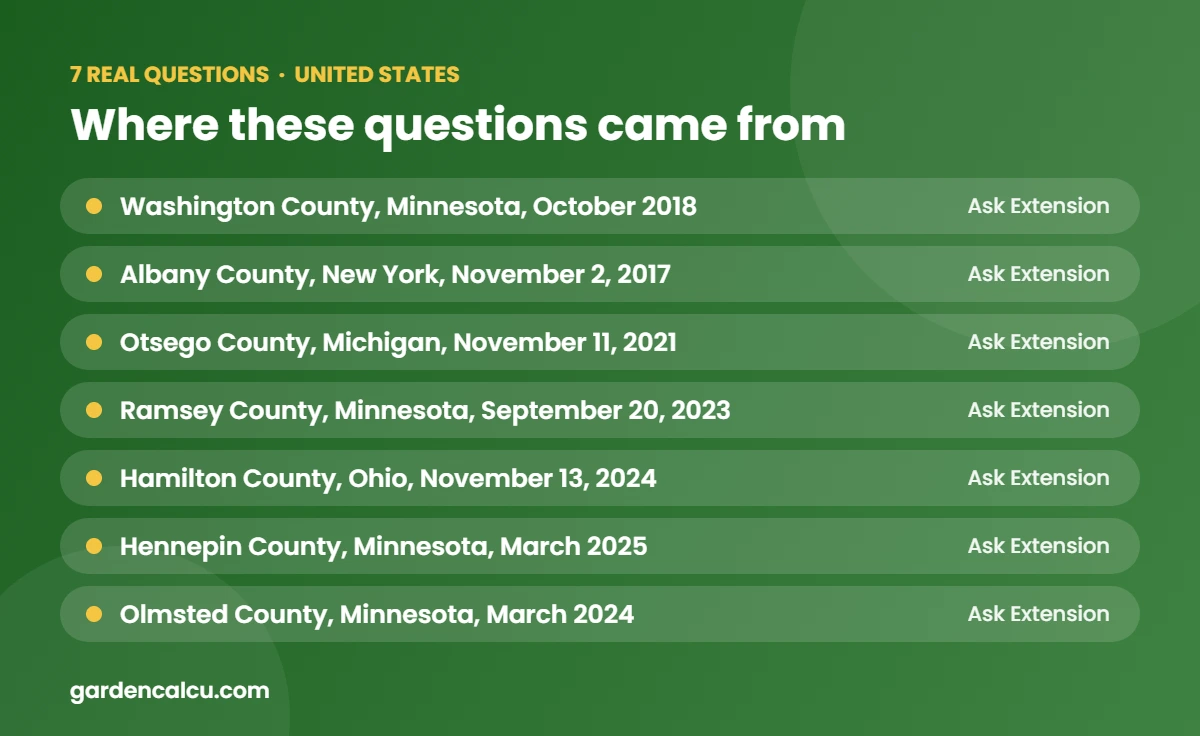
“Dormant Seeding”
The question: After a house addition wrecked the yard, a homeowner had re-leveled and added black dirt, and planned to dormant seed. Should starter fertilizer go down with the seed, and should it be covered?
What the expert said: No fertilizer, the expert said, because the seed will not grow until spring and does not need nutrients yet. Dormant seeding is generally done during November, when soil temperature is below 50 degrees. If the soil is warmer, the seed germinates and the seedlings die over winter. If it is completely frozen, the seed cannot work into the ground. Rake the soil loose first, and do not water.
“Grass seeding”
The question: An upstate New York homeowner asked in early November whether it was still a good time to plant grass seed.
What the expert said: Not too late, the expert said. Planting in November is a widely accepted practice in cold regions called dormant seeding. Wait until there is no chance the seed will germinate this fall, because seedlings that emerge so late are too weak to survive winter. Press the seed into solid contact with the soil.
“Planting new grass seed in November”
The question: A homeowner with about 5,000 square feet of bare ground around a new outbuilding asked whether to seed in mid-November or wait for spring.
What the expert said: The best time in the Midwest is mid-August to mid-September, the expert said, but dormant seeding is an option. You want seed on the ground when it is not frozen but too cold for germination, usually mid to late November in Michigan. The seed sprouts when temperatures rise in spring, getting ahead of the weeds.
“Planting Grass Seed”
The question: A homeowner asked if the week of September 25 was too late to seed a large dead area.
What the expert said: It is getting a bit late, the Master Gardener said. For new grass to make it through winter in Minnesota it should be sown by mid-September. One option is to try anyway and reseed in spring. Another is to dormant seed in late October and early November, before it snows, so the grass sprouts early next spring.
“Dormant Seeding Timing and Watering Advice”
The question: A homeowner had measured soil temperature at 37°F with a five-day average of 50°F and asked whether to wait another month, and whether to water after seeding.
What the expert said: The expert was concerned. Ohio winters are so variable, with warm spells followed by extreme cold, that waiting might be better. Dormant seeding works best on bare soil or thin lawns, where seed can reach the soil. Done too early, some seed germinates and the immature seedlings often do not survive winter.
“Lawn care”
The question: A homeowner had dormant seeded bare spots in late November and by March did not know whether to overseed, fertilize or apply weed and feed.
What the expert said: Way too early to do anything, the Master Gardener said. If you dormant seeded, wait and see what comes up. You can overseed again in May. Wait until new grass is at least a month old before fertilizing.
“Spring lawn seeding”
The question: In a warm March, a homeowner asked if it was too soon to seed.
What the expert said: For normal seeding, wait until May, the Master Gardener said. She added a few days later that, according to the University of Minnesota lawn care newsletter, it was not too late to dormant seed at that point in mid-March.
How dormant seeding works
Grass seed is tough when it is dry and cold. It can sit in or on the soil all winter without harm. What kills it is sprouting at the wrong time, because a seedling with a root a quarter inch long cannot survive a hard freeze.
Dormant seeding uses that fact. You put the seed down when the soil is already too cold for it to sprout. Over winter, freezing and thawing open small cracks in the soil surface and the seed settles into them. Snowmelt and spring rain provide moisture. As soon as the soil warms, the seed germinates, weeks before the ground would be dry enough to prepare a seedbed.
The Michigan expert named the main benefit: the grass gets ahead of the weeds.
Rule 1: wait for cold soil
Everything depends on soil temperature. The Minnesota expert gave the number: below 50°F.
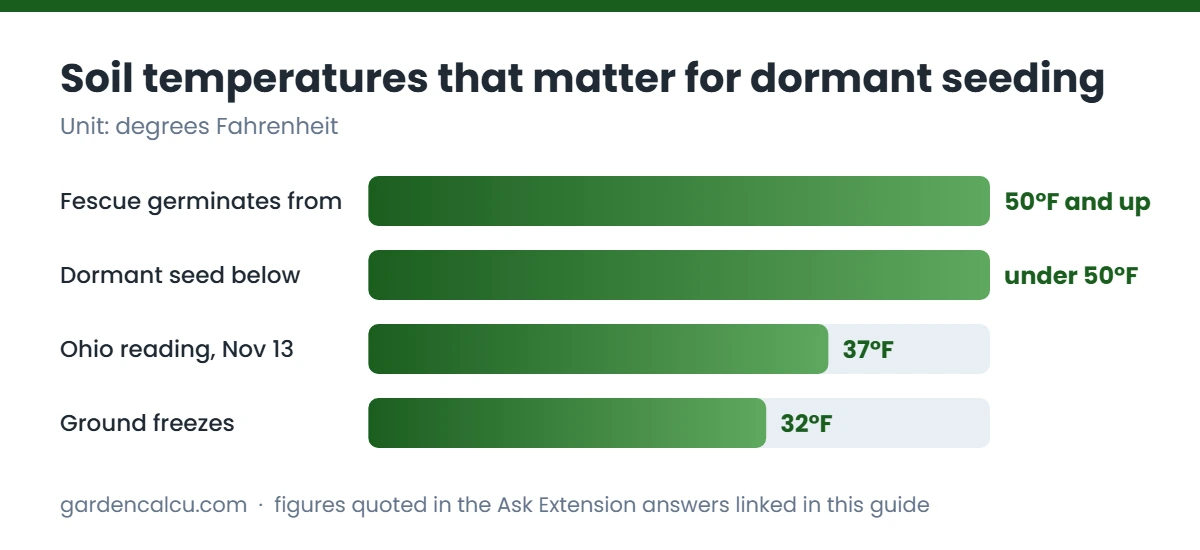
Chart for “dormant seeding”: soil temperature thresholds from the Extension answers above.
Soil condition | What happens to seed | Verdict |
|---|---|---|
50 to 65°F | Fescue and other cool-season grasses germinate | Too warm for dormant seeding |
Hovering around 50°F with warm days | Some seed sprouts, then dies in winter | Too early |
Consistently below 50°F, ground soft | Seed stays dormant and settles in | Right time |
Frozen solid | Seed sits on top, cannot work in | Too late for best results |
The Ohio homeowner’s readings show why one measurement is not enough. The soil was 37°F that day, but the five-day average was 50°F. A warm week could still wake the seed. The New York expert’s rule covers it: wait until there is no chance the seeds will germinate this fall.
Tip: Use a soil thermometer pushed 2 inches into the ground, and take the reading for several days in a row. When the highs stay in the 30s and 40s and the forecast shows no return to warm weather, it is time.
Dates from the answers
State | Dormant seeding window | Source |
|---|---|---|
Minnesota | Late October to November, before snow | Two Minnesota answers |
Michigan | Mid to late November | Michigan answer, 2021 |
Upstate New York | November | New York answer, 2017 |
Ohio | Risky, winters too variable | Ohio answer, 2024 |
Minnesota, late winter | Still possible in mid-March | Minnesota answer, 2024 |
The last line is a second chance. Seed scattered in late winter, even over a thin layer of snow, behaves the same way.
Rule 2: prepare the surface
Dormant seed has to touch soil. The Ohio and New York answers both stress seed-to-soil contact, and it is the reason the method fails on thick lawns.
Rule 3: spread the seed and leave it
Spread seed at the rate for bare soil or overseeding, as appropriate. Because some seed is lost to birds, washing and winter, many guides suggest going slightly heavier than a normal fall seeding. The Grass Seed Calculator gives the base amount for your area.
Worked example: the Michigan homeowner had 5,000 square feet of bare soil. At an example new-lawn rate of 6 pounds per 1,000 square feet, that is 5 x 6 = 30 pounds of seed. Check the rate on your seed label, since it varies by grass type.
Walk over the seeded area or roll it lightly to press seed into the surface. Then stop.
Rule 4: know where it works and where it does not
The Ohio answer, quoting University of Minnesota Extension, is direct about limits.
This is why the Ohio expert leaned toward waiting, while the Minnesota and Michigan experts were comfortable recommending it. Steady cold and reliable snow cover are what make dormant seeding dependable.
Watch out: On a slope, dormant seed can wash downhill in winter rain or snowmelt. For erosion control, pin down straw or an erosion blanket over the seed, or cover the soil with mulch and seed in spring.
How much seed for your lawn?
Enter the size of the area and whether it is bare soil or an existing lawn. The calculator gives the pounds of grass seed to buy.
Rule 5: be patient in spring
The Hennepin County homeowner had done the seeding and then wanted to do something in March. The Master Gardener’s advice was to do nothing yet.
Rule 6: compare it with the alternatives
Dormant seeding is one of three choices in late fall.
Option | Good for | Drawback |
|---|---|---|
Dormant seed in November | Bare soil in steady-cold climates | Some seed loss, weather dependent |
Wait and seed in spring | Variable-winter climates | Weeds and summer heat compete with young grass |
Lay sod | Instant cover while ground is unfrozen | Cost |
Wait for next fall | Best establishment | Bare soil for a year |
If you are still inside the normal window, use it. Our guide on when to plant grass seed in fall gives the cut-off dates, and how long does grass seed take to grow explains why late October sowings fail.
Common mistakes
Frequently asked questions
Short answers to the questions that come up most often.
Quick recap
Dormant seeding works when the seed goes down after the soil has cooled below 50°F and before it freezes, on a raked surface where it can touch the soil. No fertilizer, no water.
It is most reliable where winters stay cold. In spring, wait for the soil to warm, skip the crabgrass preventer and overseed any gaps in May.
Get your exact number
Measure the bare areas and the calculator shows the pounds of seed to spread.
Related guides
Sources
The facts in this guide to “dormant seeding” come from these university Extension pages and public questions: