Cover Crops for Raised Beds: 6 Best Choices and When to Sow
The best cover crops for raised beds are oats, barley, crimson clover, field peas and cereal rye, sown four to eight weeks before your first killing frost. A 4 x 8 ft bed needs less than an ounce of oat or rye seed, and only a fifth of an ounce of crimson clover.
Cover crops are usually talked about in acres, which makes them sound like a farm practice. They work just as well in two small beds behind a house. The questions change, though. How do you scale the seed down? What happens if you cannot till? Which ones turn into weeds?
This guide is built from four real questions that gardeners sent to university Extension services in North Carolina, Michigan, Oregon and Delaware, plus seeding rates published by Iowa State University and Clemson. The seed amounts for common bed sizes are worked out below.
Key takeaways
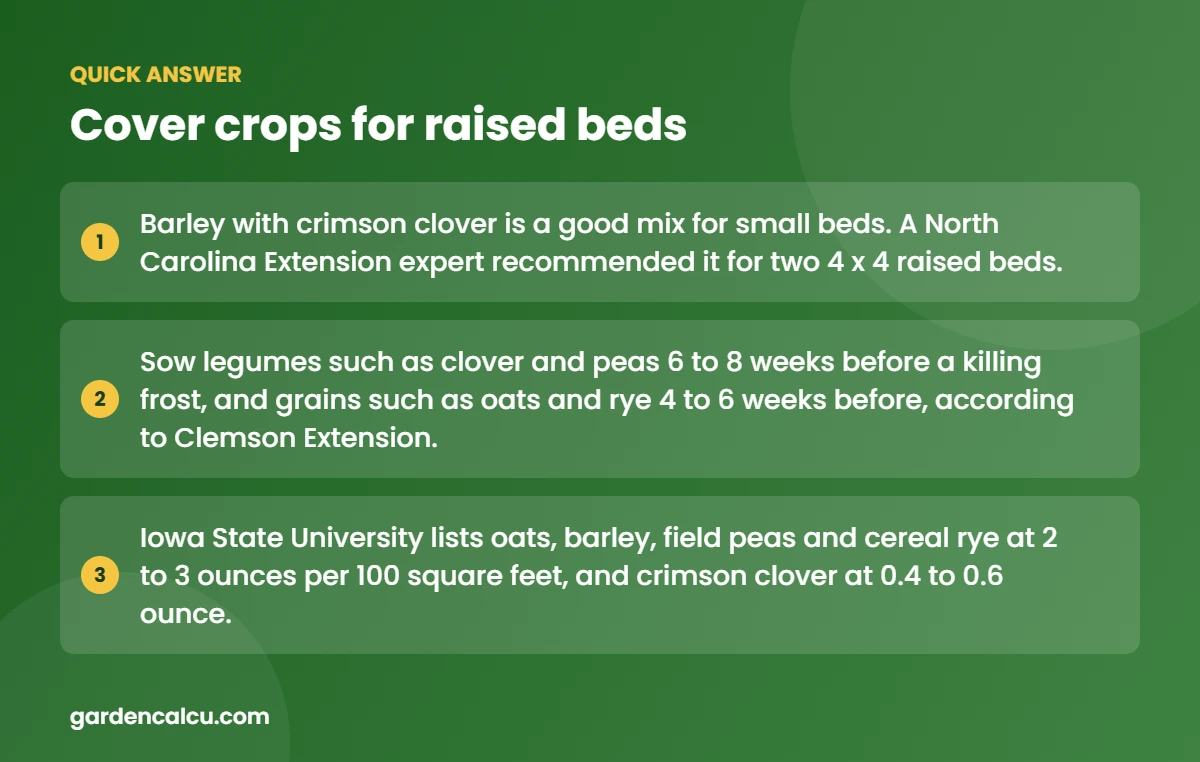
Quick answer to “cover crops for raised beds” in three points.
Real questions gardeners asked
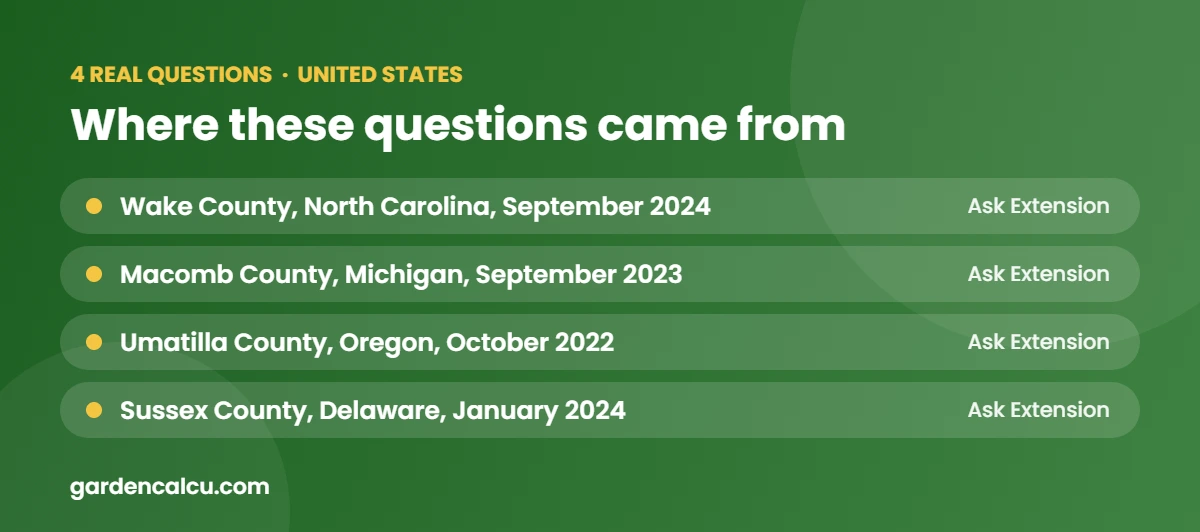
Interest in cover crops for raised beds peaks every September, when summer crops come out and gardeners wonder what to do with bare soil. We read four questions sent to Extension and the replies. Here is each one in our own words, with a link to the original.
“Mini cover crop?”
The question: A gardener with two 4 x 4 raised beds, one for tomatoes and peppers and one for beets and snow peas, asked whether to sow barley and crimson clover once the tomatoes were done, or leave the bed fallow. The empty bed dried out and ants moved in.
What the expert said: The expert called barley and crimson clover great choices. They prevent erosion and improve soil structure, and the clover adds nitrogen. In that area they can be sown from mid-September to early November. Crimson clover keeps growing slowly through winter while barley covers the ground, and both can be turned into the soil in early spring.
“Fall-planted cover crops can benefit your gardens — True or False”
The question: After reading a newspaper article recommending oats, winter rye, winter wheat, crimson clover and hairy vetch, a gardener asked if fall cover crops are really a good idea and what the downsides are.
What the expert said: The educator said cover crops are a good practice. They build soil health, add nutrients and improve how soil handles water. But they are not all equal, so decide what you want from one first. The negatives are weed potential, the work of killing the crop in spring, and the planting deadline in fall. He does not recommend hairy vetch in a garden, because if it cannot be killed on time it becomes a weed.
“Winterizing treatment for raised beds”
The question: A gardener with several raised vegetable beds asked what to apply in fall to fortify the soil for spring.
What the expert said: After clearing old plants, the expert suggested cover crops as the way to add nutrients and improve structure when no fall crop is growing. The list included fall rye, crimson clover, field peas, hairy vetch, and oats or barley.
“Winter prep vegetable garden”
The question: A backyard gardener asked in late January what could be done to prepare the vegetable garden.
What the expert said: The expert said their demonstration garden uses cover crops in the vegetable beds to keep down weeds and add organic matter, but that by late January it was too late to sow one. Cleanup and a soil test were the jobs for that time of year.
What cover crops do for a raised bed
A raised bed left bare from October to April loses more than you might expect. Rain washes nutrients down and out. Weeds move in. The surface crusts. A cover crop is simply a plant grown to hold the soil and feed it.
The 6 best cover crops for raised beds
These are the crops named in the Extension answers, with rates and winter behavior from Iowa State University’s guide for home vegetable gardens.
Cover crop | Type | Seed per 100 sq ft | Survives winter? |
|---|---|---|---|
Oats | Grain | 2 to 3 oz | No, winter kills |
Winter barley | Grain | 2 to 3 oz | No |
Cereal (winter) rye | Grain | 2 to 3 oz | Yes |
Field peas | Legume | 2 to 3 oz | No, unless winter is mild |
Crimson clover | Legume | 0.4 to 0.6 oz | Sometimes |
Hairy vetch | Legume | 0.5 to 1 oz | Yes |
“Survives winter” refers to Iowa conditions. In a milder climate more of them live through. In North Carolina, for example, the expert expected crimson clover to keep growing slowly all winter.
Which one should you choose?
How much seed for a raised bed?
The rates above are per 100 square feet. A raised bed is much smaller, so the amounts are tiny.
Worked example: a 4 x 8 ft bed is 32 square feet. 32 ÷ 100 = 0.32. For oats at 3 ounces per 100 square feet, 0.32 x 3 = 0.96 ounce, just under an ounce. For crimson clover at 0.6 ounce, 0.32 x 0.6 = 0.19 ounce, about a teaspoon or two of the small seed.
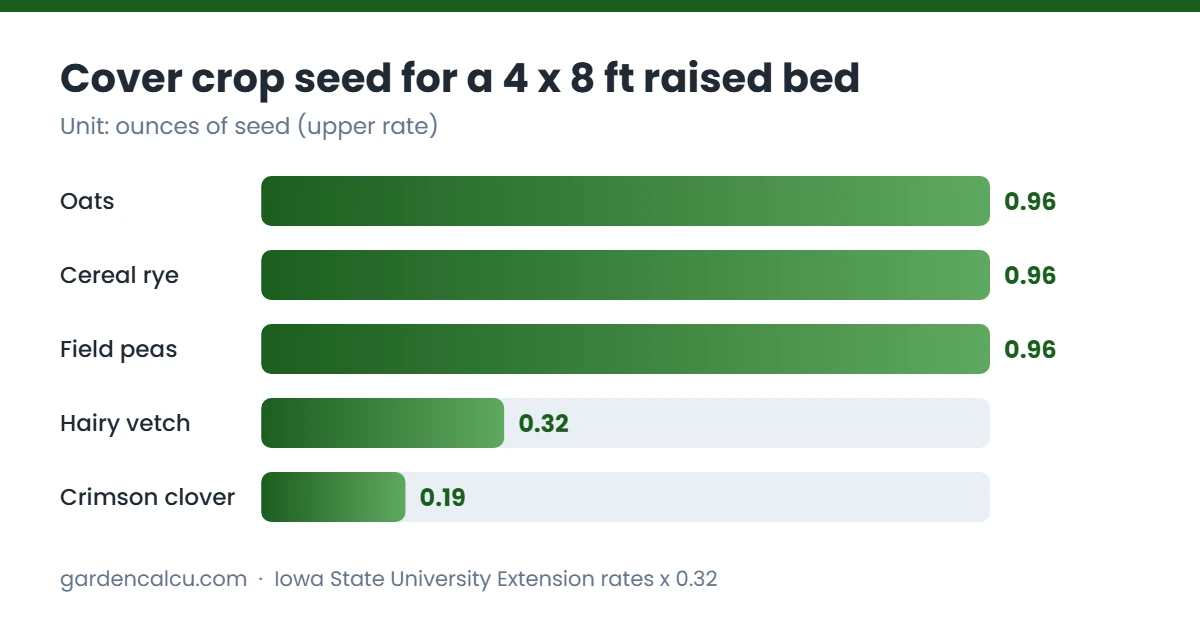
Chart for “cover crops for raised beds”: ounces of seed for a 4 x 8 ft bed at Iowa State University’s upper seeding rate.
Bed size | Area | Oats, barley, rye or peas | Crimson clover | Hairy vetch |
|---|---|---|---|---|
4 x 4 ft | 16 sq ft | 0.3 to 0.5 oz | 0.06 to 0.1 oz | 0.08 to 0.16 oz |
4 x 8 ft | 32 sq ft | 0.6 to 1.0 oz | 0.13 to 0.19 oz | 0.16 to 0.32 oz |
4 x 12 ft | 48 sq ft | 1.0 to 1.4 oz | 0.19 to 0.29 oz | 0.24 to 0.48 oz |
10 x 10 ft | 100 sq ft | 2 to 3 oz | 0.4 to 0.6 oz | 0.5 to 1 oz |
When you sow a mix, each crop is used at a lower rate than it would be alone. Clemson Extension’s fall mix of oats and crimson clover, for instance, uses 1.5 pounds of oats and 8 ounces of clover per 1,000 square feet. For a 4 x 8 bed that works out to about 0.8 ounce of oats and a quarter ounce of clover.
Tip: Small packets sold for gardens often hold far more seed than one bed needs. The Seed Calculator helps you work out amounts for your bed size so you can share a packet across several beds or with a neighbor.
When to sow cover crops for raised beds
Timing is the main thing that goes wrong. A cover crop needs warm soil to sprout and a few weeks of growth before hard cold.
Clemson Extension gives a clear rule tied to frost. Sow legumes 6 to 8 weeks before a killing frost and non-legumes such as oats and rye 4 to 6 weeks before.
Worked example: with a first frost around October 20, clover and peas should go in between August 25 and September 8. Oats and rye can wait until September 8 to 22.
In mild-winter areas the window is longer. The North Carolina expert gave mid-September to early November. At the other extreme, the Delaware expert told a gardener that late January was simply too late.
Summer crops are often still producing at the ideal sowing date. You can scatter seed under tomatoes and peppers a few weeks before you pull them, or clear half the bed early.
Watch out: If you have missed the window, do not waste the seed. Cover the bed with 3 inches of shredded leaves or straw. Our guide to leaves as mulch explains how.
Work out seed for your beds
Enter your bed size and spacing and the calculator estimates how much seed you need, so you buy the right amount.
How to sow a cover crop in a raised bed
After that a cover crop needs almost nothing. Rain usually takes care of watering in fall.
How to finish a cover crop in spring without a tiller
Farmers plow cover crops in. In a raised bed you have gentler options.
Whichever you choose, do it early enough. Iowa State advises terminating cereal rye 2 to 3 weeks before planting because it releases compounds that hinder seedlings, and notes that rye and winter wheat easily become weeds if not completely killed. Do not let any cover crop set seed.
Downsides to know about
The Michigan educator was honest that cover crops have negatives. In a raised bed they come down to three.
None of these is a reason to skip cover crops. They are reasons to pick an easy one, sow on time and cut it down before it flowers.
Common mistakes
Frequently asked questions
Short answers to the questions that come up most often.
Quick recap
Cover crops for raised beds are cheap, quick to sow and need very little seed. Choose oats or barley with crimson clover, sow four to eight weeks before your first killing frost, and cut the crop down in spring before it flowers.
If the date has passed, mulch the bed and put a reminder in the calendar for early September next year.
Get your exact number
Enter the bed size and the calculator estimates the seed you need, so one packet goes as far as it should.
Related guides
Sources
The facts in this guide to “cover crops for raised beds” come from these university Extension pages and public questions: