
Free Fertilizer Calculator
Calculate the correct fertilizer amount based on garden bed size, plant type, and fertilizer formulation.
Fertilizer Calculator
Every gardener wants healthy, productive plants. But figuring out exactly how much fertilizer to use is one of the trickiest parts of growing vegetables at home. Use too little and your plants struggle. Use too much and you can burn roots, damage soil, and waste money. That is exactly why a fertilizer calculator is such a useful tool for gardeners at every level.
A fertilizer calculator takes the guesswork out of feeding your garden. You enter basic information about your garden size, the crops you are growing, and the type of fertilizer you have on hand. The calculator then tells you exactly how much to apply. Simple, fast, and accurate.
This guide covers everything you need to know about using a fertilizer calculator, how it works, what the numbers on fertilizer bags actually mean, how much different vegetables need, and how to avoid the most common fertilizing mistakes. Whether you are growing in a raised bed, a container, or a full backyard garden, this guide will help you feed your plants the right way.

What Is a Fertilizer Calculator?
A fertilizer calculator is a practical tool, available online, that figures out exactly how much fertilizer your garden needs based on your specific growing space and crop type.
Instead of guessing or following the same general instructions on every fertilizer bag, a fertilizer calculator gives you a number tailored to your actual garden. It factors in your garden’s square footage, the nutrient requirements of the plants you are growing, and the nutrient concentration of the fertilizer product you are using. The result is a precise recommendation in pounds, ounces, or cups, ready to apply.
Who Should Use It?
A fertilizer calculator is helpful for anyone who grows food or plants in soil. It is especially valuable for:
- Beginner gardeners who are not sure where to start with feeding plants
- Home vegetable gardeners who want to maximize yields without overfeeding
- Raised bed gardeners who need to manage limited soil volume carefully
- Container gardeners where over-fertilizing is an especially easy mistake to make
- Budget-conscious gardeners who want to avoid buying and applying more fertilizer than necessary
You do not need any chemistry background or gardening experience to use one. If you can measure your garden and read a fertilizer label, you have everything you need.
Why Use a Fertilizer Calculator for Your Garden?
Most gardeners either under-fertilize because they are not sure how much to use, or over-fertilize because they figure more is better. Both approaches cause problems. A garden fertilizer calculator solves this by giving you a precise, reliable answer based on real data.
Saves Money
Fertilizer is not cheap, especially for larger gardens. Applying more than your plants need is literally throwing money into the soil — or worse, washing it into runoff where it does no good at all. A fertilizer amount calculator helps you buy only what you need and apply only what works, stretching every dollar further across the growing season.
Protects Plants
Too much fertilizer, especially nitrogen, can burn plant roots, cause excessive leafy growth with little fruit production, and make plants more vulnerable to pests and disease. Using a calculator keeps applications within the safe range for each crop so your plants stay healthy and productive rather than stressed and struggling.
Prevents Soil Damage
Over time, excess fertilizer builds up in soil and changes its chemistry. High salt concentrations from repeated over-application can make soil less hospitable for plants and beneficial microorganisms alike. A garden fertilizer guide approach, calculating before you apply. protects the long-term health of your garden soil season after season.
How a Fertilizer Calculator Works
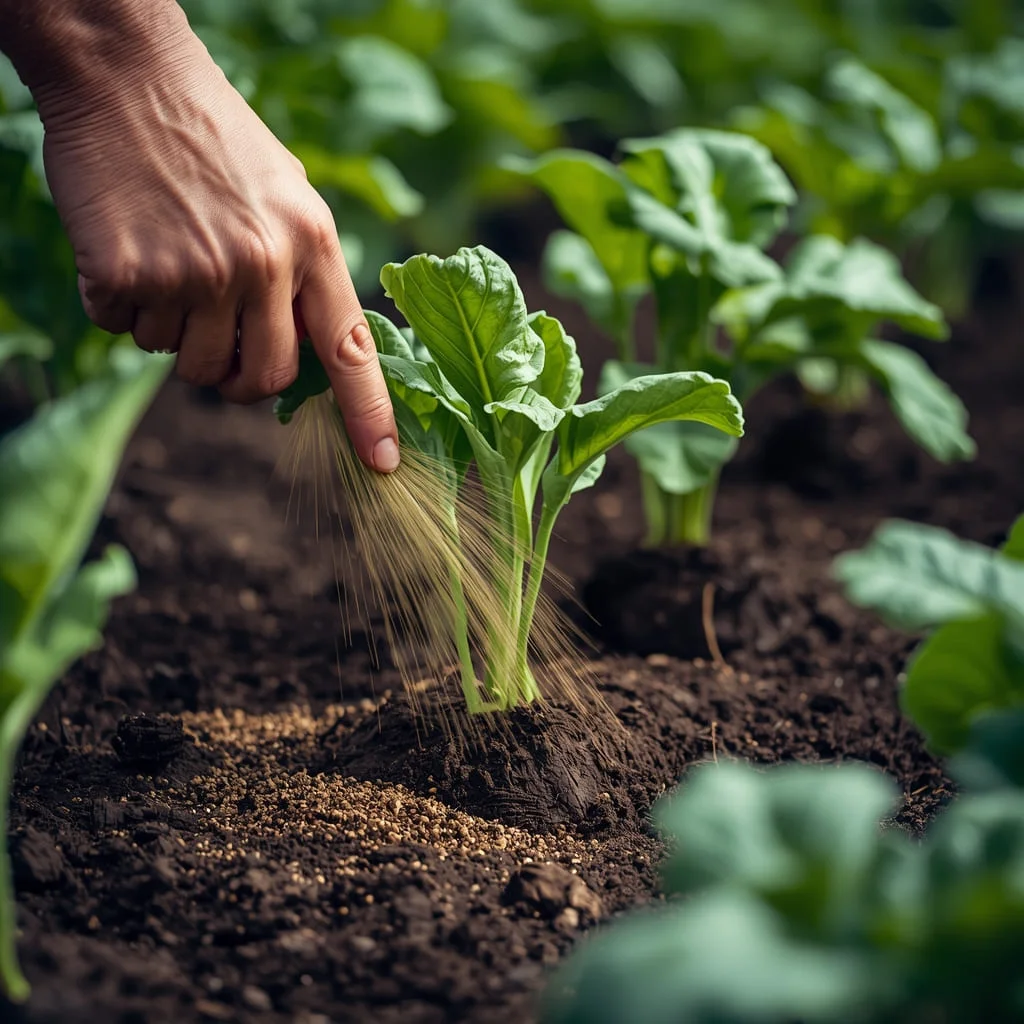
The math behind a fertilizer calculator is straightforward. It combines three pieces of information, your garden size, your plant’s nutrient needs, and the strength of your fertilizer, to give you an exact application amount.
Garden Bed Size
The first input is always the size of your growing space. The calculator needs to know the total square footage so it can scale the recommendation appropriately. A small 4×4 container bed needs a fraction of what a 20×30 foot garden plot requires, even if both are growing the same crops.
Plant Type
Different plants have very different nutritional needs. Leafy greens like lettuce and spinach are hungry for nitrogen. Root crops like carrots need more phosphorus and potassium than nitrogen. Heavy fruiting crops like tomatoes and peppers need a balanced approach that shifts over the season as they move from vegetative growth to flowering and fruiting.
The calculator uses these known nutritional profiles to determine how much of each nutrient your specific crop needs per square foot of growing space.
Fertilizer Formula — NPK
Every bag of fertilizer is labeled with three numbers, for example, 10-10-10 or 5-10-5. These numbers represent the percentage of nitrogen (N), phosphorus (P), and potassium (K) in the product. The calculator uses these numbers to figure out how much of the product you need to apply to deliver the right amount of each nutrient to your garden.
For example, if your tomatoes need 0.2 pounds of nitrogen per 100 square feet, and your fertilizer is 10% nitrogen (first number is 10), the calculator divides the nitrogen needed by the percentage to tell you exactly how many pounds of fertilizer product to apply.
Free Garden Calculators for Accurate Planting & Harvest Planning
Information Needed Before Using a Fertilizer Calculator
Before you open a fertilizer calculator, gather a few key details. Having this information ready makes the process take just a couple of minutes.
Garden Length and Width
Measure your garden bed, raised bed, or container with a tape measure. Write down the length and width in feet. Multiply them together to get total square feet. If your growing space is an irregular shape, break it into smaller rectangles and add the totals together.
Units of Measurement
Most fertilizer calculators in the USA work in feet and pounds. Some also offer metric options. Make sure you are consistent — if you enter your garden size in feet, make sure the fertilizer amount is given back in pounds or ounces, not grams or kilograms.
Crop Selection
Know exactly which plants you are growing and roughly how much space each one occupies. If you are growing multiple crops in the same bed, you will either need to calculate each section separately or use a calculator that supports mixed plantings.
Fertilizer Type
Have your fertilizer bag or product label in front of you. You will need the three NPK numbers from the label. Also note whether it is a granular (dry) fertilizer or a liquid fertilizer, as the application method and rate differ between the two. Common fertilizer types include:
- Granular balanced fertilizers like 10-10-10 or 12-12-12 for general garden use
- High-nitrogen fertilizers like 46-0-0 (urea) for leafy green crops
- Tomato-specific fertilizers like 8-32-16 for flowering and fruiting stages
- Organic fertilizers like blood meal (12-0-0), bone meal (3-15-0), or fish emulsion (5-1-1)
Step-by-Step Guide to Using a Fertilizer Calculator
Follow these steps and you will have your fertilizer recommendation in just a few minutes.
Step 1: Measure Your Garden Space Use a tape measure to find the length and width of your growing area. Multiply to get total square feet. Example: a raised bed that is 4 feet wide and 8 feet long = 32 square feet.
Step 2: Identify Your Crop Write down the specific vegetable or crop you are growing in that space. If you have multiple crops, list each one and estimate how many square feet it occupies. Example: 16 square feet of tomatoes and 16 square feet of peppers in a 32-square-foot bed.
Step 3: Find the Recommended Nutrient Rate for Your Crop Look up how much nitrogen, phosphorus, and potassium your crop needs per 100 square feet. This information is available from your local university extension office, on seed packet instructions, or directly within most online fertilizer calculators.
Step 4: Read Your Fertilizer Label Find the three NPK numbers on your fertilizer bag. Write them down. For example: a bag labeled 10-10-10 contains 10% nitrogen, 10% phosphorus, and 10% potassium.
Step 5: Enter the Information into the Calculator Type your garden square footage, crop type, and fertilizer NPK numbers into the calculator. Hit calculate.
Step 6: Apply the Recommended Amount The calculator will give you a specific amount,for example, 0.8 pounds of 10-10-10 fertilizer per 32 square feet. Measure that amount carefully, apply it evenly across the bed, and water it in thoroughly.
Step 7: Record and Repeat Write down what you applied, when you applied it, and the calculator’s recommendation. Most vegetables need fertilizing every 3 to 6 weeks during the growing season. Tracking your applications helps you stay on schedule and avoid accidental double-dosing.
Understanding Fertilizer Numbers (N-P-K)
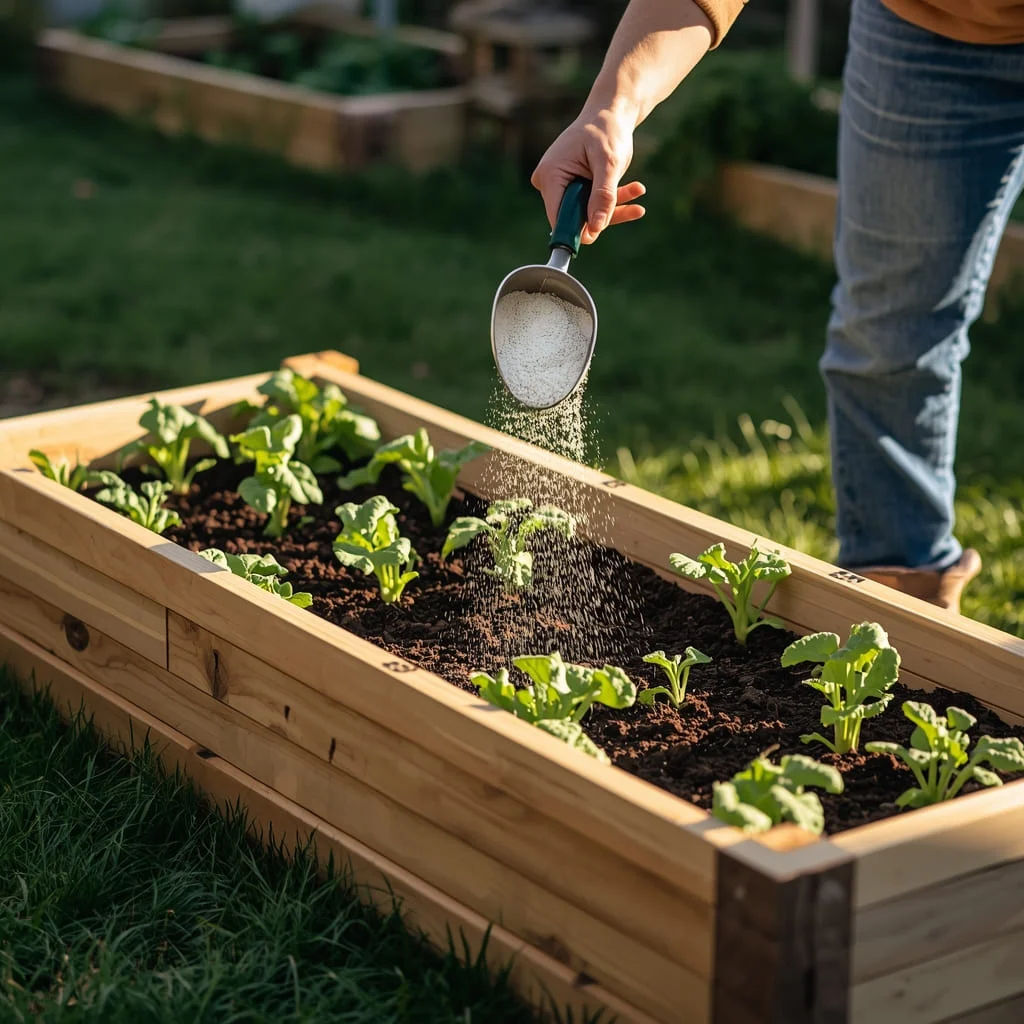
The three numbers on every fertilizer bag are one of the most important things to understand before using any fertilizer calculator. These numbers tell you what is actually in the bag and in what concentration.
Nitrogen (N) — The First Number
Nitrogen is the nutrient most responsible for leafy, green growth. It is the primary driver of plant size and leaf production. Crops like lettuce, spinach, kale, and cabbage are nitrogen-hungry and benefit from fertilizers with a higher first number.
Too much nitrogen causes problems though, plants grow lots of leaves but fewer fruits and flowers. It also makes plants soft and more attractive to pests. The fertilizer calculator helps you stay in the right range for each crop.
Phosphorus (P) — The Second Number
Phosphorus supports root development, flower formation, and fruit production. It is especially important during the early stages of plant growth and again when plants begin to flower. Root crops like carrots, beets, and radishes need phosphorus-rich soil to develop properly.
A fertilizer with a higher middle number, like 5-10-5 — is often recommended for transplanting seedlings and encouraging strong early root growth.
Potassium (K) — The Third Number
Potassium, sometimes called potash, strengthens the overall health of the plant. It helps plants resist disease, handle drought stress, and produce firm, high-quality fruit. It also plays a role in how efficiently plants use water. A balanced potassium level keeps plants sturdy and productive from planting through harvest.
How Much Fertilizer Different Crops Need
Here is a practical reference for how much fertilizer common home garden vegetables typically need. These amounts are based on general recommendations from university extension programs and are expressed per 100 square feet of growing space.
Tomatoes
Tomatoes are heavy feeders that need different things at different stages of growth.
- At planting: Use a balanced fertilizer like 10-10-10. Apply about 2 to 3 pounds per 100 square feet worked into the soil before transplanting.
- At flowering: Switch to a lower-nitrogen, higher-phosphorus formula like 5-10-10. Apply 1 to 2 pounds per 100 square feet every 3 to 4 weeks.
- Mid-season: Continue with the lower-nitrogen formula to keep fruit production strong.
Over-fertilizing tomatoes with nitrogen mid-season causes lush green plants with very few tomatoes — a common and frustrating mistake.
Lettuce
Lettuce is a fast-growing leafy green that responds well to nitrogen-rich fertilizer.
- At planting: Apply a balanced fertilizer at 1.5 to 2 pounds per 100 square feet.
- During growth: Side-dress with a nitrogen-rich fertilizer every 3 weeks. Fish emulsion or a 10-5-5 formula works well.
- Lettuce grown in cool weather needs less fertilizer than lettuce pushed through warm conditions.
Carrots
Carrots are moderate feeders that prefer phosphorus and potassium over heavy nitrogen.
- At planting: Apply a low-nitrogen fertilizer like 5-10-10 at 2 pounds per 100 square feet.
- During growth: Avoid heavy nitrogen applications, too much nitrogen causes forked, hairy roots and lots of leafy tops with small carrots.
- A single pre-planting application is often all carrots need for the season.
Peppers
Peppers have similar needs to tomatoes but are slightly more sensitive to over-fertilizing.
- At planting: Use a balanced fertilizer at 1.5 to 2 pounds per 100 square feet.
- At flowering: Switch to a lower-nitrogen formula and apply every 4 weeks.
- Pepper plants that receive too much nitrogen produce beautiful dark green plants with very few peppers — the same problem as over-fertilized tomatoes.
Spinach
Spinach is one of the most nitrogen-hungry vegetables in the garden.
- At planting: Apply a nitrogen-rich fertilizer at 2 to 3 pounds per 100 square feet.
- During growth: Side-dress with additional nitrogen every 3 weeks for continuous leafy production.
- Because spinach is harvested for its leaves, high nitrogen throughout the season is appropriate and productive.
Tips for Applying Fertilizer Correctly
Knowing how much fertilizer to use is only half the job. How you apply it matters just as much as how much you use.
- Water before and after applying — Never apply granular fertilizer to dry soil. Water the bed first, apply the fertilizer, then water again to push nutrients down to the root zone.
- Keep fertilizer off plant stems and leaves — Direct contact with fertilizer can burn stems and foliage. Apply granular fertilizer around the base of plants, not directly on them.
- Work granular fertilizer into the top inch of soil — Use a hand rake or trowel to lightly incorporate dry fertilizer into the surface rather than leaving it sitting on top where it can wash away.
- Apply liquid fertilizer in the morning — Morning applications give liquid fertilizers time to soak in before the heat of the day causes evaporation.
- Follow the schedule — Most vegetables benefit from fertilizing every 3 to 6 weeks during the growing season. Set a reminder so you do not skip applications or accidentally apply twice.
- Use a measuring scale or cup — Eyeballing fertilizer amounts is how over-application happens. Use a kitchen scale or measuring cup to get accurate amounts every time.
- Consider a soil test first — A basic soil test from your local extension office or garden center tells you exactly which nutrients your soil is already rich in, so you only add what is actually missing.
Common Fertilizing Mistakes to Avoid
Even well-meaning gardeners make these mistakes regularly. Knowing what to watch for ahead of time protects your plants and your soil.
Applying too much at once — More fertilizer does not mean faster growth. Excess nutrients overwhelm plants, burn roots, and can make plants more vulnerable to disease. Always follow the calculator’s recommended rate.
Using the wrong formula for the growth stage — Applying a high-nitrogen fertilizer to flowering tomatoes is one of the most common mistakes home gardeners make. Always match the fertilizer formula to the stage of growth your plant is in.
Skipping the pre-planting soil amendment — Many gardeners only fertilize after plants are in the ground. Working compost and a starter fertilizer into the soil before planting gives roots immediate access to nutrients from their first day in the ground.
Fertilizing dry soil — Applying fertilizer to bone-dry soil increases the risk of root burn because the concentrated nutrients have no water to dilute them. Always water first.
Fertilizing in extreme heat — Applying fertilizer during a heat wave stresses plants that are already struggling. Wait for cooler temperatures or apply in the early morning before the day heats up.
Not recording applications — Without a record of when and how much you applied, it is easy to double-dose a bed or forget a scheduled feeding entirely. Keep a simple garden notebook or use a phone note to track each application.
Using a Fertilizer Calculator for Raised Beds
Raised beds are one of the most popular growing setups in American home gardens, and they work especially well with a fertilizer calculator because the defined boundaries make measurements accurate and easy.
A standard 4×8 raised bed has 32 square feet of growing space. With a fertilizer calculator, you enter 32 square feet, select your crop, enter your NPK numbers, and get a precise amount in ounces or pounds, no estimating required.
One important thing to remember with raised beds is that the soil is often more fertile than in-ground soil because most gardeners fill raised beds with a custom mix of topsoil, compost, and other amendments. This means your plants may need slightly less fertilizer than the calculator suggests, especially in the first season. Start at the lower end of the recommended range and observe how your plants respond before increasing.
Because raised beds drain quickly, water-soluble nutrients can leach out faster than in traditional garden plots. This means raised bed gardens often benefit from more frequent, smaller fertilizer applications rather than one large dose every few weeks.
Using a Fertilizer Calculator for Container Gardening
Container gardens are even more dependent on regular fertilizing than raised beds or in-ground gardens. The limited soil volume in a container means nutrients get used up and washed out much faster. A fertilizer calculator helps container gardeners stay on top of feeding without accidentally overdoing it in a confined space.
To use a fertilizer calculator for containers, measure the diameter of the pot and calculate the surface area, or simply use the volume of potting mix the container holds. Most standard 5-gallon containers hold roughly 0.67 cubic feet of soil. Enter this as your growing space and follow the crop-specific recommendations as normal.
Because container plants are watered more frequently — and excess water flushes nutrients out through the drainage holes, plan on fertilizing container vegetables every 2 to 3 weeks rather than the 4 to 6 week schedule typical for in-ground or raised bed gardens. Liquid fertilizers are often easier and more effective for containers because they absorb quickly and evenly through the root zone.
Slow-release granular fertilizers mixed into the potting soil at planting time can also provide a base level of nutrition between liquid feedings, reducing how often you need to fertilize manually.
Conclusion
A fertilizer calculator is one of the most practical tools you can add to your gardening routine. It removes the guesswork from one of the most important parts of plant care, saves you money by preventing waste, and protects your plants and soil from the damage that over-fertilizing causes.
Whether you are feeding a single container of tomatoes on a balcony or managing multiple raised beds in a backyard garden, the principle is the same, measure your space, know your crop, read your fertilizer label, and let the calculator do the math. The result is healthier plants, better harvests, and a garden that improves season after season.
Start using a fertilizer calculator this season. Measure your beds, gather your product labels, and take ten minutes to run the numbers before your next fertilizer application. Your plants will thank you for it. To better understand how these specific nutrients affect your soil’s health, you can refer to this detailed guide on plant nutrition and fertilizing from the Texas A&M AgriLife Extension.
Frequently Asked Questions (FAQ)
A fertilizer calculator is a tool that tells you exactly how much fertilizer to apply to your garden based on your garden size, the crops you are growing, and the nutrient concentration of your fertilizer. You should use one because it prevents both under-fertilizing and over, fertilizing — two of the most common causes of poor garden performance. It also saves money by making sure you only buy and use what you actually need.
The three numbers on a fertilizer bag, for example 10-10-10 — represent the percentage of nitrogen, phosphorus, and potassium in that order. A bag of 10-10-10 fertilizer is 10% nitrogen, 10% phosphorus, and 10% potassium. The remaining 70% is filler material that helps distribute the nutrients evenly. Higher numbers mean a more concentrated product that needs to be applied in smaller amounts. This fertilizer calculator also provides you bags of fertilizer.
Most vegetable gardens benefit from fertilizing every 3 to 6 weeks during the active growing season. Fast-growing leafy greens like lettuce and spinach may need feeding every 3 weeks. Slower-growing crops like carrots may only need one or two applications per season. Container gardens need more frequent feeding, typically every 2 to 3 weeks, because nutrients flush out faster through drainage holes. This fertilizer calculator will help you to calculate exact quantity of fertilizer.
Yes. Organic fertilizers like fish emulsion, blood meal, and bone meal all have NPK numbers printed on their labels just like synthetic fertilizers. Enter those numbers into the calculator the same way you would for any other product. Keep in mind that organic fertilizers release nutrients more slowly than synthetic ones, so the full benefit may take a few weeks to show up in plant growth.
Over-fertilizing — especially with too much nitrogen, can burn plant roots, cause excessive leafy growth at the expense of fruit production, and build up salt in the soil over time. Symptoms of over-fertilization include brown or scorched leaf edges, wilting despite adequate water, and plants that look lush and green but produce very little fruit. If you suspect over-fertilization, flush the soil thoroughly with water and hold off on any additional applications for several weeks. Always use our free fertilizer calculator to maximize your yield.