
Free Mulch Calculator
Calculate cubic yards and cubic feet of mulch for garden beds and landscaping areas.
Mulch Calculator
If you have ever stood in a garden center staring at bags of mulch and had no idea how many to buy, you are not alone. Buying too few means a second trip to the store. Buying too many means wasted money and bags piling up in your garage. That is exactly the problem a mulch calculator solves.
A mulch calculator is a simple tool that tells you exactly how much mulch you need based on the size of your garden area and how deep you want to apply it. You enter your measurements, choose your desired depth, and the calculator does the math, giving you a result in cubic feet or cubic yards so you know precisely what to buy.
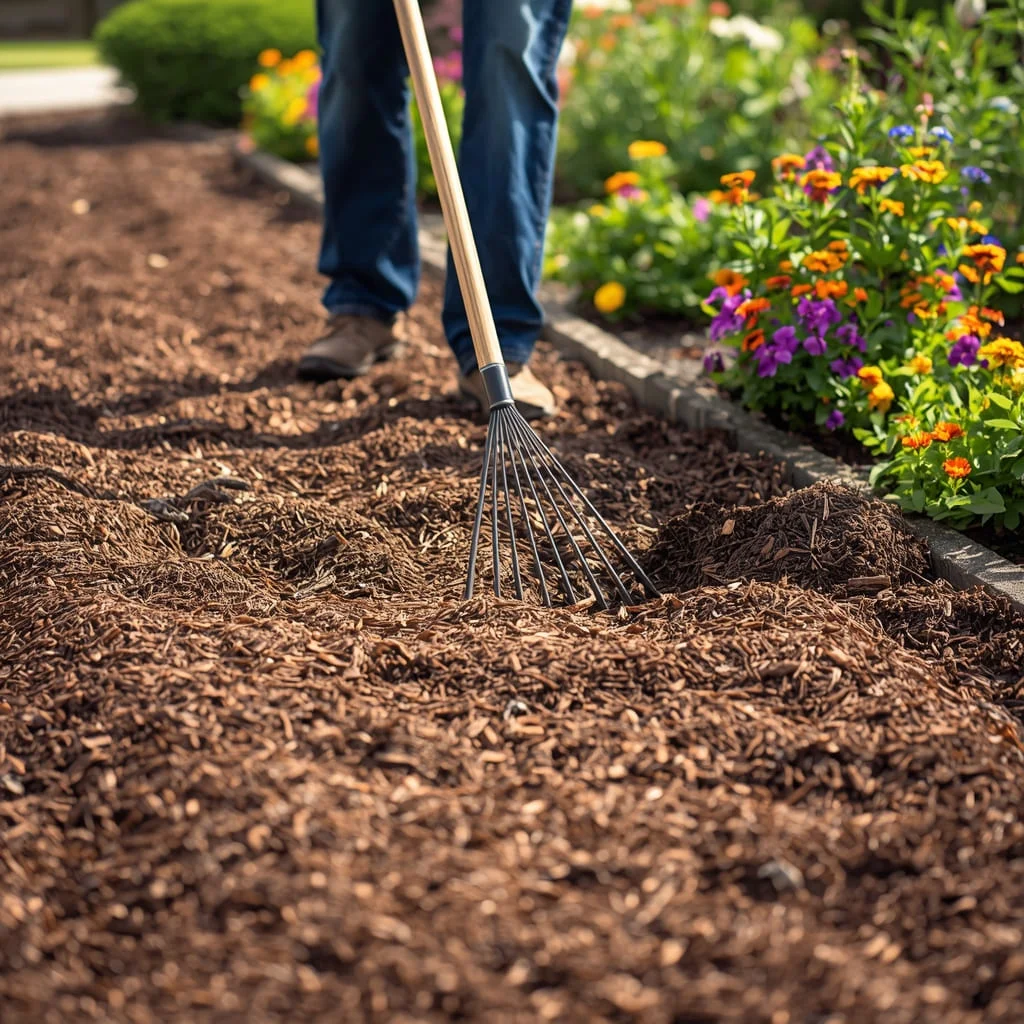
Whether you are mulching a small flower bed, a vegetable garden, a row of trees, or an entire landscaping project, this guide will walk you through everything you need to know. You will learn how to use a mulch calculator, which depth is right for different plants, which types of mulch work best, and how to apply it correctly for the best results.
What Is a Mulch Calculator?
A mulch calculator is a practical tool — found online, in landscaping apps, or as a simple formula on paper, that calculates how much mulch you need to cover a specific area at a specific depth. It removes all the guesswork from one of the most basic landscaping and gardening tasks.
The calculation itself is simple math, length times width times depth, but the tricky part is converting the result into the right unit for purchasing (cubic yards for bulk mulch, cubic feet or bags for bagged mulch). A mulch calculator handles all of that conversion automatically so you walk into the store knowing exactly what to buy.
Who Should Use It?
A mulch calculator is useful for just about anyone who works with soil and plants. It is especially helpful for:
- Home gardeners mulching vegetable beds, flower beds, or herb gardens
- Homeowners doing landscaping around trees, shrubs, and walkways
- First-time gardeners who have never mulched before and do not know where to start
- DIY landscapers planning larger projects like front yard makeovers or backyard gardens
- Anyone buying mulch in bulk who needs to order the right amount without overspending
You do not need any special knowledge or experience to use a mulch calculator. If you can measure a garden bed with a tape measure, you have everything you need to get an accurate result.
Why Use a Mulch Calculator?
Most people estimate how much mulch they need by eye, and most people get it wrong. Some buy twice as much as they need. Others come home with three bags when they needed eight. Both situations are frustrating and wasteful. A garden mulch calculator fixes this every time.
Prevent Buying Too Much or Too Little Mulch
The most obvious benefit is getting the quantity right. Mulch is sold by the bag (typically 2 cubic feet per bag) or by the cubic yard in bulk deliveries. Without calculating first, it is nearly impossible to know how many bags or yards to buy for a specific area. A mulch calculator gives you that exact number before you ever leave the house. This mulch calculator will reduce your cost.
Helps Plan Garden Beds and Landscape Areas
A mulch yard calculator is also useful during the planning stage of a garden or landscaping project. When you know how much mulch an area requires, you can budget accurately, schedule deliveries, and decide whether to buy bagged or bulk mulch based on the total volume needed.
Saves Effort and Cost
Bulk mulch delivered by the cubic yard is significantly cheaper per unit than bagged mulch from a garden center, but only if you order the right amount. Too much and you are paying for mulch that sits in a pile and never gets used. Too little and you pay a second delivery fee. Calculating first saves both money and the effort of dealing with leftover material or additional orders. This mulch calculator will save your time, which is most precious.
How a Mulch Calculator Works
The math behind a mulch calculator is based on a simple volume formula. Length times width gives you the area in square feet. Multiplying that by the desired depth (converted to feet) gives you the volume in cubic feet. Dividing by 27 converts cubic feet into cubic yards, the standard unit for bulk mulch purchases.
Length and Width Inputs
The first thing you enter is the dimensions of the area you want to mulch. Measure the length and width of your garden bed, landscaped area, or any other space in feet. If the area is irregular, break it into smaller rectangles, calculate each one separately, and add the results together.
Depth Selection
Next, you choose how deep you want the mulch layer to be. Most garden mulch calculator tools offer depth in inches, typically between 1 and 6 inches. The right depth depends on what you are mulching, which is covered in detail in the recommended depth section below.
Unit Conversion
Good mulch calculators handle unit conversions automatically. You enter measurements in feet and inches, and the calculator converts depth into fractions of a foot for the volume calculation. The result is then given in both cubic feet (useful for bagged mulch shopping) and cubic yards (useful for bulk ordering).
Output in Cubic Yards or Cubic Feet
The final output tells you exactly how much mulch to buy. Most calculators also tell you how many standard 2-cubic-foot bags you need, which is helpful when buying from a garden center or home improvement store.
Information Needed Before Using a Mulch Calculator
Before you open a mulch calculator, gather a few simple pieces of information. Having these ready makes the process take just a couple of minutes.
Area Measurements
Use a tape measure to find the length and width of every area you plan to mulch. Write the measurements down. For circular areas like around a tree base, measure the diameter of the mulched circle and the calculator will handle the rest. For irregular shapes, estimate by breaking the space into rectangles and adding the areas together.
Desired Mulch Depth
Decide how deep you want your mulch layer before you calculate. Depth varies depending on the type of plants in the area and the goal of mulching. A general rule of thumb is 2 to 3 inches for most garden beds. More detail on recommended depths is covered in the section below.
Type of Mulch
Different mulch types have slightly different coverage characteristics, weights, and costs. Knowing which type you plan to use, wood chips, bark, straw, compost, or rubber mulch, helps you match the calculator’s output to the right product at the store. Some types, like straw, are lighter and may settle more than others, which can affect how much you actually need.
Step-by-Step Guide to Using a Mulch Calculator
Follow these steps and you will have your exact mulch quantity in just a few minutes.
Step 1: Measure Your Garden Area Use a tape measure to find the length and width of the area you want to mulch. Write the numbers down in feet. For a rectangular flower bed that is 10 feet long and 4 feet wide, your area is 40 square feet.
Step 2: Decide on Your Mulch Depth Choose how deep you want the mulch layer. For most vegetable gardens and flower beds, 2 to 3 inches is the standard. For trees and shrubs, 3 to 4 inches is common. For weed suppression in pathways, up to 4 to 6 inches may be appropriate.
Step 3: Enter the Measurements into the Calculator Type your length, width, and desired depth into an online mulch calculator or use the formula manually. Most online calculators have simple boxes for each number — just enter and click calculate.
Step 4: Read the Output The calculator will give you a result in cubic feet and cubic yards. It may also tell you how many standard 2-cubic-foot bags you need. Write this number down before heading to the store.
Step 5: Decide Between Bagged and Bulk Mulch As a general rule, if you need less than 2 cubic yards, bagged mulch from a garden center is usually more convenient. If you need more than 2 to 3 cubic yards, ordering bulk mulch delivered by the truckload is almost always cheaper per unit.
Step 6: Add a Small Buffer Add about 10 percent to your calculated amount to account for settling, uneven application, and any areas you may have missed in your measurements. For example, if the calculator says you need 10 cubic feet, buy 11 cubic feet to be safe.
Step 7: Apply and Record Apply your mulch at the calculated depth, water the area lightly, and record how much you used. This record comes in handy next season when you need to top off your mulch layer.
Recommended Mulch Depth for Different Plants
One of the most important inputs in any mulch depth guide is knowing how deep to go for different plant types. Too shallow and mulch does not do its job. Too deep and you can suffocate roots and cause stem rot.
Vegetables
Vegetable garden beds do best with 1 to 2 inches of mulch. Vegetables have shallow root systems and need good air circulation at the soil surface. Straw and compost are the most popular mulch choices for vegetable gardens. Keep mulch a few inches away from plant stems to prevent rot and pest problems.
Flowers
Annual and perennial flower beds generally benefit from 2 to 3 inches of mulch. This depth is enough to suppress weeds, hold moisture, and regulate soil temperature without smothering shallow bulbs or crowding plant crowns. Shredded bark and wood chip mulch look attractive in flower beds and last longer than lighter organic options.
Trees
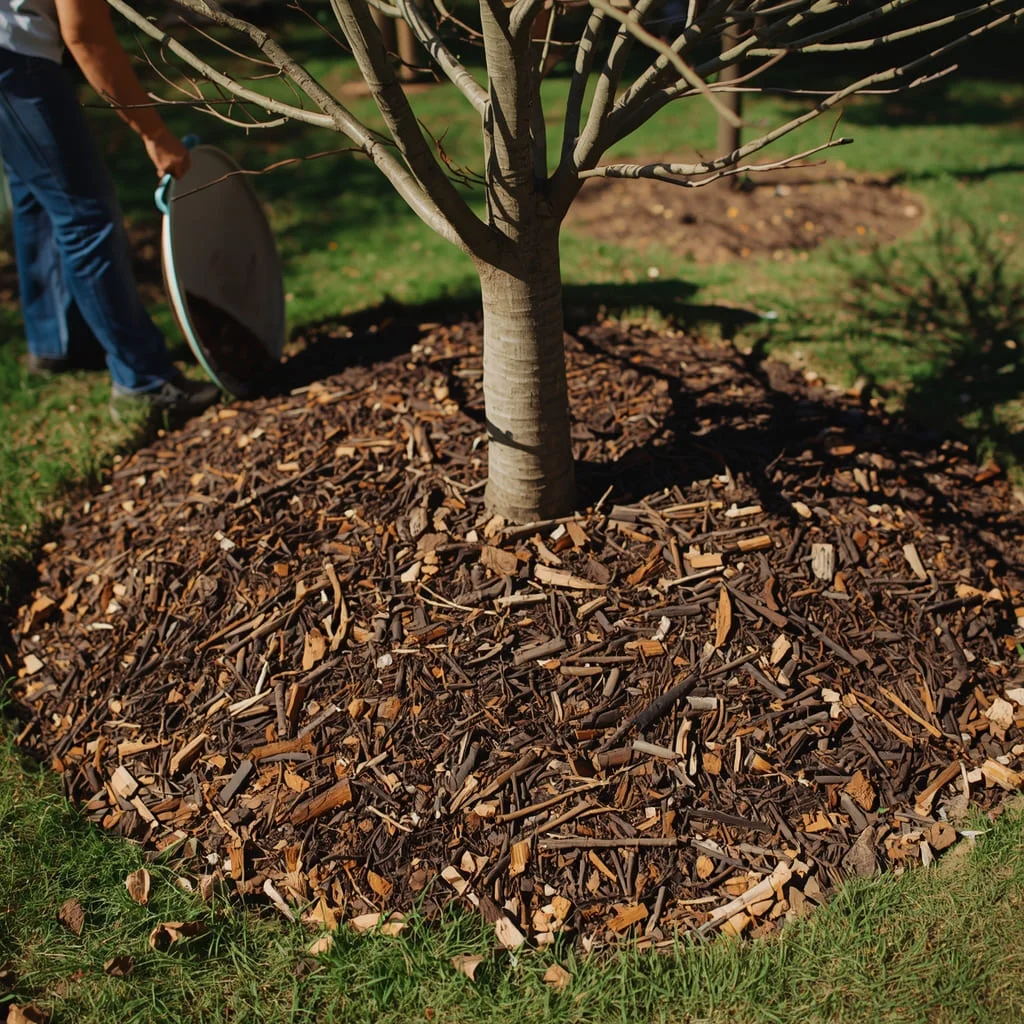
The area around tree trunks — called the drip zone — benefits from 3 to 4 inches of mulch extending out to the drip line of the branches. Never pile mulch directly against the trunk (this is called volcano mulching and it causes rot and pest damage). Keep mulch at least 3 to 6 inches away from the base of the trunk and spread it in a wide, flat ring instead.
Shrubs
Shrubs and hedges do well with 2 to 4 inches of mulch spread over the root zone. Like trees, keep mulch pulled back from the main stems to prevent moisture buildup and rot at the crown. Shredded hardwood bark and pine bark nuggets are popular choices around shrubs because they break down slowly and stay in place well.
Types of Mulch You Can Use
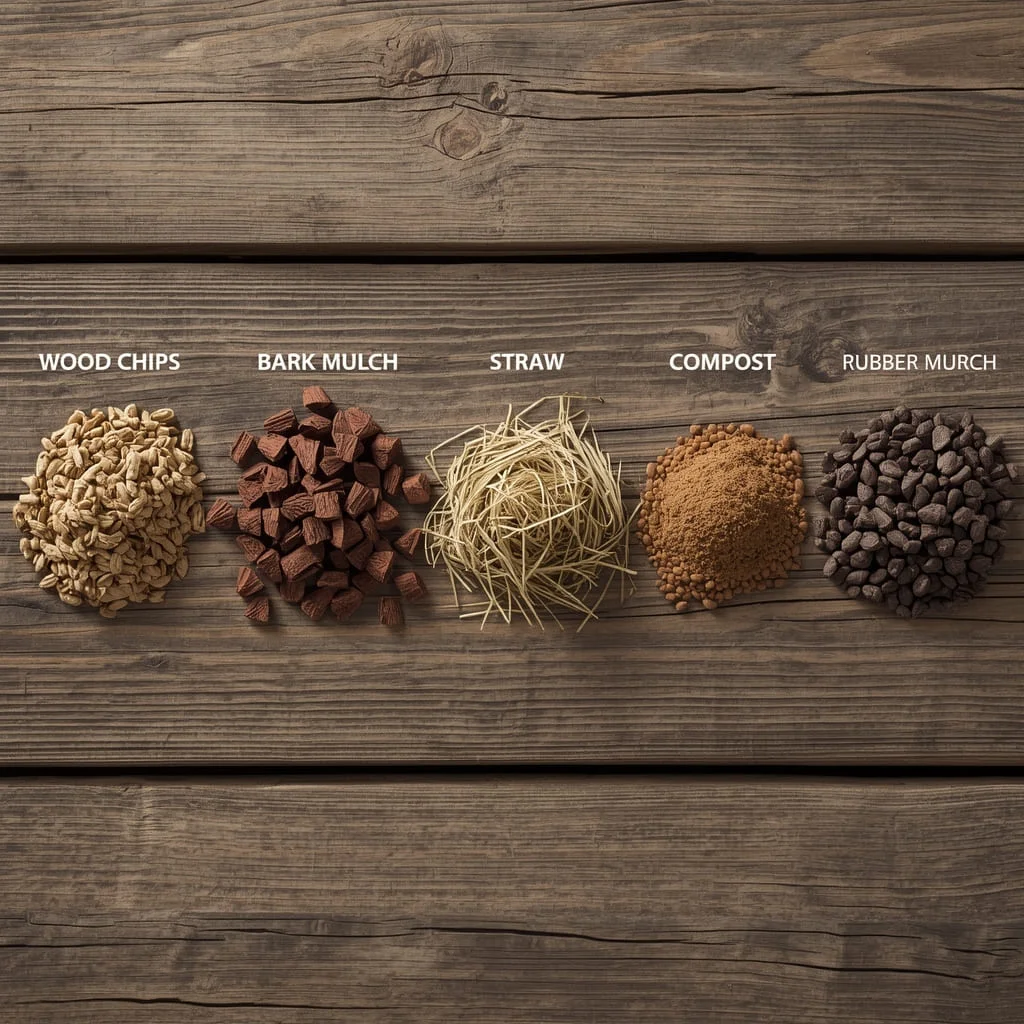
Not all mulch is the same. Different materials have different benefits, drawbacks, costs, and appearances. Here is a quick breakdown of the most common types to help you choose the right one for your project.
Wood Chips
Wood chips are one of the most popular and affordable mulch options. They are available in bulk from tree service companies (sometimes free), landscape suppliers, and garden centers. Wood chips break down slowly, improve soil structure over time, and do an excellent job suppressing weeds.
They are best suited for trees, shrubs, and pathways. Avoid using fresh wood chips directly in vegetable beds as they can temporarily tie up nitrogen in the soil as they decompose.
Bark Mulch
Bark mulch comes in several grades, fine, medium, and large nuggets. It is cleaner looking than raw wood chips and is a popular choice for decorative landscape beds around homes. Bark mulch lasts 1 to 2 years before it breaks down and needs to be replenished.
Large bark nuggets tend to float in heavy rain and are better suited for flat, stable areas. Finely shredded bark stays in place better on slopes and in flower beds.
Straw
Straw is the go-to mulch for vegetable gardens across the USA. It is light, easy to apply, inexpensive, and breaks down over the season to add organic matter to the soil. It is an excellent insulator for soil temperature and does a good job holding moisture around plants like tomatoes, peppers, and squash.
Make sure you buy straw, not hay. Hay contains weed seeds that will sprout throughout your garden. Straw is the dry stalks of grain crops after the seed heads have been removed and should be largely seed-free.
Compost
A 1 to 2 inch layer of finished compost used as mulch is one of the best things you can do for a vegetable or flower garden. It feeds the soil as it breaks down, improves soil structure, and adds beneficial microorganisms. The trade-off is that compost does not suppress weeds as effectively as wood-based mulches and needs to be replenished more often.
Compost mulch works best when layered under a thicker organic mulch like straw or wood chips rather than used alone.
Rubber Mulch
Rubber mulch is made from recycled tires and is a long-lasting option for playgrounds, pathways, and decorative landscape areas where you do not want to replenish mulch every year. It does not break down or decompose, so it provides no soil benefit, but it also lasts almost indefinitely.
Rubber mulch is not recommended for vegetable gardens or food-producing areas because of concerns about chemicals leaching into the soil. It is best suited for non-edible landscape areas and play zones.
Benefits of Mulching Your Garden
Mulching is one of the highest-return things you can do in a garden. A few inches of the right material on the surface of your soil delivers multiple benefits all season long.
Moisture Retention
Mulch acts as a barrier between the soil and the air, dramatically slowing down evaporation. A properly mulched garden bed can retain moisture much longer than bare soil, which means less watering, lower water bills, and plants that stay hydrated even during dry spells. In hot summers across much of the USA, this benefit alone makes mulching worth every penny.
Weed Control
A 2 to 3 inch mulch layer blocks sunlight from reaching weed seeds in the soil, preventing most of them from germinating. The weeds that do push through are usually easy to pull because the soil underneath the mulch stays loose and moist. Mulching consistently is one of the most effective low-effort weed management strategies available to home gardeners.
Soil Temperature Control
Mulch insulates the soil, keeping it cooler in summer heat and warmer during cool nights and early frosts. This extended growing season and stable root environment helps plants stay productive longer. In spring, a light mulch layer over newly planted beds helps the soil warm up faster than bare ground.
Improved Soil Health
Organic mulches like wood chips, straw, and compost break down slowly over time, feeding soil microorganisms and earthworms, improving soil structure, and adding organic matter. Gardens that are mulched consistently every year develop richer, more productive soil without the need for as much added fertilizer.
Common Mulching Mistakes to Avoid
Even experienced gardeners make these mulching errors. Knowing about them in advance saves you time, money, and plant problems down the road.
Volcano mulching around trees — Piling mulch up against tree trunks like a volcano is one of the most damaging things you can do to a tree. It traps moisture against the bark, causes rot, attracts pests, and can eventually kill the tree. Always keep mulch 3 to 6 inches away from the trunk and spread it flat.
Applying mulch too deep — More mulch is not always better. More than 4 inches of mulch can suffocate roots, prevent rainfall from penetrating to the soil, and create an environment where harmful fungi thrive. Stick to the recommended depth for your plant type.
Using fresh wood chips in vegetable beds — Fresh wood chips consume nitrogen as they decompose, temporarily reducing the nitrogen available to your vegetables. Use aged or composted wood chips in veggie beds, or stick with straw or compost.
Not removing old mulch before adding new — Over time, old mulch breaks down and compacts. Adding new mulch on top of a thick layer of old compacted mulch creates a spongy barrier that can prevent water and nutrients from reaching the soil. Rake and fluff old mulch before topping off, or remove and replace it entirely if it has become dense and compacted.
Mulching dry soil — Always water your garden thoroughly before applying mulch. Mulch applied to dry soil locks the dryness in rather than sealing moisture. Water first, then mulch.
Buying the wrong type for the application — Decorative bark nuggets look great but float away in areas with heavy rain or irrigation. Hay introduces weed seeds into your garden. Rubber mulch around edible plants raises chemical concerns. Match the mulch type to the specific application every time.
Free Garden Calculators for Accurate Planting & Harvest Planning
Cubic Yard Calculator Mulch
Raised beds are one of the easiest applications for a mulch calculator because they have straight sides and exact dimensions, no guessing or estimating required. A standard 4×8 raised bed gives you 32 square feet of growing space. At a 2-inch depth, that requires just over 0.2 cubic yards or about 5 to 6 cubic feet of mulch — roughly 3 standard 2-cubic-foot bags.
When mulching raised beds, straw and compost are the most popular choices. Both break down over the season, adding nutrients and organic matter directly to the bed. Keep mulch pulled back slightly from plant stems and refresh the layer mid-season if it thins out from decomposition or weathering.
Because raised beds are self-contained, there is no risk of mulch washing away into surrounding lawn areas. This makes them ideal for experimenting with heavier mulch layers if you are dealing with extreme heat or persistent weed pressure.
Using a Mulch Calculator for Landscaping Projects
Landscaping projects — like mulching around a home’s foundation, along a fence line, or throughout a front yard bed,often involve larger and more irregular areas than a simple garden bed. This is where a mulch yard calculator becomes especially valuable.
For large landscaping areas, break the space into individual rectangles or sections, calculate each section separately, and add all the totals together. Include any irregularly shaped areas by estimating them as close to a rectangle as possible and rounding slightly up to account for the odd shape.
For projects over 3 cubic yards, bulk mulch delivered by the truckload is almost always more cost-effective than bags. Many landscape suppliers in the USA sell mulch by the cubic yard with delivery available. Having an accurate calculator result in hand before calling a supplier ensures you order exactly what you need and negotiate confidently.
Keep in mind that slopes and hills may require slightly more mulch than flat areas because the material can shift and thin out over time as it settles on an angle.
Tips to Apply Mulch Correctly
Getting the right amount of mulch is only half the job. Applying it properly makes a big difference in how well it performs all season long.
- Clear the area first — Remove weeds, old compacted mulch, and debris before applying fresh mulch. Starting clean gives you the best results.
- Water the soil before mulching — Apply mulch to moist soil so you are sealing in moisture rather than locking out water.
- Keep mulch away from stems and trunks — Leave a gap of at least 2 to 3 inches around plant stems and 3 to 6 inches around tree trunks to prevent rot and pest problems.
- Apply in spring and fall — Spring mulching helps retain moisture as temperatures rise. Fall mulching insulates roots heading into winter. Both applications are valuable.
- Use a rake for even spreading — A wide garden rake helps you spread mulch quickly and evenly to a consistent depth across the entire bed.
- Top off annually — Organic mulches break down over time. Check your mulch depth each spring and add material to bring it back to the recommended depth. Usually 1 to 2 inches of fresh mulch is enough to top off an existing layer.
Conclusion
A mulch calculator is one of the simplest and most useful tools any gardener or homeowner can use before starting a mulching project. It takes just a few minutes, requires nothing more than a tape measure and your desired depth, and saves you from the all-too-common experience of buying the wrong amount.
Whether you are mulching a small raised bed, a row of shrubs along your fence line, or a complete front yard landscaping project, the process is the same — measure your area, choose your depth, run the numbers, and buy exactly what you need. The result is a healthier garden, fewer weeds, better moisture retention, and money left in your pocket. To ensure your garden stays healthy and moisture-rich, you can follow these expert recommendations on proper mulch depth and application provided by the University of Missouri Extension
Use a mulch calculator every time you mulch. Your garden, and your budget, will be better for it.
Frequently Asked Questions (FAQ)
To use a mulch calculator, measure the length and width of the area you want to mulch and enter those numbers in feet. Then choose your desired mulch depth in inches. The calculator multiplies length by width by depth and converts the result into cubic feet and cubic yards. It may also tell you how many standard 2-cubic-foot bags to buy. The whole process takes about two minutes.
A standard 4×8 raised bed has 32 square feet of growing space. At a 2-inch depth, you need about 5.3 cubic feet of mulch, which means roughly 3 standard 2-cubic-foot bags. At a 3-inch depth, you need about 8 cubic feet or 4 bags. Always add one extra bag as a buffer to account for uneven application and settling.
For vegetable gardens, a depth of 1 to 2 inches is usually ideal. Vegetables have relatively shallow root systems and need good airflow at the soil surface. Straw is one of the best mulch choices for veggie beds because it is light, easy to work with, and breaks down over the season to improve the soil. Keep mulch a few inches away from plant stems to prevent rot.
For small projects under 2 cubic yards, bagged mulch is usually more convenient and easier to manage. For larger projects over 2 to 3 cubic yards, bulk mulch ordered by the cubic yard and delivered by truck is almost always cheaper per unit. Calculate your total volume first using a mulch calculator, then decide which purchasing method makes more sense for your project size and budget.
Organic mulches like wood chips, bark, and straw break down over time, usually within 1 to 2 years for most types. Check your mulch depth each spring. If it has thinned to less than 1 inch, it is time to top off. Usually adding 1 to 2 inches of fresh mulch over the existing layer is all you need. A full removal and replacement is only necessary if the old mulch has become compacted and is blocking water penetration.