
Free Harvest Yield Calculator
Estimate total harvest yield based on your garden bed size and selected crop.
Harvest Yield Calculator
If you have ever planted a garden and wondered how much food you would actually get from it, you are not alone. Most home gardeners have no idea what to expect until harvest time — and by then it is too late to plan. That is exactly where a harvest yield calculator comes in.
A harvest yield calculator helps you figure out how much food your garden can produce before you even plant a single seed. It takes the guesswork out of gardening and gives you real numbers to work with. Whether you are growing tomatoes in a raised bed or lettuce in a container on your back porch, knowing your expected output helps you plan smarter, waste less, and grow more.
This guide covers everything you need to know about using a harvest yield calculator — what it is, how it works, which crops produce the most, and how to get the best results from your garden space.
What Is a Harvest Yield Calculator?
A harvest yield calculator is a simple tool — either online, in an app, or on paper — that estimates how much food a garden will produce based on the size of the growing space and the type of crops planted.
You enter basic information like your garden dimensions and which vegetables or fruits you are growing. The calculator then gives you an estimated yield — usually in pounds or ounces — based on average production data for each crop. Think of it as a way to plan your garden the same way you would plan a grocery list. Instead of guessing, you get a realistic picture of what your garden can actually deliver.
Who Should Use It?
A harvest yield calculator is useful for just about anyone who grows food. It is especially helpful for:
- Beginner gardeners who are not sure how much to plant
- Home gardeners trying to grow enough food for their family
- Small-space gardeners who need to maximize every square foot
- Market gardeners who need to estimate production before selling
- Anyone trying to reduce grocery bills by growing their own food
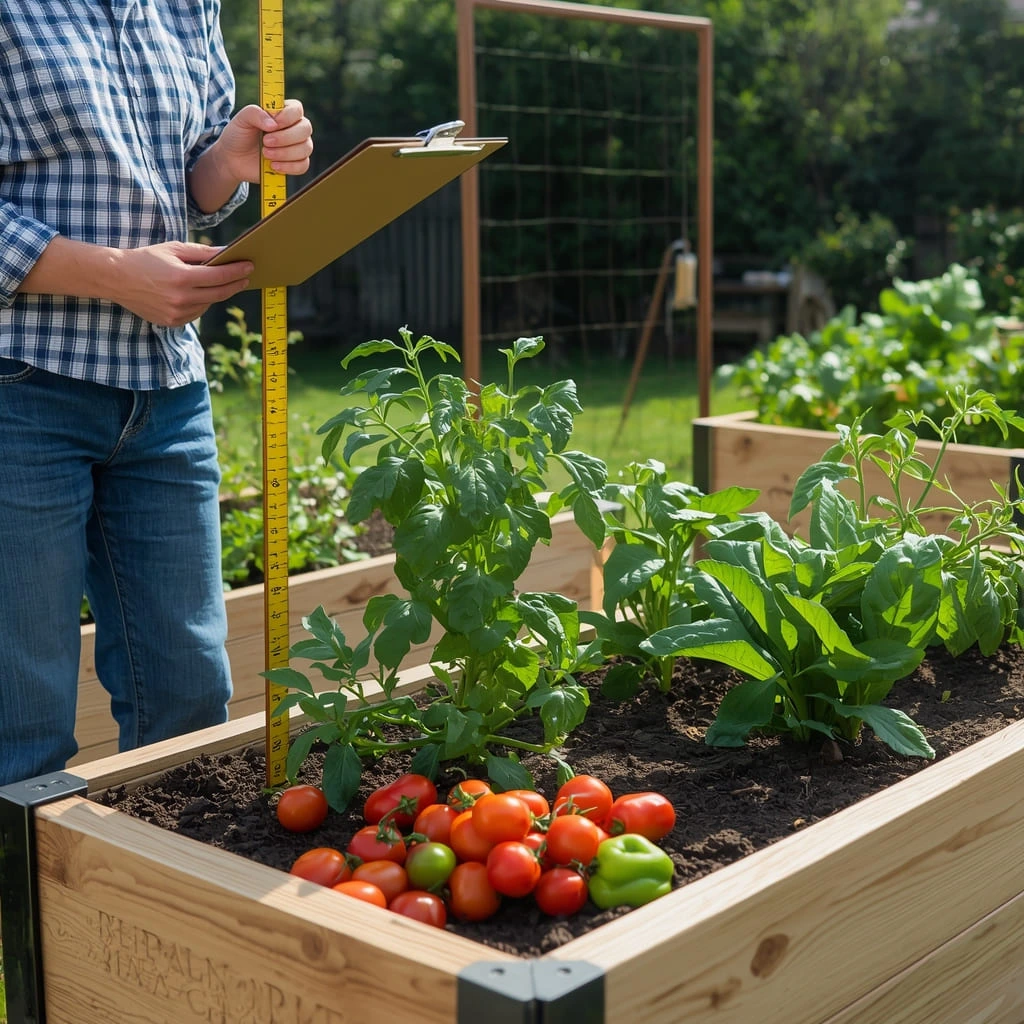
You do not need to be a farming expert or have a huge garden to benefit from using one. Even a simple 4×8 foot raised bed can be calculated to show you exactly how many pounds of vegetables you can expect.
Why Use a Harvest Yield Calculator for Your Garden?
Most people plant a garden based on gut feeling. They buy a few seed packets, find some open soil, and hope for the best. This approach works sometimes — but it often leads to problems like planting too much of one thing, not enough of another, or running out of space before all the seeds go in.
A garden yield calculator fixes all of that. Here is why it is worth using every season.
Saves Time and Space
When you know how much a plant will produce, you can decide exactly how many plants you actually need. If your family eats about 5 pounds of tomatoes a week and one plant produces around 10 to 15 pounds per season, you know you need at least 2 or 3 plants — not 10. This saves you space for other crops and cuts down the time you spend watering and maintaining plants you do not need.
Helps Estimate Food Production
A harvest yield calculator gives you a realistic crop yield estimate so you can plan meals, canning, and food storage around your actual harvest. If you want to make enough tomato sauce to last all winter, you can calculate exactly how many plants and how many square feet you need to make that happen.
Useful for Small and Large Gardens
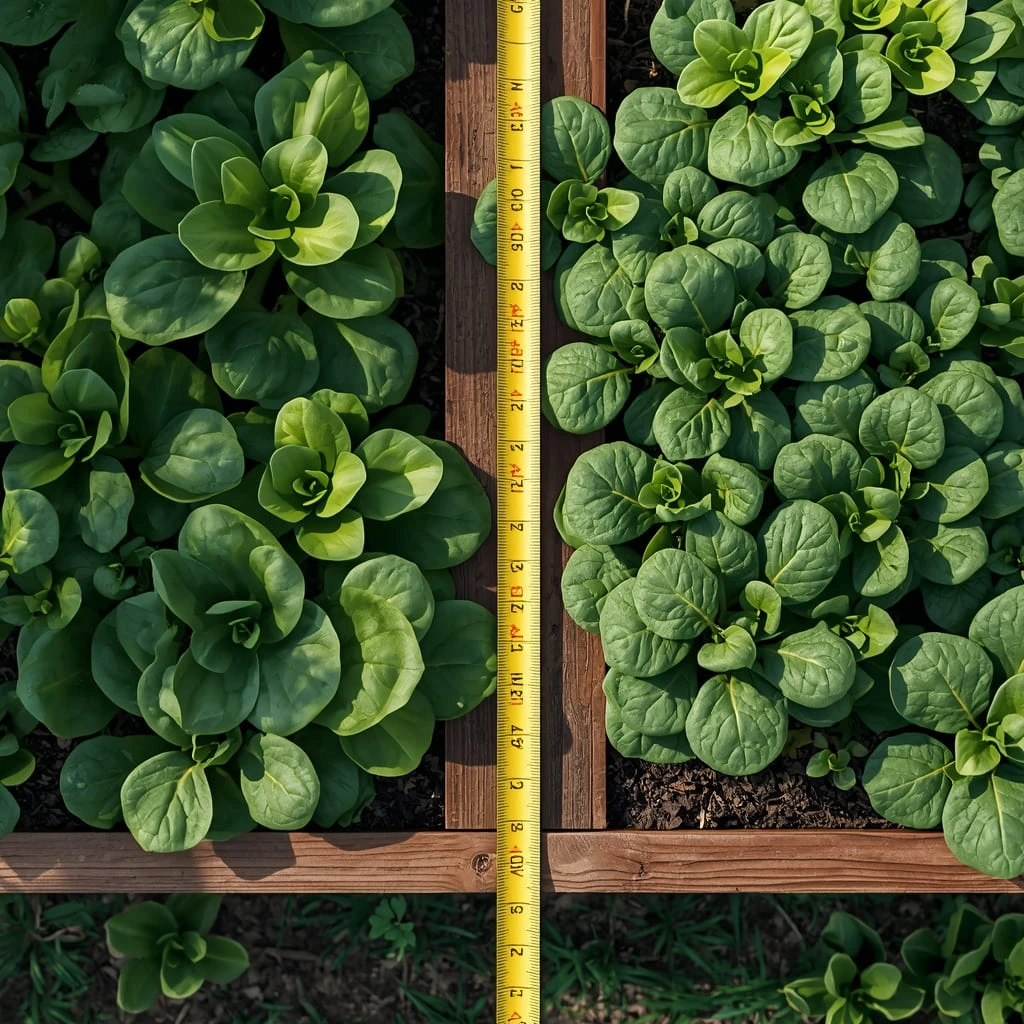
Whether you have a tiny balcony container garden or a full backyard plot, the same calculation principles apply. The calculator scales to any size. A 2×2 container and a 20×50 foot garden both benefit from knowing the expected output per square foot of growing space.
How a Harvest Yield Calculator Works
The math behind a harvest yield calculator is simple. It multiplies the size of your growing space by the average yield per square foot for each crop type. Different crops produce very different amounts per square foot, so the crop selection is just as important as the garden size.
Garden Bed Size Input
The first thing the calculator needs is the size of your growing area. You enter the length and width of your garden bed, container, or plot. The calculator then figures out the total square footage. For example, a bed that is 4 feet wide and 8 feet long gives you 32 square feet of growing space.
Crop Selection
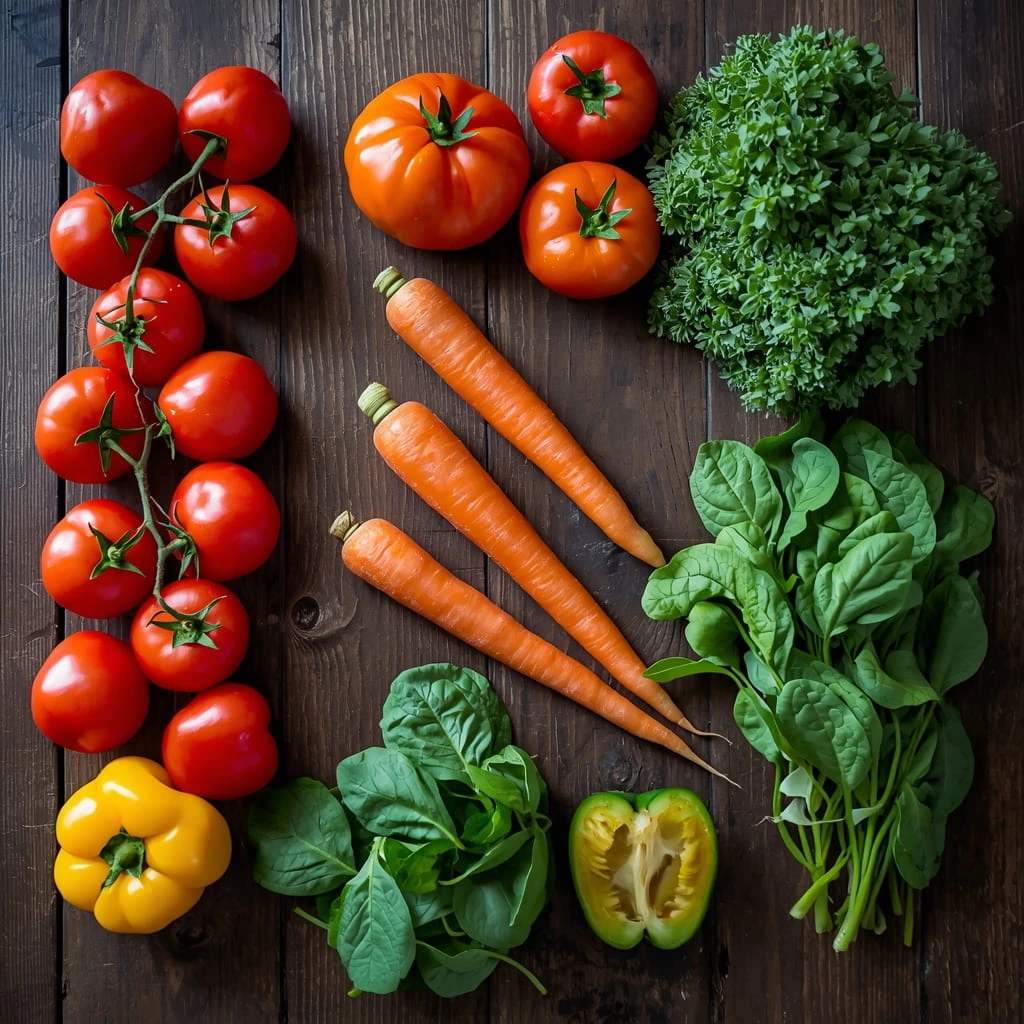
Next, you select the crops you plan to grow. Each crop has a known average yield per square foot based on data from university extension programs, USDA research, and real-world garden records. For instance, tomatoes produce an average of 1 to 2 pounds per square foot while lettuce produces around 0.5 pounds per square foot.
Output Estimate
Once you enter the bed size and crops, the calculator multiplies the square footage by the yield-per-square-foot number for each crop. This gives you an estimated total harvest in pounds. Some advanced calculators also factor in plant spacing, growing season length, and succession planting to give you a more detailed picture.
Information Needed Before Using a Harvest Yield Calculator
Before you sit down with a garden production calculator, gather a few basic pieces of information. Having these ready makes the process quick and straightforward.
Garden Length and Width
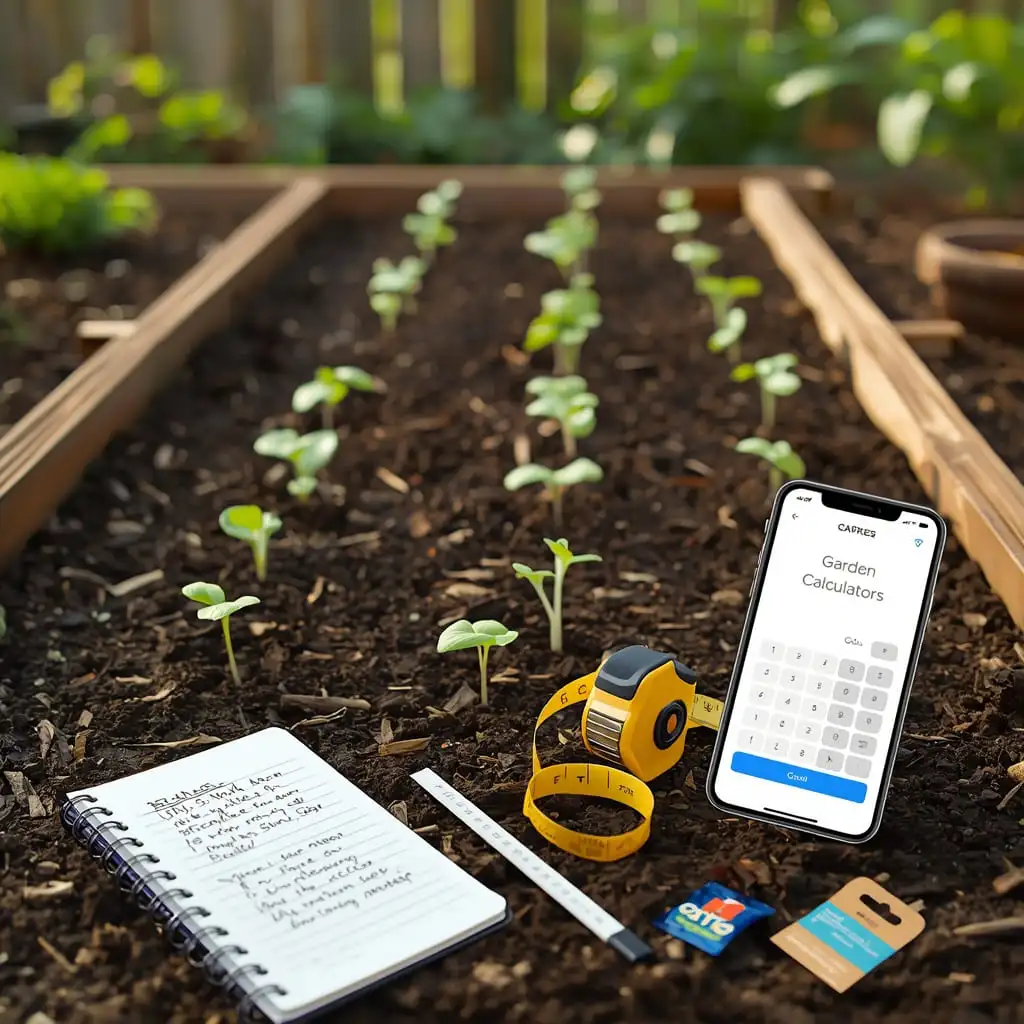
Measure your garden bed, raised bed, or container accurately. Use a tape measure and write down the length and width in feet or meters. If your garden is an irregular shape, break it into rectangles, calculate each section separately, and add them together.
Unit of Measurement
Most harvest yield calculators in the USA work in feet and pounds. Some also offer metric options (meters and kilograms). Make sure you are using the same unit throughout so your results are accurate. If you switch between feet and meters mid-calculation, the numbers will not make sense.
Crop Type
Know exactly which crops you plan to grow and roughly how much space each one will take up. If you are growing multiple crops in one bed — which is very common — you will need to divide the space and calculate each section separately or use a calculator that supports mixed planting.
Other helpful details to have ready include:
- Expected planting date and growing season length
- Whether you are using raised beds, containers, or in-ground soil
- Whether you plan to use succession planting (planting new seeds every few weeks for a continuous harvest)
Step-by-Step Guide to Using a Harvest Yield Calculator
Using a harvest yield calculator is straightforward. Follow these steps and you will have your estimated harvest in just a few minutes.
Step 1: Measure Your Garden Space Use a tape measure to find the length and width of your growing area. Write down the numbers. Multiply length by width to get total square feet. Example: 4 feet x 8 feet = 32 square feet.
Step 2: List the Crops You Plan to Grow Write down every vegetable, fruit, or herb you want to grow this season. Note how much space you plan to give each one. For example, you might give 16 square feet to tomatoes and 16 square feet to lettuce in a 32-square-foot bed.
Step 3: Find the Average Yield Per Square Foot Look up the average yield per square foot for each crop. You can find this information in the estimated yield table further in this article, from your local university extension office, or directly in an online garden yield calculator.
Step 4: Multiply Space by Yield Rate Multiply the square footage for each crop by its average yield per square foot. Example: 16 square feet of tomatoes x 1.5 pounds per square foot = 24 pounds of tomatoes expected.
Step 5: Add Up the Total Add the estimated yields for all your crops together to get your total expected harvest for the season. This number gives you a clear picture of how much food your garden will produce and whether you need to adjust your plan.
Step 6: Adjust Your Plan if Needed If the estimate is lower than what you need, you can increase the space for high-yield crops, add more beds, or choose more productive varieties. If the estimate is more than you need, scale back and use the extra space for variety.
Benefits of Using a Harvest Yield Calculator
Using a garden yield calculator before planting season does more than just give you numbers. It changes how you approach your entire garden from start to finish.
Better Planning
When you know what to expect, you can plan around it. You can schedule harvest time, plan your meals and food storage in advance, and figure out exactly what you need to buy before the season starts. No more running out of canning jars mid-summer or planting way more zucchini than your family could ever eat.
Reduce Waste
One of the most common problems in home gardening is overplanting. When too many plants produce at the same time, a lot of food goes to waste simply because there is more than anyone can eat or preserve. A harvest yield calculator helps you plant the right amount so that almost everything you grow actually gets used.
Improve Productivity
When you track estimated yields against actual yields at the end of the season, you start to learn which crops perform well in your soil, climate, and conditions. Over time, this data helps you make smarter planting decisions and steadily increase your garden’s overall productivity year after year.
FOR MORE CALCULATORS PLEASE CLICK ON THIS LINK
Factors That Affect Garden Yield
A harvest yield calculator gives you an estimate based on averages — but your actual results depend on several real-world factors. Understanding these helps you get closer to the high end of the estimated range.
Soil Quality
Healthy, nutrient-rich soil is the foundation of a productive garden. Plants grown in poor soil struggle to reach their full potential. Adding compost, aged manure, and organic matter before planting gives your crops the nutrients they need to produce at full capacity. A simple soil test from your local garden center can tell you exactly what your soil needs.
Weather
Temperature, sunlight, and rainfall all play a big role in how much your garden produces. A long, warm growing season with steady sunshine is ideal for most vegetables. Late frosts, extended heat waves, or too much rain can all reduce your actual yield below the calculator’s estimate. In the USA, gardeners in USDA hardiness zones 6 through 9 generally get the most consistent results.
Watering
Consistent, deep watering helps plants grow steadily and produce well. Irregular watering — too much one week and too little the next — stresses plants and reduces their yield. Tomatoes, for example, are especially sensitive to inconsistent watering and will crack or develop blossom end rot without a steady moisture supply.
Fertilizer
Plants need nutrients to produce food. Nitrogen supports leafy growth, phosphorus helps flowers and fruit develop, and potassium strengthens roots and overall plant health. A balanced fertilizing routine — especially for heavy feeders like tomatoes and peppers — keeps plants producing at their peak throughout the season.
Plant Spacing
Crowded plants compete for sunlight, water, and nutrients. When plants are too close together, none of them reach their full production potential. Following the recommended spacing for each crop is one of the simplest ways to make sure your actual yield matches or exceeds the calculator’s estimate.
Estimated Yield for Popular Crops
Here is a practical reference table for common home garden crops. These numbers are based on averages from USDA data and university extension research, and they assume good growing conditions.
Tomato Plant Yield Calculation
- Average yield per square foot: 1 to 2 pounds
- Per plant average: 10 to 15 pounds per season
- Example: A 4×4 foot tomato bed (16 sq ft) can produce 16 to 32 pounds of tomatoes
Indeterminate varieties like Beefsteak and Big Boy tend to produce on the higher end of this range when properly supported and fertilized throughout the season.
Lettuce
- Average yield per square foot: 0.4 to 0.5 pounds
- Per plant average: 0.25 to 0.5 pounds per cut
- Example: A 4×4 foot lettuce bed (16 sq ft) can produce 6 to 8 pounds per cutting
Lettuce grown using the cut-and-come-again method can be harvested multiple times from the same plant, significantly increasing your total yield over a season.
Carrots
- Average yield per square foot: 1 to 1.5 pounds
- Per square foot: About 16 carrots depending on variety
- Example: A 2×4 foot carrot bed (8 sq ft) can produce 8 to 12 pounds of carrots
Loose, deep, well-amended soil is critical for carrot production. Rocky or compacted soil produces short, forked, or stunted roots.
Spinach
- Average yield per square foot: 0.4 to 0.6 pounds
- Per plant average: 0.25 to 0.5 pounds
- Example: A 3×4 foot spinach bed (12 sq ft) can produce 5 to 7 pounds per harvest
Like lettuce, spinach can be harvested multiple times using the cut-and-come-again method. It also does well in cooler weather and can be planted in early spring and again in fall for two full harvests per year.
Peppers
- Average yield per square foot: 0.5 to 1 pound
- Per plant average: 5 to 10 pounds per season
- Example: A 4×4 foot pepper bed (16 sq ft) can produce 8 to 16 pounds of peppers
Bell peppers tend to produce on the lower end while hot pepper varieties like jalapeños and cayenne often produce more fruit per plant throughout the season.
Tips to Increase Your Garden Harvest
Getting the most out of your garden space comes down to a few proven strategies. Here are the most effective ways to push your actual yield closer to — or even above — your calculator’s estimate.
- Use succession planting — Instead of planting all your seeds at once, plant a new batch every 2 to 3 weeks. This spreads your harvest over a longer period and prevents feast-or-famine cycles.
- Try companion planting — Certain plants grow better together. Basil near tomatoes, for example, can improve flavor and repel pests. Marigolds near peppers help keep aphids away.
- Prune and support properly — Removing suckers from indeterminate tomatoes and providing strong cages or stakes keeps energy focused on fruit production rather than excessive leafy growth.
- Add compost every season — Replenishing organic matter before each planting season keeps soil nutrient levels high and improves both yield and quality year after year.
- Mulch your beds — A 2 to 3 inch layer of straw or wood chip mulch holds moisture, regulates soil temperature, and reduces weeds — all of which contribute to healthier, more productive plants.
- Water at the base — Watering directly at the soil level rather than overhead keeps leaves dry, reduces disease risk, and ensures water reaches the roots where it is needed most.
- Test and amend your soil — A soil test every 1 to 2 years tells you exactly what nutrients are lacking. Targeted amendments based on test results can dramatically increase your yield.
Common Mistakes to Avoid
Even experienced gardeners make these mistakes. Knowing about them ahead of time can save your harvest.
Overplanting without a plan — Growing more than you can eat, preserve, or give away leads to food going to waste and garden space being used inefficiently. Always calculate your needs before planting.
Ignoring plant spacing — Planting too close together is one of the most common reasons yields fall below expectations. Crowded plants share resources and none of them thrive.
Skipping soil preparation — Planting directly into poor, unimproved soil without adding compost or fertilizer is a recipe for disappointing results. Always prepare the soil before each planting season.
Not tracking actual vs. estimated yield — If you do not write down what your garden actually produced, you have no data to improve from. Keep a simple garden journal and compare your real results to the calculator’s estimate each season.
Watering inconsistently — Skipping watering during hot weeks or overwatering after a rain causes stress that reduces fruit production and quality. Aim for consistent, deep watering on a regular schedule.
Planting at the wrong time — Planting too early when the soil is still cold, or too late when the season is almost over, severely limits what a plant can produce. Always follow recommended planting dates for your USDA hardiness zone.
Using a Harvest Yield Calculator for Raised Beds
Raised beds are one of the most popular ways to grow food in home gardens across the USA, and they work perfectly with a harvest yield calculator. The defined boundaries of a raised bed make it very easy to measure and calculate accurately.
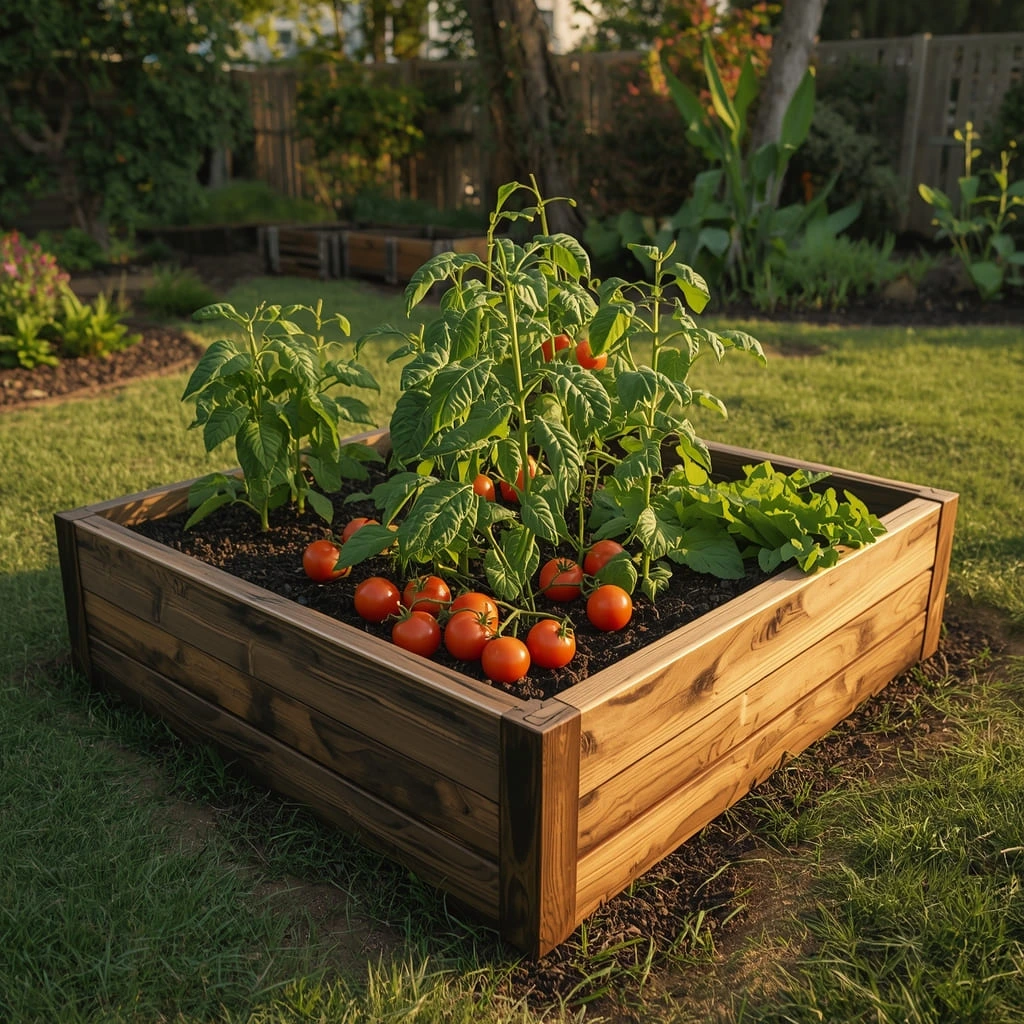
Standard raised beds are typically 4 feet wide (so you can reach the center from either side without stepping in) and anywhere from 4 to 12 feet long. A 4×8 raised bed gives you 32 square feet of growing space — enough to grow a meaningful supply of several different crops.
When using a calculator for raised beds, enter each bed separately if you have multiple beds growing different crops. Raised beds also tend to produce 20 to 30 percent more than in-ground gardens of the same size because the soil is looser, better amended, and drains more effectively. Keep this in mind and adjust your estimates slightly upward if your raised bed soil is well-prepared.
Popular raised bed crop combinations that maximize yield include:
- Tomatoes and basil in one bed, lettuce and spinach in another
- Carrots and radishes together (radishes loosen the soil for carrots)
- Peppers and marigolds to maximize production and repel pests
Using a Harvest Yield Calculator for Container Gardening
Container gardening has become incredibly popular for city dwellers, apartment residents, and anyone with limited outdoor space. The good news is that a harvest yield calculator works just as well for containers as it does for large garden plots.
For containers, measure the diameter of the pot and calculate the surface area, or simply measure the planting area at the top of the container. Most standard 5-gallon buckets have about 0.5 to 0.75 square feet of surface area. A large 15-gallon container pot gives you roughly 1 to 1.5 square feet.
Container yields are generally lower than raised bed or in-ground yields because containers have less soil volume and dry out faster. However, you can narrow the gap by using a quality potting mix, fertilizing regularly, and watering consistently.
Best crops for container growing based on yield per container:
- Cherry tomatoes — 1 plant per 5-gallon pot, 5 to 8 pounds per season
- Lettuce and spinach — Multiple plants per container, 3 to 5 pounds per harvest
- Peppers — 1 plant per 5-gallon pot, 3 to 6 pounds per season
- Herbs — Very high yield per square inch, great use of small containers
- Carrots — Use a deep pot (at least 12 inches), 1 to 2 pounds per container
Conclusion
A harvest yield calculator is one of the most practical tools any home gardener can use. It takes the guesswork out of planting, helps you plan your food supply realistically, and gives you a clear target to work toward each season. Whether you are growing in a backyard plot, a raised bed, or a collection of containers on a balcony, knowing your estimated crop yield before you plant changes everything.
The best part is that using a harvest yield calculator does not require any special skills or knowledge. You just need a tape measure, a list of the crops you want to grow, and a few minutes to run the numbers. The information you get back is worth far more than the time it takes.
Start using one this season — measure your space, pick your crops, and see how much food you can actually produce from the garden you already have. You might be surprised at just how much is possible. To help you plan your garden rows effectively, you can refer to this comprehensive guide on average vegetable yields per foot provided by the University of Nebraska-Lincoln Extension.
Frequently Asked Questions (FAQ)
A harvest yield calculator is a tool that estimates how much food your garden will produce based on the size of your growing area and the type of crops you plant. You enter your garden dimensions and crop types, and the calculator multiplies your square footage by the average yield per square foot for each crop to give you an estimated harvest in pounds.
A harvest yield calculator gives you a solid estimate based on average production data, but your actual results will vary depending on your soil quality, weather, watering habits, and growing practices. Think of the estimate as a realistic target range rather than a guaranteed number. Gardens with well-prepared soil and consistent care typically hit the higher end of the estimated range.
Yes, absolutely. A harvest yield calculator works for any size garden, including containers. Simply measure the planting surface area of your containers and enter that as your garden size. Keep in mind that container yields are generally slightly lower than raised bed or in-ground yields due to limited soil volume and faster drying.
A standard 4×8 raised bed gives you 32 square feet of growing space. Depending on what you grow, you can expect to produce anywhere from 30 to 60 pounds of vegetables per season from a single well-maintained bed. Planting high-yield crops like tomatoes, peppers, and lettuce in combination helps maximize the total output.
Some of the highest-yielding vegetables per square foot include tomatoes (1 to 2 pounds), carrots (1 to 1.5 pounds), and peppers (0.5 to 1 pound). Leafy greens like lettuce and spinach also perform well when grown using the cut-and-come-again method, since you get multiple harvests from the same plants throughout the season.