Mulch Strawberries for Winter: 5 Easy Steps and Best Timing
The time to mulch strawberries for winter is after two or three hard frosts have hardened the plants, usually mid to late November in northern states. Cover them with 4 to 6 inches of clean straw or pine needles, and rake it back in spring when new growth starts.
Strawberries are tougher than they look, but their crowns sit right at the soil surface with nothing over them. University of Minnesota Extension says a crown may be killed at 15°F. In a winter with little snow, an unmulched bed can lose most of its plants.
This guide is built from four real questions sent to university Extension services in Minnesota, Colorado and Ohio, each from a gardener unsure about timing. The experts give dates, depths and materials, and explain what to do when the weather does not cooperate.
Key takeaways
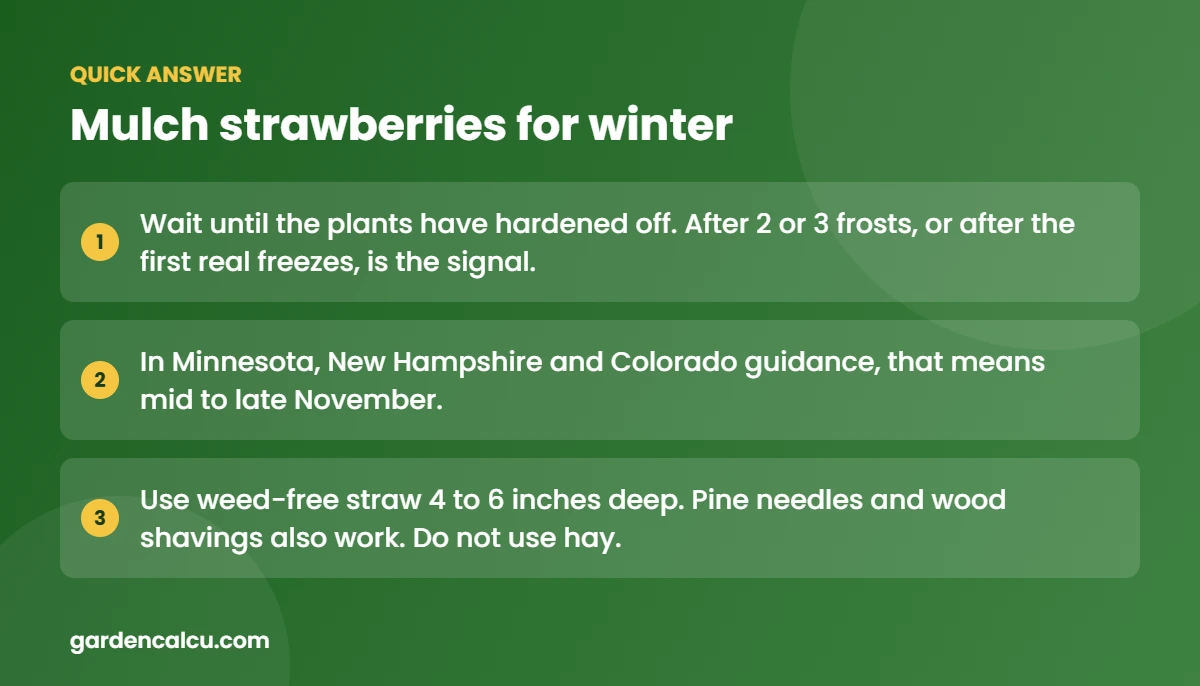
Quick answer to “mulch strawberries for winter” in three points.
Real questions gardeners asked
Gardeners who ask when to mulch strawberries for winter are usually watching a forecast that keeps changing. We read four real questions, from October through January, and summarized each in our own words with a link to the original.

“Mulching strawberries in raised beds”
The question: A gardener had pine needles ready for raised strawberry beds but a warm week was forecast. Mulch now, or wait another week?
What the expert said: Pine needles are a good mulch for strawberries, the volunteer said, and passed on University of New Hampshire guidance. Apply mulch in mid-November to protect plants from extreme cold and from root damage caused by rapid freezing and thawing. Straw is most common, but pine needles, wood shavings or other loose organic material that will not mat also work. Do not use hay, which carries weed seed. Spread it in a fluffy layer 3 to 6 inches deep.
“Protecting strawberry plants”
The question: With no straw available, a gardener had covered a thriving three-year-old patch with old blankets before a December rain, worried about the ground heaving. In a warm spell, she asked when to uncover them.
What the expert said: The University of Minnesota volunteer quoted the Extension guidance. The crown of a strawberry plant may be killed at 15°F, so winter protection is essential. After 2 or 3 frosts have hardened off the plants, cover them with 4 to 6 inches of weed-free straw. Snow is an excellent insulator and is enough where snow cover is reliable. Rake straw away in spring when growth begins, leaving some at the base of the plants as summer mulch.
“Strawberry Winterizing”
The question: A Colorado Springs gardener asked when to winterize strawberries and whether to cut them back first.
What the expert said: The main thing is to protect them with straw mulch or row cover fabric, the expert said. Apply mulch after the initial freezes. Mid to late November would probably be perfect, once cold weather has stopped growth and the soil is cold. Spread it 1 to 2 inches deep over the plants and hold it in place with weighted boards or piles of soil. It stops drying winter winds from pulling moisture out of the plants and prevents root damage from alternate freezing and thawing.
“Mulching Strawberries for Winter”
The question: A first-year grower with everbearing and June-bearing plants had waited for them to harden off, but the fall stayed warm. Then cold and snow arrived together. After rain, some plants were exposed and wet. Was it too late to mulch?
What the expert said: After researching it, the expert said the best option is still to mulch, with wheat straw or pine needles. Use at least six inches and cover the plants thoroughly. The air trapped in the layer buffers the plants from outside temperatures and keeps them above the point of damage.
Why strawberries need winter mulch
The Extension answers name three separate dangers. Mulch deals with all of them.
A thick, loose mulch works like snow. It traps air, keeps the soil temperature steady and shades the ground so it does not thaw on a sunny January afternoon.
Step 1: wait for the plants to harden off
This is the part that worries people, and all four questions were about it. Mulching too early is a real mistake. Plants covered while still growing do not harden properly and can rot under the mulch.
The signals from the answers are consistent.
Source | When to mulch |
|---|---|
University of Minnesota Extension | After 2 or 3 frosts have hardened off the plants |
University of New Hampshire guidance | Mid-November |
Colorado answer, 2024 | After the initial freezes, mid to late November |
Ohio answer, December 2025 | Still worth doing in December after a warm fall |
In practice, watch the plants and the thermometer. When the leaves have flattened against the ground and turned dull or reddish, and you have had several nights in the 20s, they are ready.
If you are unsure of timing in your area, find your first frost date. Mulching time is typically several weeks after it.
What if the weather turns warm again?
The Isanti County gardener faced a warm week right at mulching time. A few mild days after hard frosts do not undo hardening. If the plants have been through their frosts and the calendar says mid-November, go ahead. The bigger risk is a sudden plunge below 15°F with bare crowns.
What if you are late?
The Ohio answer covers it. In December, with snow coming and going, the advice was still to mulch, and to cover thoroughly. Late mulch is better than none, because the hardest cold usually comes in January and February.
Step 2: choose the right mulch
Material | Use it? | Notes |
|---|---|---|
Wheat, oat or barley straw | Yes, first choice | Must be weed-free |
Pine needles | Yes | Recommended in the Minnesota and Ohio answers |
Wood shavings | Yes | Loose, does not mat |
Row cover fabric | Yes | An alternative named by the Colorado expert |
Hay | No | Weed seeds sprout among the plants in spring |
Whole leaves | Risky | Tend to mat down wet and smother crowns |
Old blankets | Emergency only | Hold water and are hard to remove gradually |
The rule behind the table came from the New Hampshire guidance. Use loose organic material that gives cover without matting. Matted, soggy mulch holds water against the crowns and causes rot.
Shredded leaves are better than whole ones but still pack down more than straw. If leaves are what you have, see leaves as mulch and keep the layer fluffy.
Step 3: how deep
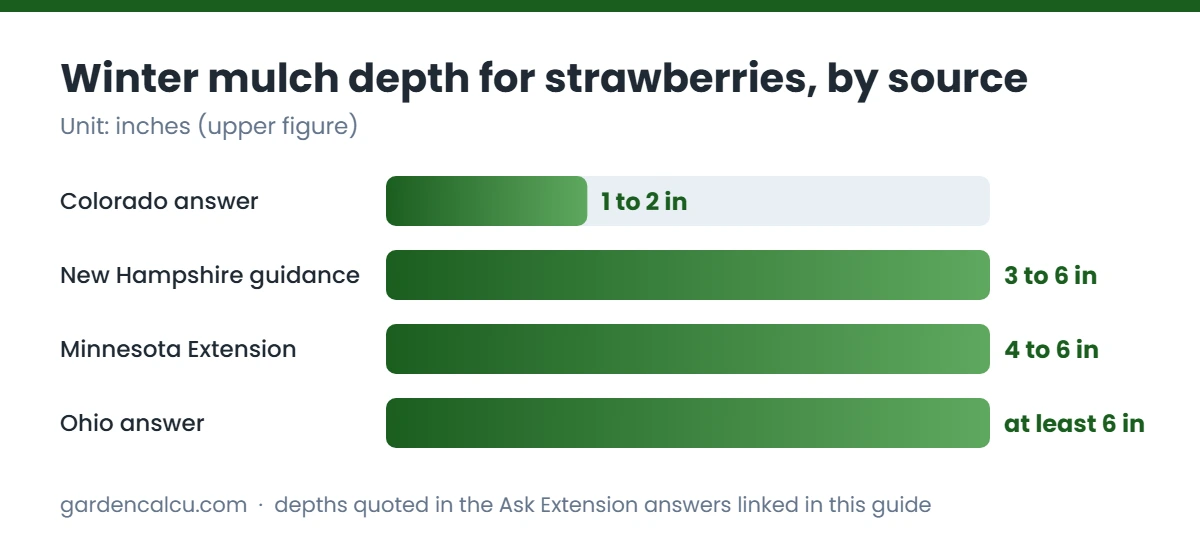
Chart for “mulch strawberries for winter”: mulch depths recommended in four Extension answers.
Three of the four sources agree on 4 to 6 inches, loosely applied. The Colorado figure of 1 to 2 inches is lower, and reflects a climate where the main threats are drying wind and freeze-thaw cycles, with boards or soil holding the mulch against the wind.
For most cold-winter gardens, aim for 4 to 6 inches. It will settle to 2 or 3 inches over winter, which is expected.
How much mulch is that?
Multiply the bed area by the depth in feet. Five inches is 0.42 feet.
Worked example: a 4 x 8 ft strawberry bed is 32 square feet. 32 x 0.42 = 13.3 cubic feet of loose straw or pine needles. A row 2 feet wide and 20 feet long is 40 square feet and needs about 17 cubic feet.
Bed | Area | 4 in deep | 6 in deep |
|---|---|---|---|
4 x 4 ft | 16 sq ft | 5.3 cu ft | 8 cu ft |
4 x 8 ft | 32 sq ft | 10.7 cu ft | 16 cu ft |
2 x 20 ft row | 40 sq ft | 13.3 cu ft | 20 cu ft |
10 x 10 ft patch | 100 sq ft | 33.3 cu ft | 50 cu ft |
Straw is sold compressed and fluffs up a great deal when you shake it out, so one bale goes further than its size suggests. The Mulch Calculator gives the loose volume for any bed and depth.
How much straw for your strawberry bed?
Enter the length and width of the bed and a depth of 4 to 6 inches. The calculator gives the cubic feet of mulch to spread.
Step 4: put it on and keep it on
Raised beds and containers need extra care. Soil in a raised bed freezes from the sides as well as the top, so mulch right to the edges. Pots are colder still and are best moved into an unheated garage or sunk into the ground.
Tip: If snow has already fallen, you can mulch on top of a thin layer of it. Do not wait for it to melt if serious cold is forecast.
Step 5: uncover in spring
The Minnesota guidance gives the timing. Rake straw away in spring when growth begins.
Uncover too early and a late freeze hits tender growth. Too late and leaves yellow under the mulch. The Todd County gardener with blankets faced this choice during a January warm spell. A brief thaw in midwinter is not the signal. New growth in spring is.
For protecting open flowers on a cold spring night, see how to protect plants from frost.
Is snow enough?
Where snow arrives early and stays, yes. University of Minnesota Extension calls snow an excellent insulator and says it is sufficient protection where snow cover is reliable.
The catch is the word reliable. Straw is most valuable, the same guidance says, in late fall or early spring when bitter cold can arrive without snow on the ground. Mulch is insurance against a snowless cold snap.
Watch out: Do not count on snow that melts and returns, as the Ohio grower found. Plants left exposed and wet between snowfalls are at the most risk. Mulch them.
Common mistakes
Frequently asked questions
Short answers to the questions that come up most often.
Quick recap
To mulch strawberries for winter, wait for two or three hard frosts, then cover the plants completely with 4 to 6 inches of clean straw or pine needles. Skip hay, and hold the mulch down where it is windy.
In spring, rake it off the crowns when growth starts and leave the rest between the plants as summer mulch.
Get your exact number
Measure the bed, choose your depth and the calculator shows the cubic feet of mulch you need.
Related guides
Sources
The facts in this guide to “mulch strawberries for winter” come from these university Extension pages and public questions: