Tree Stump Removal: 5 Best Options and What to Do After
For tree stump removal, grinding by a professional is the best option for any stump of real size. The cheapest is to cut the stump at ground level, cover it with soil and let it rot. Either way, the wood chips left behind should come out of the hole before you plant grass or a new tree.
Cutting the tree down is the visible part of the job. The stump is where the follow-up questions start. Can it stay? Will it bring termites? Do Epsom salts work? Can a new tree go in the same spot? Why will grass not grow where the stump was?
This guide is built from seven real questions sent to university Extension services in Oregon, Minnesota, Ohio, Michigan and Maryland. The answers cover every common method and, just as usefully, what to do with the hole afterwards.
Key takeaways
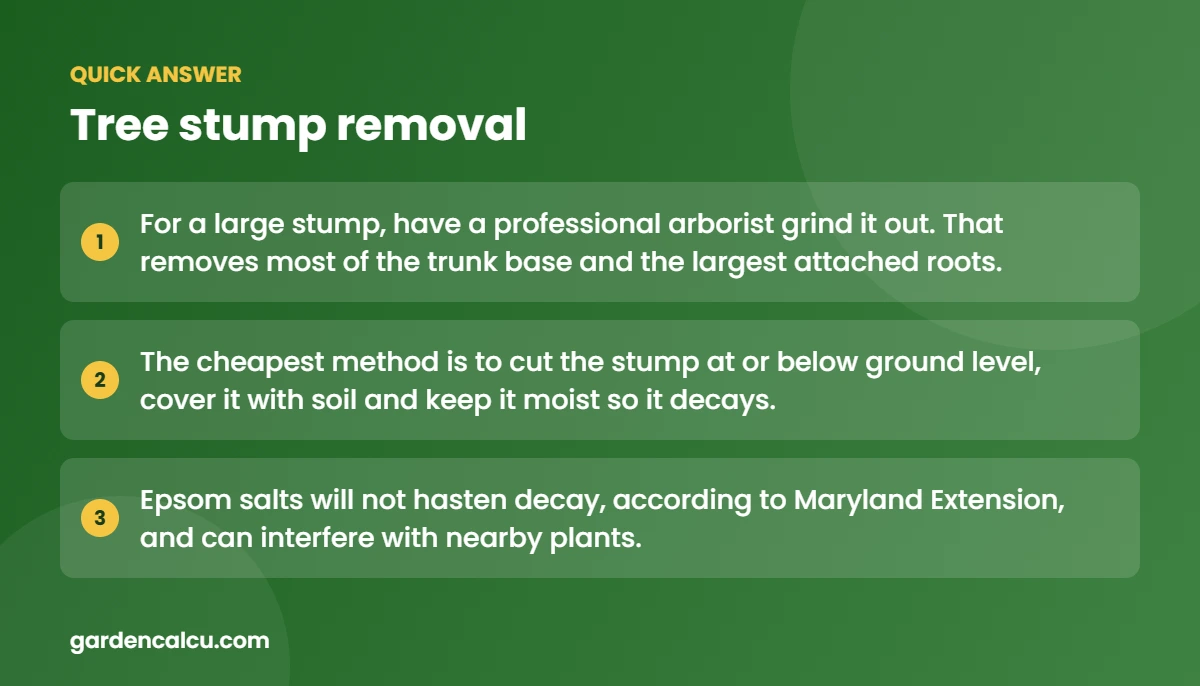
Quick answer to “tree stump removal” in three points.
Real questions gardeners asked
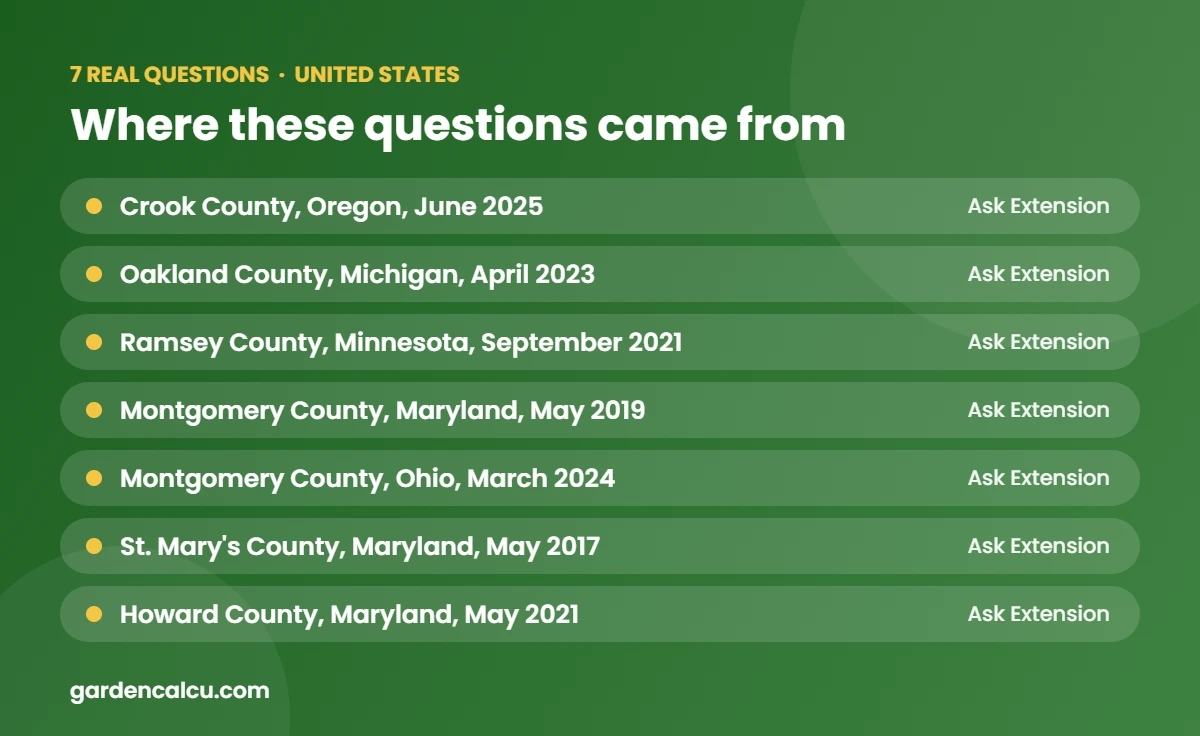
Questions about tree stump removal arrive after the tree crew has left. We read seven real ones sent to Extension experts, covering grinding, home remedies and replanting. Here is each in our own words, with a link to the original.
“How to remove tree stump”
The question: A homeowner with a stump about 16 inches tall asked the best way to get rid of it, how to fill the hole and whether a new tree could go in the same place.
What the expert said: If the stump is of any large diameter, the best bet is to have a professional arborist grind it out, the expert said. Remove all the shavings left behind and fill the hole with topsoil. Replanting a tree in the same spot is not recommended.
“What to do with tree stump underground after tree is removed?”
The question: After removing a 35-foot tree 15 feet from the house, a homeowner asked whether the whole underground stump had to be ground, whether a partly ground stump would attract insects and whether grindings or rocks could go in the hole.
What the expert said: The expert shared a University of Illinois Extension article on removing stumps. The cheapest and easiest method, though not the quickest, is to cut the stump at or below ground level, cover it with soil and keep the soil moist so decay organisms rot the wood. Boring vertical holes first speeds it up. Stumps can also be burned where local rules allow, or dug out, which is hard work for stumps over 15 inches across.
“Stump removal–or leave in place?”
The question: A homeowner planned to cut down four mature Siberian elms and asked if there was any benefit to removing the stumps, or whether leaving them might be good for the soil.
What the expert said: Most people remove stumps for looks or to replant in the same area, the volunteer said. A stump left untouched will rot and may host pests and fungi over time. Because Siberian elm resprouts, stump grinding or complete removal is the best bet for that tree.
“Tree Stumps”
The question: Before removing a dead white ash 40 inches across, a homeowner asked who calls the utility locating service, how deep to grind and whether the hole should be filled with wood chips or topsoil.
What the expert said: Licensed tree companies should check for utilities themselves and should not charge extra for it, the expert said. Grinding removes most of the wood from the trunk base and largest roots, not all roots. For grass, refill the hole with topsoil, since grass wants about a foot of topsoil and chips get in the way. For a new tree, also refill with topsoil, because the grindings need to age. After a year they make good mulch.
“Stump Grinding… Will it Kill the Tree?”
The question: A homeowner having two maple stumps ground 12 inches below grade asked whether to also drill holes and fill them with Epsom salts or herbicide before planting replacement trees.
What the expert said: If you are grinding to 12 inches, why do anything further, the expert asked. That depth eliminates suckering. Simply remove all the ground-up material and add soil. Epsom salts can interfere with plants’ ability to use calcium. Use caution about planting in the same direct area, and shift the new tree slightly from the original site.
“KILL TREE STUMP”
The question: Three trees growing into a foundation had been cut. The stumps were too close to the house for a grinder, and a deck was going over them. The owner asked how to stop regrowth and had heard Epsom salts work.
What the expert said: Remove as much stump as possible, the expert said, because a decaying stump can attract termites. Epsom salts will not hasten decay. Where grinding is impossible, cut the surface or drill holes and paint the fresh cuts, especially at the edges, with a brush-killer herbicide, following the label. Treat any sprouts the same way.
“Ground Tree Stump Remains”
The question: A community landscape committee had two stumps ground and asked what to do with the pile of chips and when a new tree could go in the same space.
What the expert said: The chips can be used as mulch around trees and shrubs or on paths, as long as they are not mixed into the soil. They are not recommended around annuals and vegetables. Try to plant the new tree at least 3 feet from the old stump, and further is better.
Tree stump removal: 5 options compared
Method | Speed | Effort and cost | Best for |
|---|---|---|---|
Professional grinding | Same day | Paid service | Any large stump, or when you want the space back |
Cut low, cover with soil, let it rot | Years | Cheapest and easiest | Stumps you can hide under lawn or a bed |
Digging out | A day of hard work | Free, heavy labor | Small stumps under about 15 inches |
Burning | A day or more | Cheap, needs supervision | Rural lots where open burning is legal |
Leaving it | None | Free | Out-of-the-way spots, species that do not resprout |
The Oregon expert’s advice covers most yards. If the stump is of any large diameter, hire it out.
Option 1: stump grinding
A stump grinder is a spinning cutting wheel that chews the stump into chips, working down below ground level. The Maryland expert explained what it does and does not do. It removes most of the wood from the trunk base and the largest attached roots. It does not remove every root, and some left behind are several inches wide.
Depth is agreed with the contractor. The Ohio homeowner was having stumps ground 12 inches below grade, and the expert said that depth eliminates suckering from the stump.
Before any grinding, underground utilities need to be marked. The Maryland expert said licensed tree companies should arrange this themselves at no extra charge.
For the cost side, the Tree Removal Cost Calculator estimates tree removal with and without stump work, which helps when comparing quotes.
Option 2: cover it and let it rot
This is the method from the University of Illinois article quoted in the Michigan answer.
It can be done at any time of year. It is slow, and the ground will sink as the wood rots, so expect to add soil later.
Option 3: digging
Digging means trenching around the stump, cutting each root with an axe or saw and levering it out. The Illinois article calls it arduous and says stumps larger than 15 inches across are usually too much for the average person.
Option 4: burning
Stumps can be burned out, but the same article warns that a stump burns like green wood because it draws moisture from the soil, so a hot, sustained fire is needed. Check local ordinances first. Open burning is banned in many towns and during dry seasons.
Watch out: Never burn a stump near a building, fence or dry vegetation, and never leave it unattended. Roots can smolder underground.
Option 5: leaving it
The Minnesota homeowner wondered if leaving stumps might help the soil. The answer was mixed. A stump will slowly rot and may host fungi and insects. Whether that matters depends on where it is and what the tree was. Siberian elm, the tree in that question, resprouts from the stump, so leaving it means a thicket of shoots.
Do Epsom salts or chemicals work?
Two homeowners asked about drilling holes and filling them with Epsom salts. Both were told no.
If you use any herbicide, read and follow the label. Some products contain ingredients that can be taken up by the roots of nearby plants.
Will an old stump attract termites?
It can. The Maryland center told the St. Mary’s County homeowner to remove as much stump as possible because a decaying stump can attract termites. That homeowner’s stumps were against the foundation and about to be covered by a deck, which is the worst case.
A stump at the far end of the yard is a much smaller concern than one beside the house. Distance from the building is what matters.
Estimate your tree removal cost
Enter the tree height and details, and the calculator gives a cost range for removal so you can compare quotes that include stump grinding.
After grinding: what to do with the hole
This is the step people skip, and it is why grass fails over old stumps. Grinding leaves a mound of soil mixed with fine wood chips. Four different experts gave the same instruction: take it out.
The reason is the same nitrogen problem described in wood chips in vegetable garden. Fresh chips mixed into soil take up nitrogen as they decay, and they physically block roots. A Maryland answer put it bluntly: fresh wood chips mixed into the planting area are not good enough for root development.
How much topsoil to refill
A ground-out stump leaves a hole a little wider than the stump. As an estimate, picture a round hole about 1 foot wider than the stump and 12 inches deep.
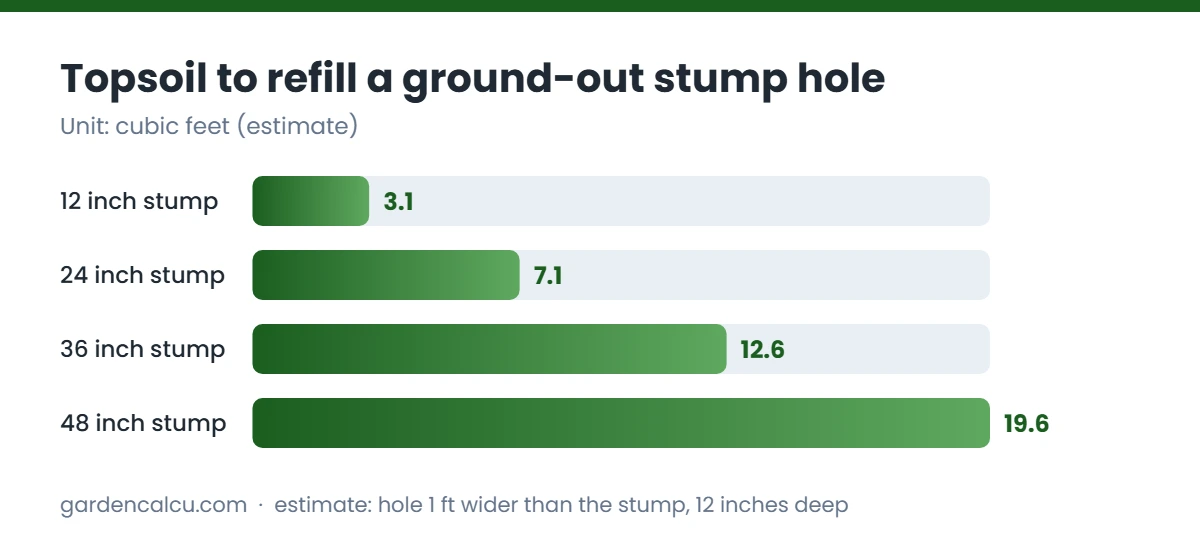
Chart for “tree stump removal”: estimated topsoil needed to refill the hole after grinding, by stump diameter.
Worked example: a 24-inch stump leaves a hole roughly 3 feet across. The volume is 3.14 x 1.5 x 1.5 x 1 = 7.1 cubic feet, or about four 2-cubic-foot bags of topsoil.
What to do with the grindings
Do not throw them away. Two Maryland answers describe good uses.
Can you plant a new tree in the same spot?
Not exactly the same spot. Three experts said so.
The old site is full of decaying roots and chips, and the soil is drier because the remaining roots wick water. Start with a small, container-sized tree that fits between old roots, plant it in clean topsoil and water it well. For timing, see the best time to plant trees.
The Ohio answer about a maple stump also recommended a soil test before replanting, since a big tree has occupied that ground for decades.
Common mistakes
Frequently asked questions
Short answers to the questions that come up most often.
Quick recap
Tree stump removal comes down to grinding for speed or rotting for economy. Skip the Epsom salts, have utilities marked before grinding and stop resprouting species from growing back.
Afterwards, take the chips out, refill with topsoil and plant any new tree at least 3 feet from the old stump. The grindings make good mulch once they have aged.
Get your exact number
Use the calculator to get a cost range for tree removal before you call for quotes.
Related guides
Sources
The facts in this guide to “tree stump removal” come from these university Extension pages and public questions: