Wood Chips in Vegetable Garden: 5 Easy Rules That Work
You can use wood chips in vegetable garden beds as long as they stay on top of the soil. Mixed or tilled into the soil, fresh wood chips tie up nitrogen and stunt vegetables. Spread on the surface as mulch, they do not.
That one distinction settles most of the conflicting advice online. It is also why two gardeners can report opposite results. One mulched the paths and praised wood chips. The other rototilled them in for three years and wrote to Extension that the garden was “a mess”.
This guide is built from six real questions sent to university Extension services in Maryland, Michigan, New Hampshire and Washington, D.C. The experts explain the nitrogen issue in plain terms, where chips belong in a vegetable garden and where a different mulch does a better job.
Key takeaways
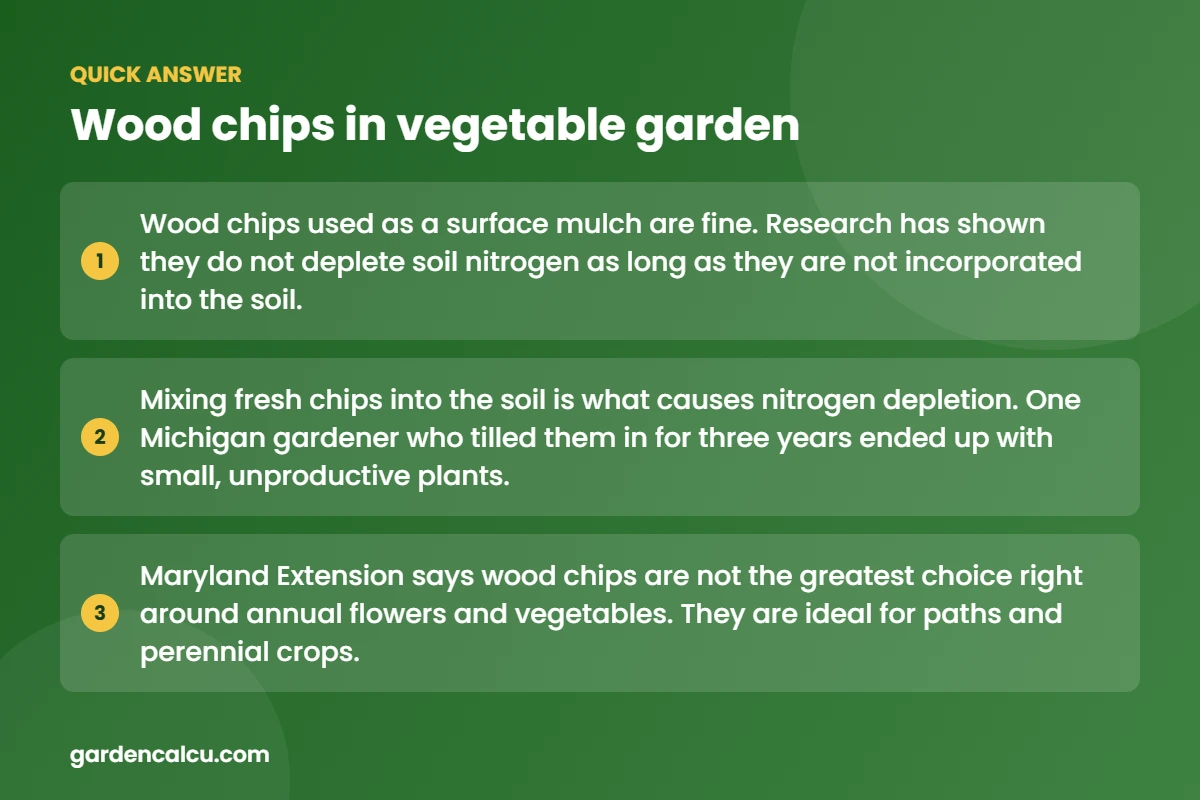
Quick answer to “wood chips in vegetable garden” in three points.
Real questions gardeners asked
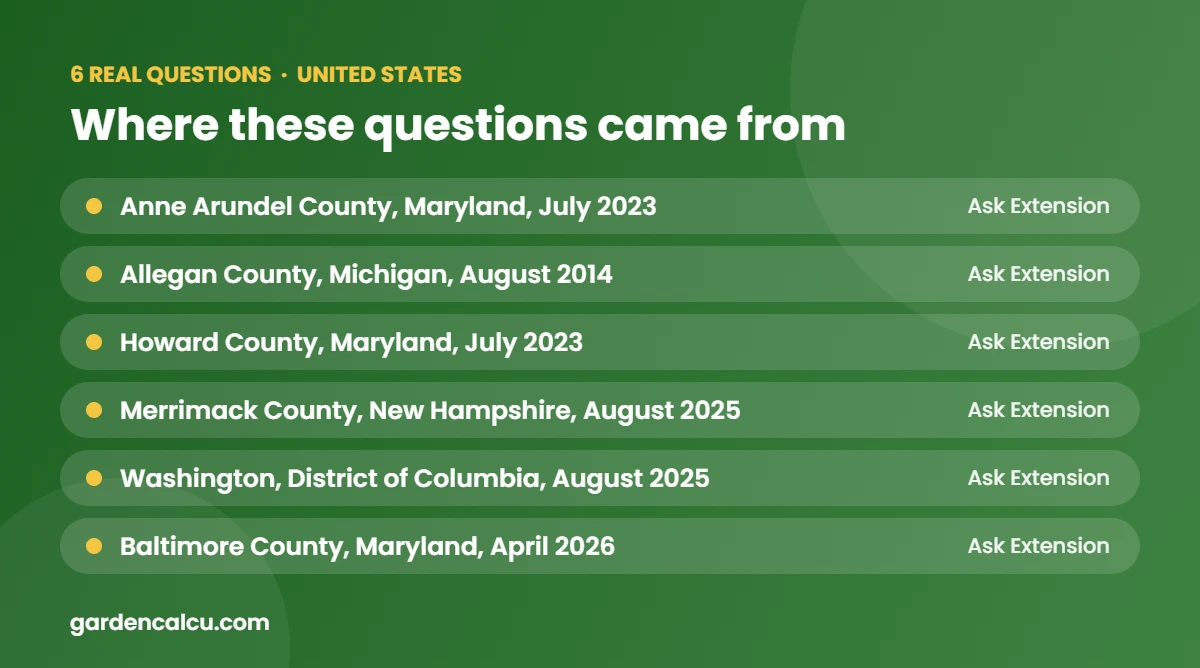
Almost every question about wood chips in vegetable garden beds mentions nitrogen. We read six real ones, from gardeners who were confused before using chips and from one who had already made the mistake. Here is each in our own words, with a link to the original.
“Fresh wood chips as mulch?”
The question: A gardener had read conflicting information about fresh arborist wood chips and asked whether they take enough nitrogen from the soil to threaten plants, and how to correct it.
What the expert said: The University of Maryland Extension expert said more recent research shows that using chips as a top mulch is fine as long as they are not incorporated into the soil. Mixing fresh chips into the soil is what can cause nitrogen depletion.
“rototilled in wood chips, soil a mess”
The question: A gardener had rototilled wood chips into the vegetable garden for three years. The plants were small and produced little.
What the expert said: Bad idea, the expert said. The chips were likely tying up available nitrogen as they decomposed. Step one is to never add more, and the same goes for sawdust. Rake out what chips you can, add compost, leaves or straw in fall and till that in. Then do a soil test in early spring. The soil may recover faster than expected.
“Fresh Pine Chips – safe for mulch?”
The question: A homeowner was about to have several tall pines cut down and asked if the fresh chips were safe as mulch, whether they needed to age and which plants to avoid.
What the expert said: Yes, they are safe to use, the expert said. The old belief was that fresh chips deplete nitrogen as they decompose. We now know they are fine as long as they are just mulch and not mixed into the soil. Wood chips are not the greatest for use around annual flowers and vegetables. Keep mulch to 2 to 4 inches and off trunks.
“Are hardwood chips good as mulch on organic raised beds?”
The question: An organic gardener with raised beds asked whether hardwood chips would be all right as a mulch.
What the expert said: Wood chips can be a good option, the University of New Hampshire Extension expert said. Note that mulches consume nitrogen as they break down, and because wood chips are high in carbon, this may mean adding supplemental nitrogen.
“Mulch”
The question: After a long session of weeding raised beds and ground beds, a gardener asked which mulch to put down to slow the weeds’ return.
What the expert said: Softwood mulches, pine fines, shredded fall leaves and plain arborist wood chips are all practical, the expert said. Suppressing weeds takes a layer just thick enough to block the sun, about 2 to 3 inches. Concerns that arborist chips tie up soil nitrogen were examined in research at Washington State University.
“Best mulch for vegetable bed”
The question: A gardener who had always used inexpensive mini pine bark nuggets read that bark steals nitrogen if it gets turned into the soil, and that some always ends up below the surface.
What the expert said: The expert said the nuggets are not fresh wood chips, so they should not use much nitrogen if slightly mixed in. If it has worked well, keep using it. Vegetables usually need fertilizer anyway, which offsets any shortfall. Pine fines and pine needles are fine too, and weed-free straw from a local garden center is another option.
Do wood chips steal nitrogen? The short science
Wood is mostly carbon and contains very little nitrogen. The fungi and bacteria that break it down need nitrogen to do the work. If they cannot get it from the wood, they take it from whatever is around them.
Where the chips are decides what is “around them”.
So the New Hampshire answer and the Maryland answers do not actually conflict. Chips consume nitrogen as they decompose. On the surface, that happens where it does no harm.
Watch out: Never rototill or dig fresh wood chips or sawdust into a vegetable bed. The Michigan expert’s first instruction was blunt: do not add any more, ever.
The 5 rules for wood chips in vegetable garden beds
Rule 2 and 3: where chips belong
The Howard County answer added a sentence that is easy to miss. Wood chips are not the greatest around annual flowers and vegetables. A second Maryland answer about stump grindings says the same: chips are fine around trees and shrubs and in pathways, and not recommended around annuals and vegetables.
The reason is practical. Annual vegetable beds are dug, planted and replanted several times a year. Every time you plant, some chips get pushed into the soil. That is exactly the worry the Baltimore County gardener raised. Over a few seasons, coarse chips end up mixed in.
Part of the garden | Wood chips? | Better choice |
|---|---|---|
Paths between beds | Yes, ideal | Chips 3 to 4 inches deep |
Fruit trees, berry bushes | Yes | Chips in a wide ring, off the trunk |
Asparagus, rhubarb, perennial herbs | Yes | Chips or shredded leaves |
Tomatoes, peppers, squash (transplants) | Acceptable if kept on top | Straw or shredded leaves |
Carrots, lettuce, beans (direct sown) | Poor fit | Fine compost or grass-free straw after seedlings are up |
Bed surface over winter | Not ideal | Shredded leaves or a cover crop |
For large transplants that stay in place all season, a chip mulch pulled back a few inches from the stem works well. For rows of small seeds, coarse chips get in the way.
Fresh chips, aged chips and bark
People often ask whether chips need to sit for a year first. The Howard County answer says no. Fresh pine chips are safe to use straight from the chipper, as surface mulch.
Tip: Tree crews often give chips away to avoid dump fees. Ask for a load when a crew is working nearby, and say where you want it dropped. A full truckload can be 10 cubic yards or more, so plan where it will go.
How much do you need?
For weed control, the D.C. answer gave 2 to 3 inches, just thick enough to block the sun. Paths can take 3 to 4 inches because nothing is growing there and feet pack it down.
Worked example: two paths, each 2 feet wide and 16 feet long, are 64 square feet in total. At 3 inches deep: 64 x 3 ÷ 12 = 16 cubic feet, which is 0.6 cubic yard.
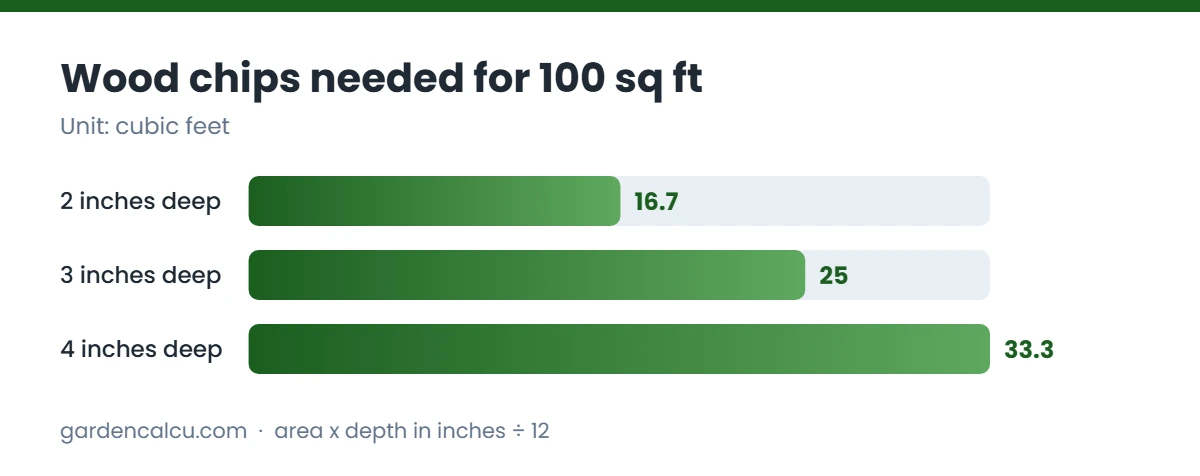
Chart for “wood chips in vegetable garden”: cubic feet of chips to cover 100 square feet at each depth.
Area | 2 in deep | 3 in deep | 4 in deep |
|---|---|---|---|
32 sq ft (one 4 x 8 bed) | 5.3 cu ft | 8 cu ft | 10.7 cu ft |
64 sq ft of path | 10.7 cu ft | 16 cu ft | 21.3 cu ft |
100 sq ft | 16.7 cu ft | 25 cu ft | 33.3 cu ft |
300 sq ft | 50 cu ft (1.9 cu yd) | 75 cu ft (2.8 cu yd) | 100 cu ft (3.7 cu yd) |
The Mulch Calculator gives cubic feet and cubic yards for any area and depth. For the formula itself, see how much mulch do I need.
How many cubic yards of chips?
Enter the area of your paths or beds and the depth. The calculator gives the cubic feet and cubic yards of mulch to order.
What if chips are already in the soil?
The Michigan answer is a recovery plan, and it is encouraging. The expert thought the soil could be brought back faster than the gardener feared.
In the meantime, crops will need extra nitrogen. The New Hampshire and Baltimore answers both point out that supplemental nitrogen offsets what the wood is using. The Fertilizer Calculator helps work out an amount for your bed size.
For how much compost to add, see how much compost to add to garden.
Better mulches for annual vegetables
If wood chips are second best around annual crops, what is first? The Extension answers name several.
All of these break down within a season and can be turned into the bed without harm, which is the real advantage over wood.
Common mistakes
Frequently asked questions
Short answers to the questions that come up most often.
Quick recap
Wood chips in vegetable garden beds are safe when they stay on the surface and harmful when they are tilled in. Use them on paths and around perennial crops, and choose straw, leaves or compost right around annual vegetables.
Keep the layer 2 to 3 inches deep. If chips have already been mixed into the soil, stop adding them, feed the bed with compost and nitrogen and test the soil in spring.
Get your exact number
Measure your paths and beds, pick a depth and the calculator shows the cubic yards of chips to ask for.
Related guides
Sources
The facts in this guide to “wood chips in vegetable garden” come from these university Extension pages and public questions: