How Many Potatoes Per Plant? 2 to 3 Pounds and 6 Easy Tips
How many potatoes per plant can you expect? Cornell Cooperative Extension puts a garden potato plant at 2 to 3 pounds, which is about 5 to 10 medium potatoes. Along a row, that adds up to 20 to 30 pounds for every 10 feet. The University of Maine gives a handy rule from the other direction: 5 pounds of seed potatoes yields about 50 pounds of potatoes.
Those are averages for plants in open ground with a full season. Real harvests vary a lot more than the charts suggest. One Maryland gardener dug a pound of potatoes from five or six plants. Another has grown lush plants in grow bags for years and found nothing bigger than a golf ball underneath.
Both of them wrote to Extension experts, and their questions are below with several others from Colorado, Ohio and Delaware. Together with the university figures, they show what a normal potato yield looks like, how much seed to buy, and what quietly cuts a harvest in half.
Key takeaways
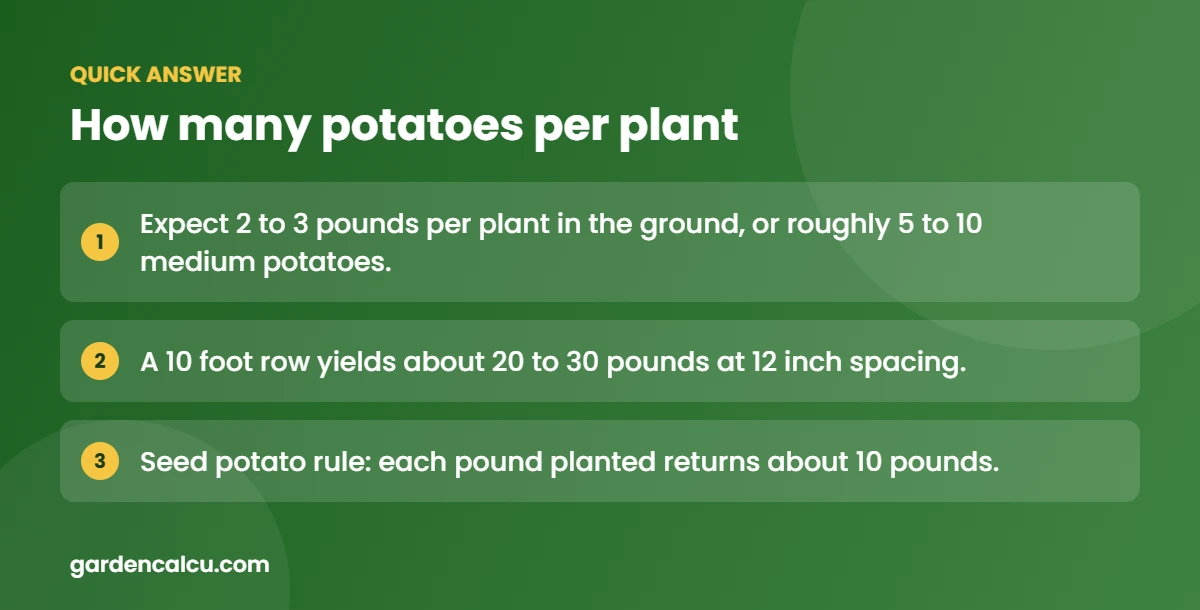
Quick answer to “how many potatoes per plant” in three points.
Real questions gardeners asked
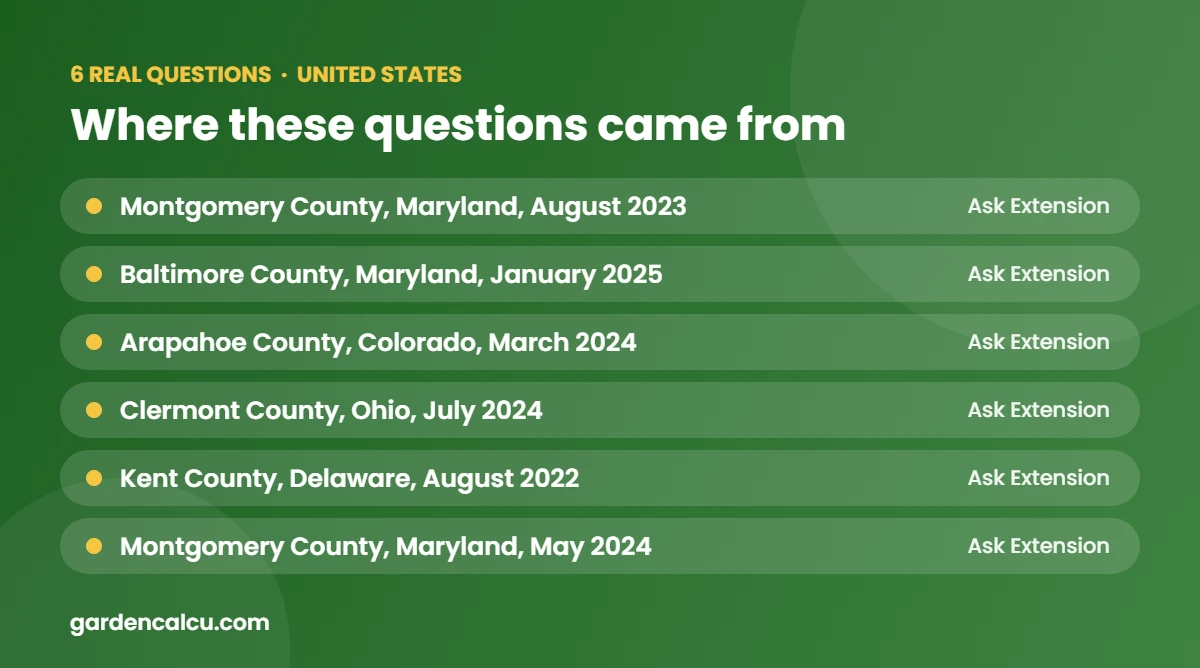
These are real questions sent to Ask Extension, the free service run by US land-grant universities. Each card shows where and when the gardener asked, and links to the full answer.
“One pound from five or six plants”
The question: So far the Red Norland plants started dying back a few weeks ago so I dug them up yesterday and maybe got 1 lb for 5-6 plants. Potatoes were small and not many. I dug up some Yukon Gold plants also yesterday. The plants are still green, but some had died back. I got 1.75 lbs from about 2 plants. Potatoes were good sized.
What the expert said: University of Maryland Extension explained that days to maturity vary by variety, with Red Norland potentially the fastest of the three the gardener grew and Russet the slowest. High heat, which also heats up the soil surface layers, can hamper tuber development. For the Russets, the advice was to wait until the tops die back on their own, and to check size by gently pushing soil aside.
“Poor or no yields in grow bags”
The question: I have tried everything I can think of to get a modest potato yield from grow bags. Every year is the same result. Plant April 1st, beautiful full perfect foliage throughout. Irrigated as needed. No signs of wilt, insect damage. When plants wither the tubers are the size of golf balls or absent. Not worth the work. Any suggestions.
What the expert said: The expert noted that container yields are usually lower than in the ground or a raised bed. For bags, the suggestions were containers under 18 inches tall, a blend of compost and potting soil, consistent moisture, and fertilizing every two weeks with a complete liquid fertilizer. A University of Maryland project averaged about 3 pounds per bag.
“Potatoes in 15 gallon pots”
The question: When is it safe to plant potatoes in containers in Aurora? I plan to try to grow potatoes in 15 gallon nursery pots and would like to start them as early as possible.
What the expert said: The expert advised planting once temperatures are consistently above 50 degrees F in the early morning. Large seed potatoes can be cut into pieces with 1 to 3 eyes and dried for 48 hours. Place 3 to 4 pieces per 15 gallon container in 6 to 8 inches of soil and add soil as the stems grow, with 6 to 8 hours of sun and fertilizer every two weeks.
“Is it too late to plant potatoes?”
The question: Is it too late to plant potatoes in Cincinnati?
What the expert said: A Master Gardener Volunteer answered that potatoes usually take about 90 to 135 days to mature before you harvest them. Planted in mid-July, they would be ready from mid-October into November, but potatoes do not respond well to frost and the average first frost there is about October 20.
“Plants died back, then sprouted again”
The question: Our first try at growing potatoes in the garden. They never did flower but plants were dying back so was ready to harvest at 100 days. This is when I realized they are sprouting new growth. Did we miss a window of opportunity to harvest?
What the expert said: The expert thought the problem was environmental. Heat sprouts can occur in periods of extreme heat that break the tubers’ normal dormancy. Potatoes should be harvested when the foliage dies back, and they prefer cool, moist soil. The advice was to harvest now and inspect the tubers closely for greening.
“Too late to start seed potatoes in late May?”
The question: I wanted to order some seed potatoes but figured it might be too late to start them. Is that the case?
What the expert said: University of Maryland Extension replied that potato foliage grows best during relatively cool weather. Sprouted seed potatoes planted right away could still work, though yield may be somewhat reduced. The expert also cautioned against planting supermarket potatoes because of disease risk.
How Many Potatoes Per Plant: The Published Numbers
Source | Figure | What it means |
|---|---|---|
Cornell Cooperative Extension | 2 to 3 lb per plant | White potatoes, 12 inches apart in rows 36 inches apart |
Cornell Cooperative Extension | 20 to 30 lb per 10 ft of row | Ten plants per 10 feet |
University of Maine Cooperative Extension | 5 lb of seed potatoes yields 50 lb | A 10 to 1 return |
University of Maine Cooperative Extension | 2 lb of seed potatoes per 10 ft of row | Plants 8 to 12 inches apart |
University of Maryland project | About 3 lb per grow bag | Several seed pieces per bag |
The two university charts agree with each other. Two pounds of seed per 10 feet of row, at Maine’s 10 to 1 return, is 20 pounds. That is the bottom of Cornell’s 20 to 30 pound range for the same length of row.
A medium potato weighs around 5 to 6 ounces, so 2 to 3 pounds per plant is roughly 5 to 10 medium potatoes. In practice a plant gives a mix: two or three large tubers, a few medium ones and a handful of small ones.
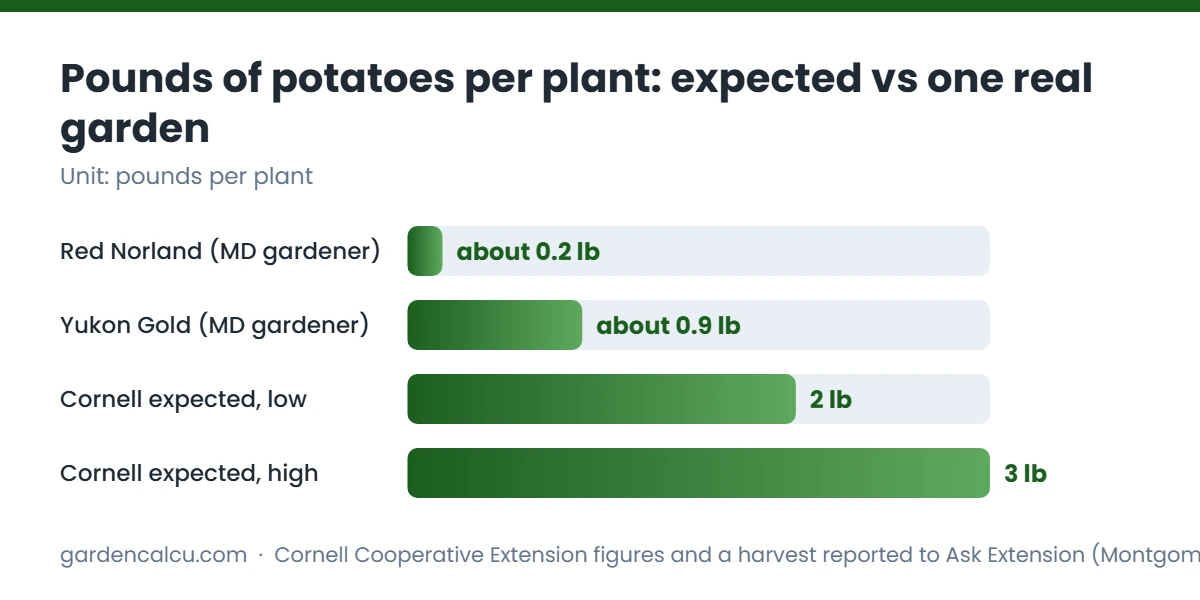
Expected yield per potato plant from Cornell Cooperative Extension, beside the harvest one Maryland gardener reported to Ask Extension in August 2023.
The chart sets those expected figures beside the Montgomery County gardener’s real harvest. The Yukon Golds, at 1.75 pounds from about two plants, came in a little under a pound each. The Red Norlands gave about a pound from five or six plants. Both were well short of 2 to 3 pounds, and the reasons, covered below, are common ones.
How Many Seed Potatoes to Buy
Maine’s rule makes planning easy. Decide how many pounds you want to harvest and divide by ten.
You want to harvest | Seed potatoes to buy | Row length at 2 lb per 10 ft |
|---|---|---|
20 lb | 2 lb | 10 ft |
50 lb | 5 lb | 25 ft |
100 lb | 10 lb | 50 ft |
200 lb | 20 lb | 100 ft |
You do not plant seed potatoes whole unless they are small. The Colorado expert explained that large ones can be cut into pieces with 1 to 3 eyes each and left to dry for 48 hours before planting. Each piece becomes one plant.
Buy certified seed potatoes. The Maryland expert cautioned against planting supermarket potatoes because of disease risk. Grocery potatoes are also often treated to slow sprouting.
Tip: A 4 by 8 foot raised bed fits two rows of eight plants at 12 inch spacing. At Cornell’s 2 to 3 pounds each, that is roughly 32 to 48 pounds from about 3 pounds of seed.
Spacing, Depth and What They Do to Yield
Spacing trades size against number. The University of Maine chart gives 8 to 12 inches between plants, in rows 30 to 36 inches apart, with seed pieces set 4 to 6 inches deep. Cornell uses 12 inches in rows 36 inches apart.
Use the Plant Spacing Calculator to see how many seed pieces your bed or row will hold.
How Long Until Harvest?
The Ohio answer gives the range: potatoes usually take about 90 to 135 days to mature. Early varieties sit at the short end and Russets at the long end. In the Maryland answer, Yukon Gold was described as having a shorter days-to-maturity period than Russet, with Red Norland potentially the fastest of the three.
Timing drives yield in two ways. Plant too late and the crop runs into heat or frost. The July planting in Ohio would have matured around or after the first frost, and the late May planting in Maryland came with a warning that yield may be somewhat reduced. Dig too early and the tubers have not finished filling out.
The signal to wait for is the same in every answer: the tops. The Delaware expert said potatoes should be harvested when the foliage dies back. The Maryland expert said to wait until the tops die back on their own.
6 Easy Ways to Get More Potatoes Per Plant
Estimate Your Potato Harvest
Enter your row length or number of plants. The free Harvest Yield Calculator estimates how many pounds of potatoes to expect, so you know how much seed to buy.
Why So Few Potatoes? Common Causes
What you see | Likely cause | What the experts said |
|---|---|---|
Lush tops, golf-ball tubers in bags | Container limits, heat in the root zone, uneven feeding | Container yields are usually lower; fertilize every two weeks, keep moisture consistent |
Small potatoes and few of them | Dug too soon, or heat during tuber formation | High heat can hamper tuber development |
Plants die back, then resprout | Heat sprouts after extreme heat | Harvest now and check for greening |
Low yield from a late planting | Season too short or too hot | Yield may be somewhat reduced |
Rotting or stunted plants | Disease from non-certified seed | Avoid supermarket potatoes |
Heat comes up again and again. Potatoes are a cool-season crop, and a hot early summer is hard on them. The Oregon planting answer gives the detail: the optimal range for tuber formation is when temperatures are in the 50 to 60 degree range. That is why the Baltimore County gardener’s April 1 planting in dark grow bags may have struggled. A bag in full sun heats up far more than open ground.
Watch out: Lots of green growth is not a sign of a good crop. Heavy nitrogen feeding grows leaves at the expense of tubers. Choose a fertilizer where the first number is not the biggest. See what do fertilizer numbers mean.
Potatoes in Containers and Grow Bags
Bags and pots are popular because they need no digging and fit on a patio. Go in with honest expectations. The Maryland expert’s first point to the frustrated grow bag gardener was that container yields are usually lower than in-ground or raised bed yields, and the university’s own project averaged about 3 pounds per bag.
If a bag gives 3 pounds from three or four seed pieces, that is about a pound per plant, well under the 2 to 3 pounds expected in the ground. For serious quantities, a raised bed is the better tool. See how deep should a raised bed be.
How Many Potato Plants Per Person?
There is no official figure, but the math is simple once you know your yield. If you want about 50 pounds of storage potatoes for a household, Maine’s rule says 5 pounds of seed, which Cornell’s numbers translate to roughly 17 to 25 plants in about 20 to 25 feet of row. For a few meals of new potatoes, a single 4 by 8 foot bed is plenty.
Growing other storage crops too? See when to harvest sweet potatoes, a different plant with very different rules, and how many tomatoes per plant for the same kind of planning math.
Frequently asked questions
Short answers to the questions that come up most often.
Quick recap
The answer to how many potatoes per plant is 2 to 3 pounds in open ground, or about 5 to 10 medium potatoes, with 20 to 30 pounds from every 10 feet of row. For planning, remember Maine’s rule: each pound of seed potatoes returns about ten.
To reach those numbers, plant early in cool weather, give the plants full sun and steady moisture, keep the soil cool with mulch, and wait for the tops to die back before you dig. Expect less from bags and pots, and choose a raised bed or a row if you want potatoes by the bushel.
Get your exact number
Estimate your potato harvest in pounds with the free Harvest Yield Calculator.
Related guides
Sources
The facts in this guide to “how many potatoes per plant” come from these university Extension pages and public questions: