Cardboard to Kill Grass: 6 Easy Sheet Mulching Steps
Using cardboard to kill grass is a proven way to turn lawn into garden without digging or herbicide. Lay plain cardboard over the mown grass, overlap every edge by a foot, soak it, cover it with several inches of mulch and wait. It takes several months for the grass underneath to die.
The method is called sheet mulching, and its strength is also its limit. It is cheap, clean and easy, but it is not quick. Most of the disappointment comes from expecting to plant a week later, or from gaps that let grass creep back through.
This guide is built from five real questions sent to university Extension services in Michigan, Oregon, Minnesota and Ohio. The experts explain how to lay it properly, whether cardboard harms soil, how long to wait and where the method should not be used.
Key takeaways
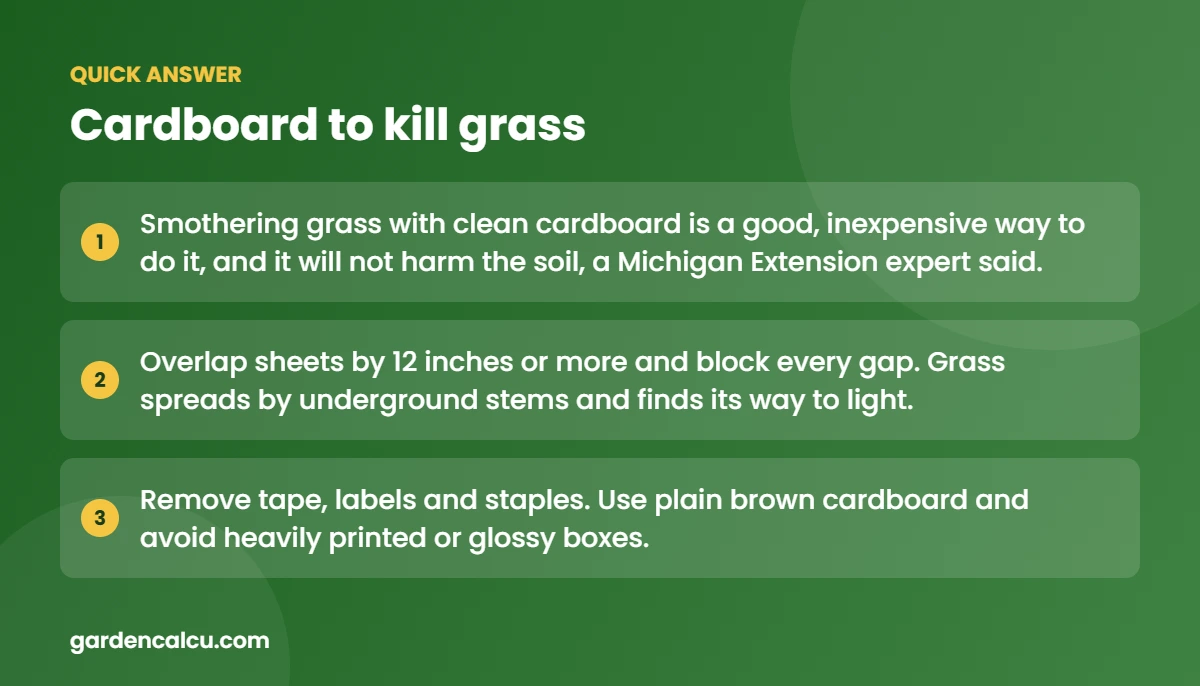
Quick answer to “cardboard to kill grass” in three points.
Real questions gardeners asked
People consider cardboard to kill grass when they want a new bed and do not want to rent a sod cutter or spray. We read five real questions about the method and the experts’ replies. Here is each in our own words, with a link to the original.
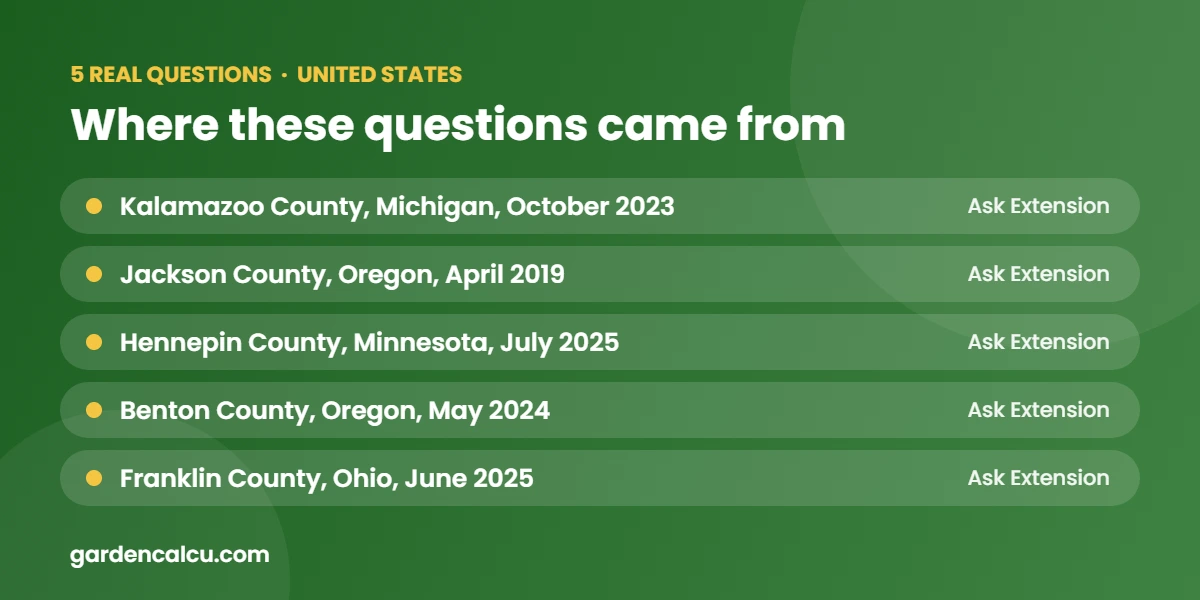
“Does deteriorating cardboard harm soil”
The question: A gardener was killing grass without chemicals by laying large pieces of cardboard and covering them with mulched grass and compost, planning to leave it over winter. Does cardboard contain anything that harms soil?
What the expert said: Smothering grass with clean cardboard is a good, inexpensive, clean way to do it and it will not harm the soil, the expert said. Take out staples, remove tape and labels, use multiple layers and overlap the seams before covering with mulch. Be patient, since it takes several months to kill the grass. Consider planting right through the mulch and cardboard in spring.
“killing lawn with cardboard”
The question: A gardener planning raised vegetable beds on lawn had heard from a friend that neighbors who used cardboard ended up with rats, and asked for help.
What the expert said: You can use cardboard to kill the lawn, the expert said. Cover the grass thoroughly, overlapping the cardboard by 12 inches or more and blocking gaps left by box flaps, because grass is terrific at finding its way to light. Top it with several inches of organic matter such as wood chips, leaves, compost or straw, and soak both layers. The expert is not a fan of weed barrier fabric under raised beds, since it also keeps out worms.
“Sheet Mulching”
The question: A homeowner planned to sheet mulch lawn with cardboard, add 3 inches of garden soil and 3 inches of mulch on top, and plant perennials, fruit and vegetables.
What the expert said: That is not how it works, the Master Gardener said. The cardboard kills the grass over time, but it has to break down before soil is added and worked in. To plant right away, remove the sod with a sod cutter instead. Otherwise leave the mulch in place until next year and set some pots on top for now.
“Cardboard as Mulch in Vegetable Beds”
The question: A gardener asked whether glues and dyes in cardboard could leach into the soil of a vegetable plot and taint the food.
What the expert said: The expert found no research indicating that toxins from cardboard used as a weed suppressor would taint soil or plants. If concerned, cut off the glued corner sections and avoid cardboard with colored ink other than black. A Washington State University article concludes that paper and cardboard sheet mulches can work in annual beds if properly maintained, but are not appropriate for permanent ornamental landscapes.
“Preparing the ground for raised beds”
The question: A couple preparing ground for raised beds did not like the look of cardboard on the lawn and worried that tilling the grass in would spread weeds.
What the expert said: Cardboard would be invisible as soon as the beds and soil are in place, the volunteer pointed out. She had used cardboard and mulch for a season to kill grass and weeds before planting vegetables and native plants. For vegetable beds, she would avoid chemicals because of questions about residue.
How cardboard kills grass
Grass needs light. Cardboard blocks it completely. Without light the grass cannot make food, uses up its reserves and dies. The roots and blades then rot where they are, which feeds the soil. Worms move in under the damp cardboard and do the mixing for you.
The cardboard itself softens and breaks down over several months. By then the job is done, and you are left with dead sod under a layer of mulch.
Does cardboard harm the soil?
Two experts answered this directly. The Michigan expert said clean cardboard will not harm the soil. The Oregon expert found no research showing toxins from cardboard tainting soil or plants.
Cardboard | Use it? |
|---|---|
Plain brown corrugated boxes | Yes |
Boxes with black printing | Yes |
Boxes with heavy colored inks | Avoid if you are concerned |
Glossy, waxed or plastic-coated cardboard | No |
Tape, labels, staples | Remove |
Glued corner seams | Cut off if you are concerned |
Appliance and bicycle boxes are ideal because they are large and plain. Fewer seams means fewer places for grass to escape.
Using cardboard to kill grass: 6 steps
The overlap is the step that decides success. The Oregon expert said grass spreads by rhizomes and is terrific at finding a way to the light. A 2-inch gap between sheets becomes a green stripe within weeks.
Tip: Extend the cardboard 6 to 12 inches beyond the edge of the planned bed. Lawn grass creeps in from the sides, and a clean edge or a shallow trench stops it.
How much mulch to cover it
Mulch holds the cardboard down, keeps it damp so it breaks down, and hides it. The Oregon answer said several inches.
Worked example: a new bed 10 x 10 ft is 100 square feet. At 4 inches of wood chips: 100 x 4 ÷ 12 = 33.3 cubic feet, or 1.23 cubic yards.
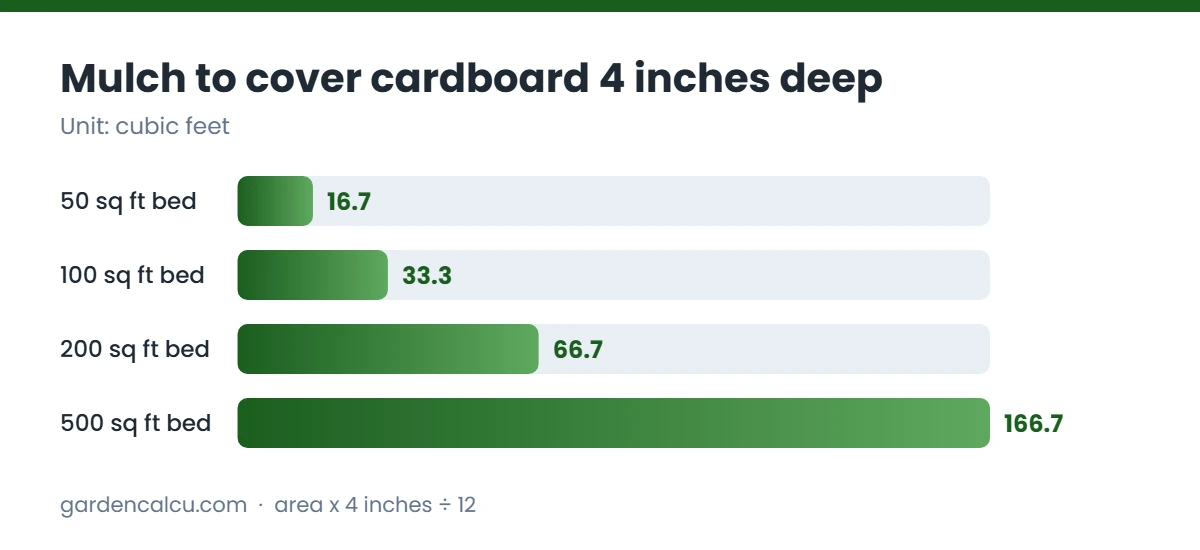
Chart for “cardboard to kill grass”: cubic feet of mulch needed to cover the cardboard 4 inches deep.
New bed area | 3 in of mulch | 4 in of mulch | Cardboard needed (with overlap) |
|---|---|---|---|
50 sq ft | 12.5 cu ft | 16.7 cu ft | About 65 sq ft |
100 sq ft | 25 cu ft | 33.3 cu ft (1.2 cu yd) | About 130 sq ft |
200 sq ft | 50 cu ft | 66.7 cu ft (2.5 cu yd) | About 260 sq ft |
500 sq ft | 125 cu ft | 166.7 cu ft (6.2 cu yd) | About 650 sq ft |
The cardboard figure allows about 30 percent extra for overlaps. The Mulch Calculator gives cubic feet and cubic yards for any area and depth. Free arborist chips are a good choice for this job. See wood chips in vegetable garden for where they belong afterwards, and leaves as mulch for a fall alternative.
How long does it take, and when can you plant?
The Michigan expert said several months. The Ohio volunteer left hers for a season. Timing depends on the grass, the temperature and how well the cardboard was sealed.
When you lay it | When to plant |
|---|---|
Fall | The following spring. This is the easiest schedule. |
Early spring | Late summer or fall for perennials and shrubs |
Summer | The following spring |
Fall is ideal. The Kalamazoo gardener laid cardboard in October to sit over winter, and the expert suggested planting straight through it in spring. By then the cardboard is soft enough to cut with a trowel.
Can you plant right away?
The Minnesota answer is the caution here. The homeowner wanted to put soil on the cardboard and plant immediately. The Master Gardener said that is not how it works. The grass has to die and the cardboard break down first.
Cardboard under raised beds
Two answers cover this. An Oregon expert in a separate question about starting raised beds recommended cardboard under the frame when building over grass or weeds, and the Ohio volunteer noted it becomes invisible once the bed is filled.
Use cardboard, not landscape fabric. The Jackson County expert is not a fan of weed barrier under raised beds because it keeps worms out. Cardboard smothers the grass and then disappears, leaving the bed open to the soil below. See how deep should a raised bed be for why that matters.
How much mulch for your new bed?
Enter the size of the area you are covering and a depth of 3 to 4 inches. The calculator gives the cubic feet and cubic yards of mulch.
Where sheet mulching is not the right tool
The Benton County answer cites a Washington State University review that is skeptical of paper sheet mulches in some settings.
The lesson is to use cardboard as a one-time tool for killing grass, not as a permanent weed barrier. Once the grass is dead, maintain the bed with mulch alone.
Watch out: Tough perennial weeds such as bindweed, quackgrass and Bermuda grass often survive one layer of cardboard. Use a double layer with generous overlaps, extend the edges and be ready to dig out survivors.
Will cardboard attract rats or termites?
The Oregon gardener had heard a rumor about rats. The expert did not treat it as a reason to avoid the method and went on to explain how to do it properly.
Rodents are drawn to food and shelter. Flat, wet cardboard under mulch offers little of either. Stacks of dry boxes, loose straw bales and compost with kitchen scraps are far more attractive. Keep the cardboard flat and soaked, and do not bury food waste in the mulch.
If termites are common where you live, keep any wood or paper mulch a foot or more away from the house foundation, as you would with ordinary mulch.
Common mistakes
Frequently asked questions
Short answers to the questions that come up most often.
Quick recap
Cardboard to kill grass works when it is plain, overlapped by a foot, soaked and buried under 3 to 4 inches of mulch. Lay it in fall and plant through it in spring.
Use it once to clear the ground, not as a permanent barrier, and choose a sod cutter or a filled raised bed if you need to plant straight away.
Get your exact number
Measure the new bed, choose your mulch depth and the calculator shows the cubic yards to order.
Related guides
Sources
The facts in this guide to “cardboard to kill grass” come from these university Extension pages and public questions: