When to Prune Trees: Best Months and 5 Rules by Species
When to prune trees: during the dormant season, after the leaves have dropped and before new growth starts. Late winter is the safest choice for most trees. Oaks must only be pruned in winter because of oak wilt, and dead branches can come off at any time of year.
Timing matters because every cut is a wound. Made at the wrong time, it invites disease, pushes out tender growth that freezes or simply drips sap for weeks. The right month depends on the species, which is why a single rule never quite fits.
This guide is built from six real questions sent to university Extension services in Michigan and Minnesota. The experts agree on the dormant season and differ slightly on fall, and their answers by species make a practical calendar.
Key takeaways
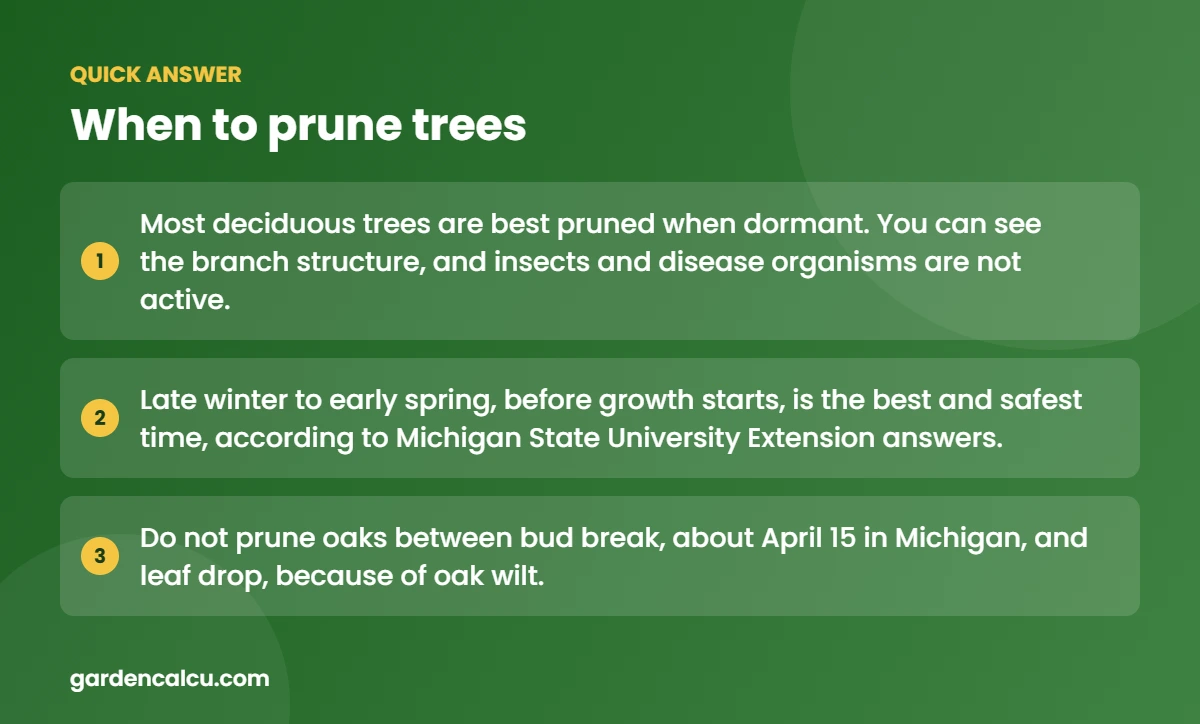
Quick answer to “when to prune trees” in three points.
Real questions gardeners asked
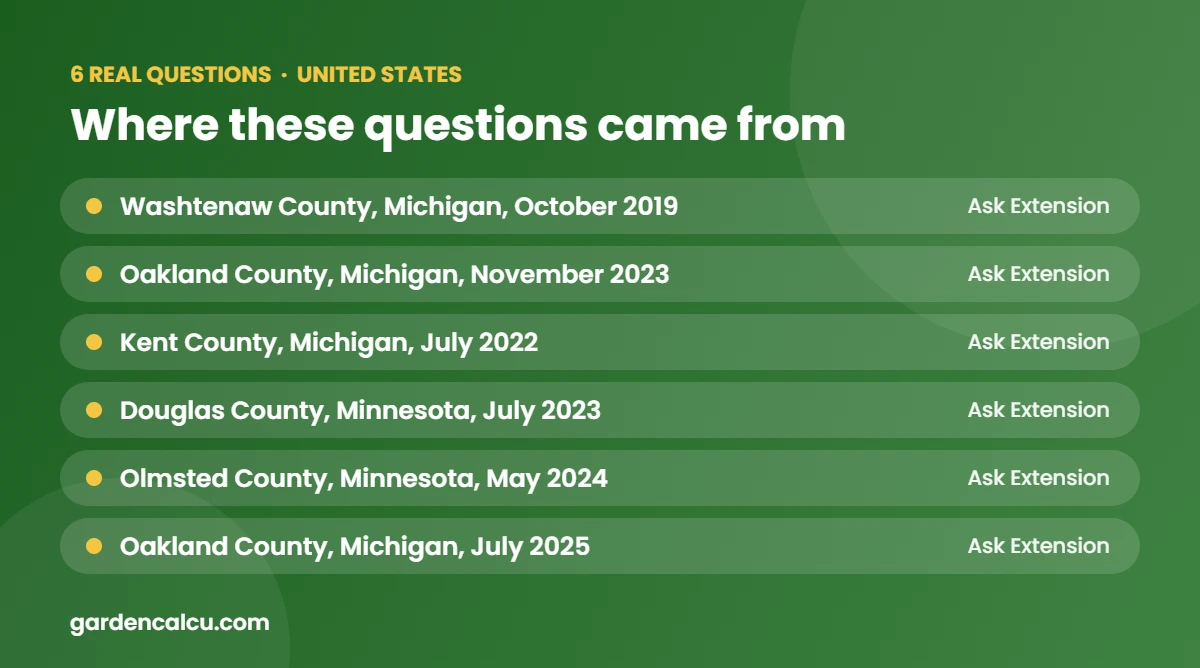
People ask when to prune trees in July with a saw already in hand, and again in November when the leaves are down. We read six real questions from both seasons and the replies. Here is each one in our own words, with a link to the original.
“When to Trim Trees”
The question: A homeowner asked the best time of year to trim six kinds of tree: oak, maple, locust, concolor fir, white pine and Norway spruce.
What the expert said: Because of oak wilt, oaks should not be pruned between bud break, around April 15, and leaf drop, the expert said. Prune them when dormant, in winter. Maples bleed sap if pruned in late winter or early spring, so pruning can be put off until summer, avoiding early summer when new growth is tender. Honey locust also oozes sap, so major trimming is best in late spring, summer or fall. Dead branches can come off any time of year.
“Oak Tree Trimming”
The question: A homeowner asked in early November whether it was all right to trim oak trees now.
What the expert said: Fall is not a good time to prune trees, the expert said. The best and safest time for any tree is late winter to early spring, when pathogens are mostly dormant and disease risk is lower. That is even more critical for oaks, because the risk of oak wilt transmission is lowest then. Pruning in fall also stimulates new growth that is vulnerable to freezing.
“ideal time to prune maple tree.”
The question: A homeowner needed to remove some maple branches about 2 inches thick and asked the best time, and whether mid-summer pruning would harm the tree.
What the expert said: The ideal time would be fall to early winter, the expert said. Most deciduous trees should be pruned in late fall to winter, when the branch structure is easy to see and most insects and disease organisms are not active. Late spring and summer are usually not good times, because pathogens are present and wounds close more slowly. Pruned in late winter, maples may bleed sap, which is unsightly but does not harm the tree.
“Trimming Trees – Mainly Maple”
The question: On a wooded lot, a homeowner wanted to take off lower maple branches for airflow and the view, and asked whether to do it in July or wait for fall or winter.
What the expert said: Most pruning is done in late winter while trees are dormant and bare, the volunteer said. But the maples could be pruned in July. He would not wait until August, because pruning stimulates new growth, and growth made in late summer and fall often does not harden off for winter. Cut at the trunk but leave the branch collar. Do not prune apple, oak or honey locust at that time of year.
“Pruning in Late Fall/Early Winter”
The question: A reader of the University of Minnesota pruning guide asked whether late fall and early winter are almost as good as late winter.
What the expert said: Yes, late fall and early winter are good times to prune trees and shrubs, the volunteer said. Winter pruning lets the plant recover while dormant. Prune on a mild, dry day, and avoid pruning when the temperature drops below 25°F, since plants are more brittle in the cold.
“Cutting Back Trees in Summer”
The question: A condo owner asked whether trees could be cut back in mid-July.
What the expert said: Timing depends on the purpose and the type of tree, the Master Gardener said. Generally, tree pruning is best during the dormant season, particularly for oaks, though there are times when pruning at other seasons is appropriate. She asked what kind of tree it was and what the goal was.
Why the dormant season is best
The Michigan answers give three reasons, and they apply to nearly every deciduous tree.
Late spring and summer cuts close more slowly and are exposed to pathogens for longer, as the Kent County answer explained.
Rule 1: late winter is the safest all-round choice
There is one point where the answers differ, and it is worth being honest about it. Two Michigan answers say late fall to winter. Two others say fall is not a good time and late winter to early spring is best. A Minnesota answer says both late fall and late winter are good.
The disagreement is about early and mid fall. Pruning then can stimulate new growth that has no time to harden before freezing weather. Once trees are fully dormant, the risk is gone.
Period | Verdict | Why |
|---|---|---|
Early to mid fall, leaves still on or just dropping | Avoid | May push tender growth before winter |
Late fall to early winter, fully dormant | Good | Structure visible, pathogens inactive |
Late winter to early spring, before bud break | Best | Lowest disease risk, wounds seal as growth begins |
Spring, as leaves emerge | Avoid | Tree is using its reserves, bark tears easily |
Late spring and summer | Light pruning only | Pathogens present, slower wound closure |
Late summer | Avoid | New growth will not harden off |
If you want one rule that never gets you into trouble, prune in late winter.
Rule 2: know your species
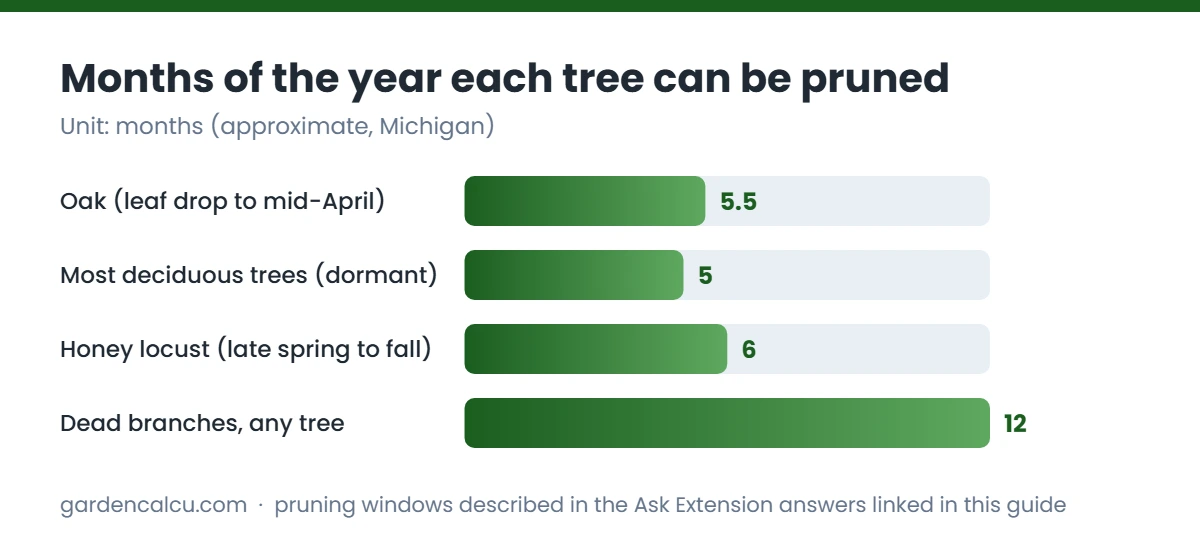
Chart for “when to prune trees”: approximate number of months each type can be pruned, based on the Michigan answers.
Tree | Best time | Avoid | Source |
|---|---|---|---|
Oak | Winter, fully dormant | Bud break (about April 15) to leaf drop | Michigan answers |
Maple | Late fall to early winter, or midsummer | Late winter if sap bleeding bothers you, and early summer | Michigan and Minnesota answers |
Honey locust | Late spring, summer or fall | Late winter (heavy sap flow) | Michigan answer, 2019 |
Birch, walnut, elm, willow, beech | Late fall or summer | Late winter if bleeding bothers you | Michigan answer, 2022 |
Apple | Late winter | Summer | Minnesota answer, 2023 |
Any tree, dead branches | Any time | None | Michigan answer, 2019 |
Oaks and oak wilt
Oak wilt is a fatal fungal disease spread by sap-feeding beetles that are drawn to fresh wounds. The beetles are active in the growing season. That is why the Michigan expert set the off-limits period from bud break, about April 15 there, to leaf drop.
Watch out: If an oak is damaged by a storm in spring or summer and has to be cut, paint the fresh wound right away. This is one of the few cases where wound paint is recommended, because it keeps the beetles off. In oak wilt areas, do not schedule any routine oak pruning between April and fall.
Maples and other bleeders
Maples, birches, walnuts and a few others push out sap from cuts made in late winter. Three experts said the same thing about it. The bleeding looks alarming and does not harm the tree.
If you would rather avoid it, prune these trees in late fall after dormancy begins, or wait until midsummer when the leaves are fully out. The Minnesota volunteer was comfortable with July for maples and warned against August.
Rule 3: watch the thermometer and the weather
The Olmsted County answer added practical conditions for winter work.
Rule 4: make the right cut
Good timing is wasted on a bad cut. The Douglas County volunteer gave the essential point. Cut the branch at the trunk but leave the branch collar, the slightly swollen ring where the branch joins. Do not cut flush.
As a general guide, avoid removing more than about a quarter of the live crown in one year, and never top a tree.
Rule 5: know when it is not a do-it-yourself job
Branches you can reach from the ground with a hand saw or pole pruner are fair game. Anything else is work for a certified arborist.
Winter is a good time to book this work. Tree crews are less busy, the ground is firm and bare branches are easier to handle. If the tree may need to come down altogether, the Tree Removal Cost Calculator gives a cost range to compare with quotes.
Estimate tree work costs
If a tree needs more than pruning, enter its height and details. The calculator gives a cost range for removal to compare with quotes.
Evergreens and flowering trees
The same Washtenaw County question asked about fir, pine and spruce. Conifers need little pruning. Remove dead or damaged branches in the dormant season, and do not cut back into bare wood on pines and spruces, since most will not resprout from it.
Spring-flowering trees and shrubs form their buds the year before. The Emmet County expert pointed out that pruning them in November cuts off next spring’s flowers. Prune those right after they bloom. Evergreens also need care going into winter. See winter burn on evergreens.
After pruning
Chipped branches make good mulch for paths and around trees. See mulch around trees. Keep a young or heavily pruned tree watered through the following summer, as described in how often to water new trees.
Common mistakes
Frequently asked questions
Short answers to the questions that come up most often.
Quick recap
When to prune trees: in the dormant season, with late winter the safest time. Oaks only in winter, maples in late fall or midsummer if you want to avoid sap, and dead wood whenever you see it.
Pick a mild, dry day above 25°F, cut just outside the branch collar and leave large or risky jobs to a certified arborist.
Get your exact number
Use the calculator to get a cost range for tree removal before calling for quotes.
Related guides
Sources
The facts in this guide to “when to prune trees” come from these university Extension pages and public questions: