Best Grass Seed for Shade: 5 Honest Rules From Experts
The best grass seed for shade is fine fescue, the group that includes creeping red, chewings and hard fescue. But no lawn grass loves shade. Even the most tolerant types need about 2 to 4 hours of direct sun or 5 to 6 hours of dappled light each day.
That second sentence is the one seed bags leave out. Homeowners buy a “dense shade” mix, watch it sprout in spring and then watch it fade by August, year after year. The seed was not the problem. The light was.
This guide is built from five real questions sent to university Extension services in Michigan, Minnesota and Ohio by people whose trees have outgrown their lawns. The experts are refreshingly direct about what will work, what will not and what to plant when grass is no longer an option.
Key takeaways
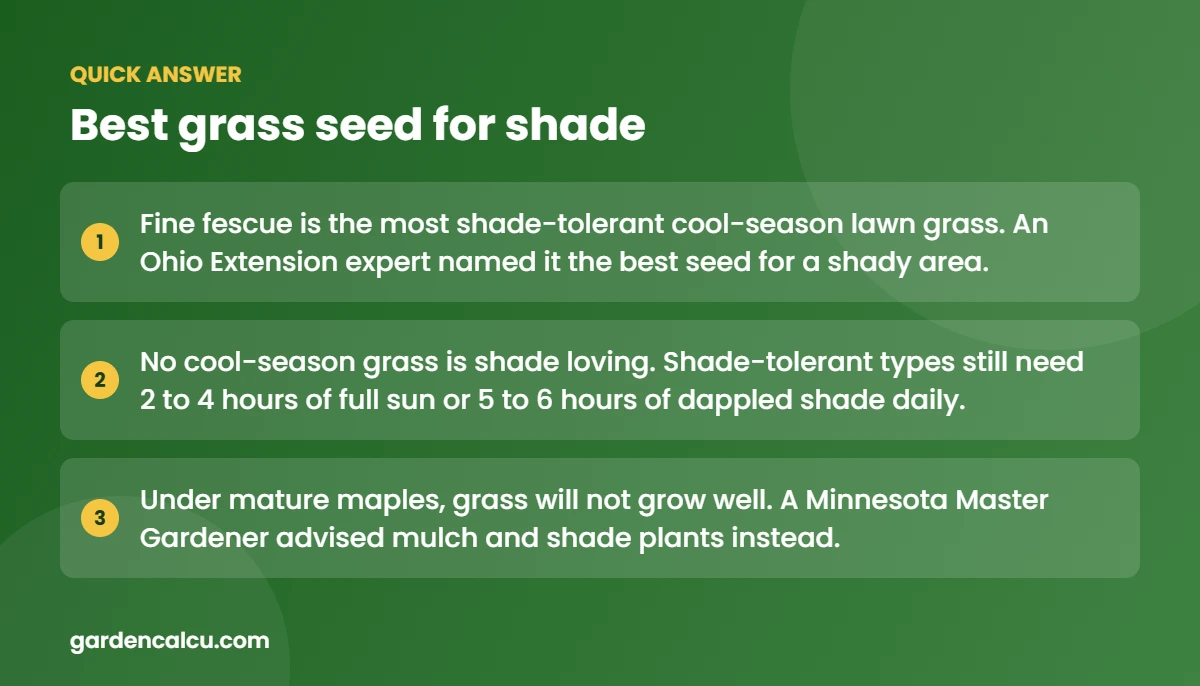
Quick answer to “best grass seed for shade” in three points.
Real questions gardeners asked
People looking for the best grass seed for shade have usually tried several already. We read five real questions from homeowners in that situation and the experts’ replies. Here is each in our own words, with a link to the original.
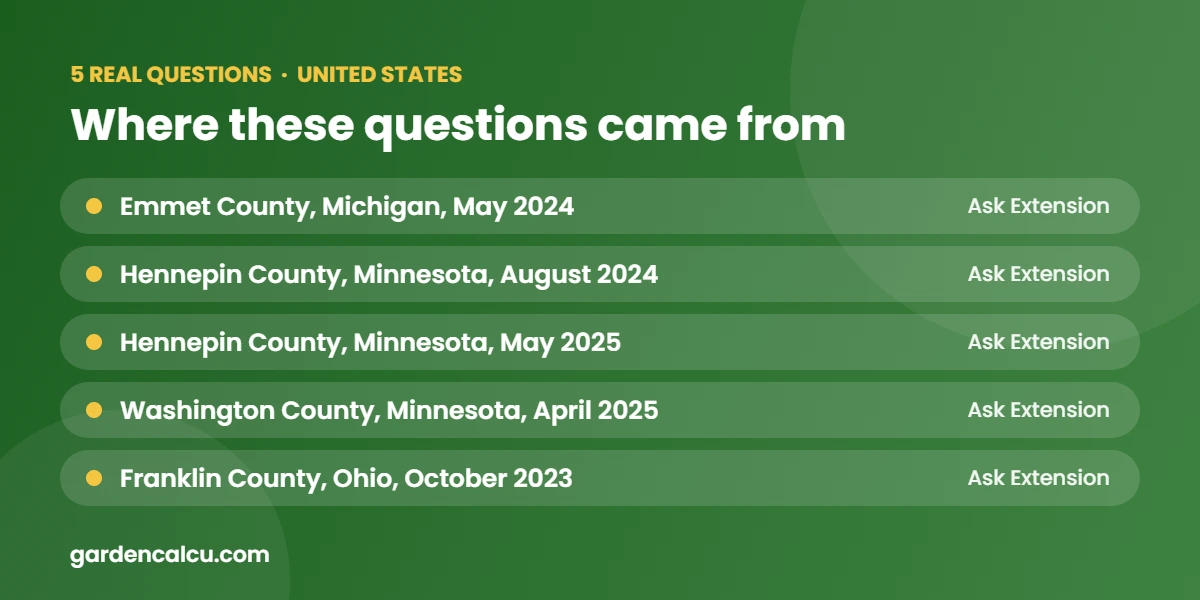
“Solutions or alternatives for a shady lawn”
The question: Part of a sloped lawn that used to grow grass no longer did as the trees grew taller. For two autumns the owner had added topsoil, sown shade-loving seed and covered it with hay, with no result.
What the expert said: First, there is no cool-season grass that is shade loving, the expert said. All grass needs some sun. Even dense-shade varieties need 2 to 4 hours of full sun or 5 to 6 hours of dappled shade each day. With less than that, consider opening up the tree canopy, or accept that grass will probably not succeed. September is also a little late to seed there. Aim for early to mid August.
“Advice for growing grass under/around Maple trees?”
The question: Grass around five 20-year-old maples had been fine for ten years and worse every year since. Adding soil and reseeding, then hydroseeding, each worked briefly before thinning again.
What the expert said: You are not going to like the answer, the Master Gardener said, but grass will not grow under mature maples. It is too shady. You can try some fescue, but it will not be a lush lawn. Consider shade-tolerant ground cover or mulch with hostas instead, and do not bury the surface roots, since they will just come up again.
“Best grass seed combination for most fully shaded lawn”
The question: Seven mature oaks shaded most of a 20,000 square foot lawn from June onward. It started well each May and declined all summer, despite shady lawn seed from several suppliers.
What the expert said: The volunteer pointed to the University of Minnesota guide to buying turfgrass seed, which covers seed types for shade, and noted that anything planted under the trees competes with them for moisture and nutrients.
“Best grass seed for sand and shade”
The question: A yard that was both sandy and heavily shaded by trees had defeated perennial ryegrass, tall fescue and other seed over several years.
What the expert said: Before recommending anything, the expert asked which grasses had been tried and how they failed: whether the seed never sprouted, sprouted and died quickly, or lasted a season or two. The answers point to different causes.
“Start new grass seed under white plastic sheeting?”
The question: A homeowner had two worn patches to reseed, one in sun for 4 to 5 hours a day and one under a tree in mostly shade.
What the expert said: A fine fescue is the best grass seed for a shady area, the expert said, and turf-type tall fescue is excellent where there is a lot of traffic.
Rule 1: measure the light before you buy seed
The Michigan expert’s numbers are the most useful thing in this guide. They turn a vague problem into something you can check.
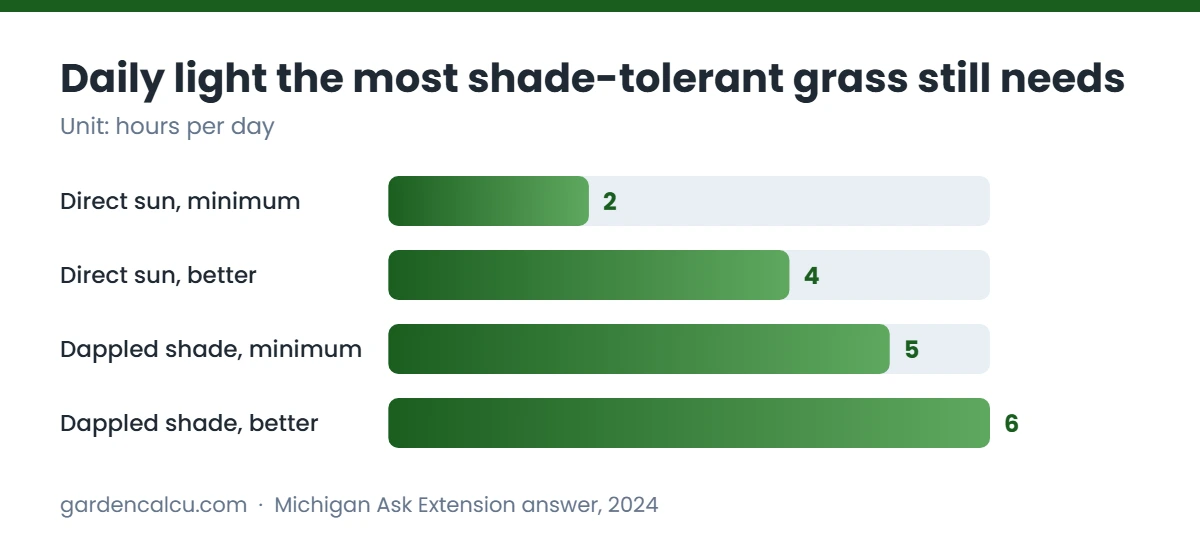
Chart for “best grass seed for shade”: hours of light that even dense-shade grass varieties need each day.
Light the area gets | What to expect |
|---|---|
6 or more hours of direct sun | Any lawn grass suited to your region |
4 to 6 hours of direct sun | Shade-tolerant mixes do well |
2 to 4 hours of direct sun | Fine fescue can hold on, thin but green |
5 to 6 hours of dappled light, no direct sun | Fine fescue, with care |
Less than that | Grass will probably fail. Plan for something else. |
Spend a sunny summer day checking the spot every hour or two and write down when it is in direct sun. Do it in June or July, with the trees in full leaf. The Bloomington homeowner’s lawn looked fine in May because the oaks had not leafed out. From June it was in shade, and that is when it declined.
Rule 2: choose fine fescue for cool-season lawns
For northern lawns, the shade ranking is consistent across Extension sources.
Grass | Shade tolerance | Traffic tolerance | Notes |
|---|---|---|---|
Fine fescues (creeping red, chewings, hard) | Best | Low | Named the best choice for shade by an Ohio expert |
Turf-type tall fescue | Moderate | Good | Excellent for traffic, the same expert said |
Perennial ryegrass | Low | Good | Sprouts fast, fades in shade |
Kentucky bluegrass | Low | Good | Needs sun to stay dense |
Most “shade” mixes are mainly fine fescue with some ryegrass for quick cover. Read the label and look for a high percentage of the fescues. The Washington County homeowner had tried perennial rye and tall fescue, both of which rank below fine fescue for shade.
Fine fescue has a weakness. It does not stand up to heavy foot traffic. A shady spot where children or dogs run every day is a hard place for any grass.
In the South, St. Augustinegrass is the usual choice for shade and bermudagrass the least tolerant, but neither is grown from the cool-season seed mixes this guide covers.
Rule 3: let in more light
The Michigan expert’s first suggestion was not a seed. It was to open the tree canopy. More light fixes the cause.
Do not top trees or strip their interior branches. Bad pruning harms the tree and the shade returns within a few years as it regrows.
Rule 4: manage shady grass differently
Grass in shade grows slowly and has little energy to spare. It needs gentler treatment than the sunny lawn next to it.
Rule 5: seed at the right time
Timing matters more in shade because the grass grows slowly. The Michigan expert said September was a little late in that northern county and recommended early to mid August.
There is a second reason to seed shady areas early in fall. Once the leaves drop, they bury the seedlings. Grass sown in August has several weeks of growth before leaf fall. Our guide on when to plant grass seed in fall gives dates by region.
Tip: Expect to overseed shady areas every year or two. Even well-chosen grass thins in shade over time. A light overseeding each August keeps it presentable.
How much seed for the shady area?
Enter the size of the area and whether you are overseeding or starting from bare soil. The calculator gives the pounds of grass seed to buy.
When to stop trying: alternatives to grass
The Hennepin County Master Gardener gave the answer nobody wants and many need. Under mature maples, grass will not grow. The pattern the homeowner described is typical: fine for the first ten years, worse every year after, as the trees matured.
She described her own yard as the alternative. Two large maples, mulch underneath, hostas in different sizes and colors, a few containers and a birdbath. Less grass to mow.
Alternative | Good for | Notes |
|---|---|---|
Mulch ring | Directly under the tree | 2 to 3 inches, kept off the trunk |
Hostas, ferns and other shade perennials | Dappled to full shade | Plant between roots, do not dig large holes |
Shade-tolerant ground cover | Slopes and large areas | Suggested in the Minnesota answer |
Stepping stones or a path | Routes people walk | Takes traffic that grass cannot |
Kill the remaining grass with cardboard under the mulch instead of digging, and do not add soil over tree roots. Both points come from Minnesota Extension answers covered in mulch around trees.
Watch out: Adding a few inches of topsoil under a tree to help grass, as two of these homeowners did, helps only briefly and can harm the tree. Roots need air, and they grow back to the surface. The Minnesota Master Gardener advised against covering them.
Why seed “worked” and then failed
The Washington County expert asked a sharp question. Did the seed never germinate, germinate and die quickly, or last a season or two? Each has a different meaning.
Common mistakes
Frequently asked questions
Short answers to the questions that come up most often.
Quick recap
The best grass seed for shade is fine fescue, and it still needs 2 to 4 hours of sun or 5 to 6 hours of dappled light. Measure the light in midsummer before spending money on seed.
Where there is enough light, seed early in fall, mow high and feed lightly. Where there is not, open the canopy or switch to mulch and shade plants.
Get your exact number
Measure the area you plan to seed and the calculator gives the pounds of seed you need.
Related guides
Sources
The facts in this guide to “best grass seed for shade” come from these university Extension pages and public questions: