Seed Starting Mix vs Potting Soil: 6 Easy Rules for Seedlings
Seed starting mix is a fine, light, soilless blend made for one job: getting seeds to sprout and root without rotting. Potting soil is coarser, often carries fertilizer, and is not always sterile. You can start seeds in either one if it is sterile, but a true seed starting mix gives more even germination and far fewer losses to mold and damping off.
The confusion is understandable. The bags sit side by side at the store, and both look like brown fluff. Then the questions start. Can seedlings stay in starter mix until planting? Do they need fertilizer? Why is there fuzz on the surface? Why did half the tray fall over in one night?
Extension experts in Oregon, Michigan, Ohio and Maryland have answered all of these for real gardeners. Their replies are below, followed by a side-by-side comparison, a feeding schedule, and simple rules for watering and mold.
Key takeaways
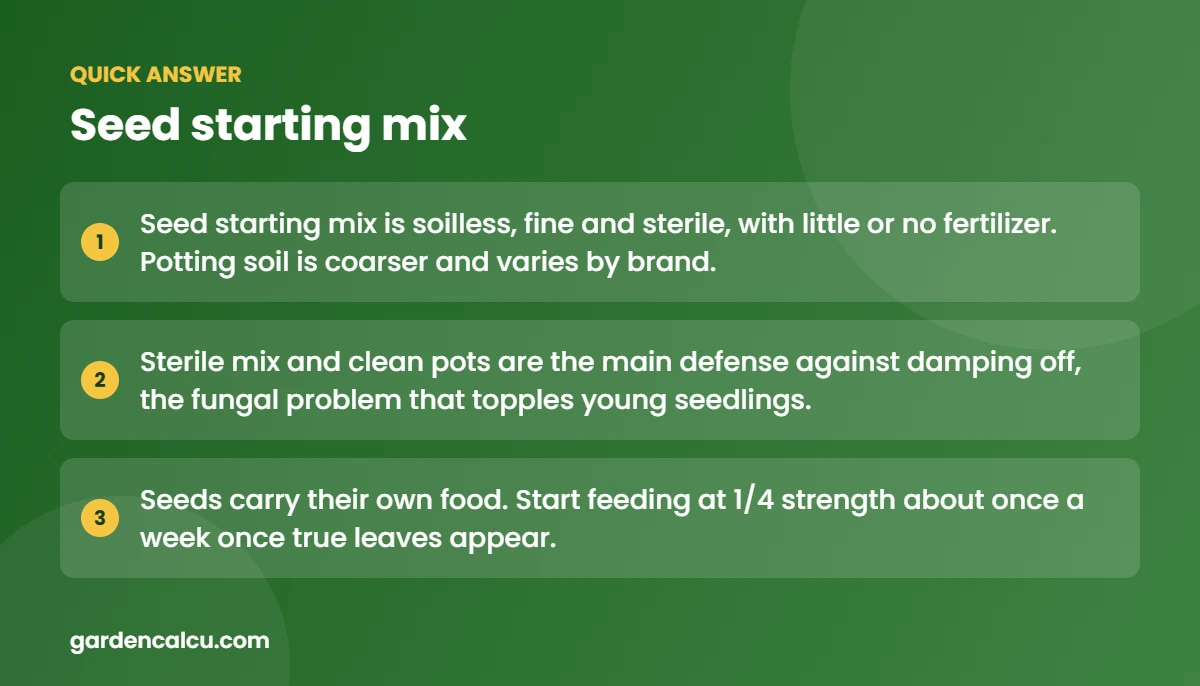
Quick answer to “seed starting mix” in three points.
Real questions gardeners asked
These are real questions sent to Ask Extension, the free service run by US land-grant universities. Each card shows where and when the gardener asked, and links to the full answer.
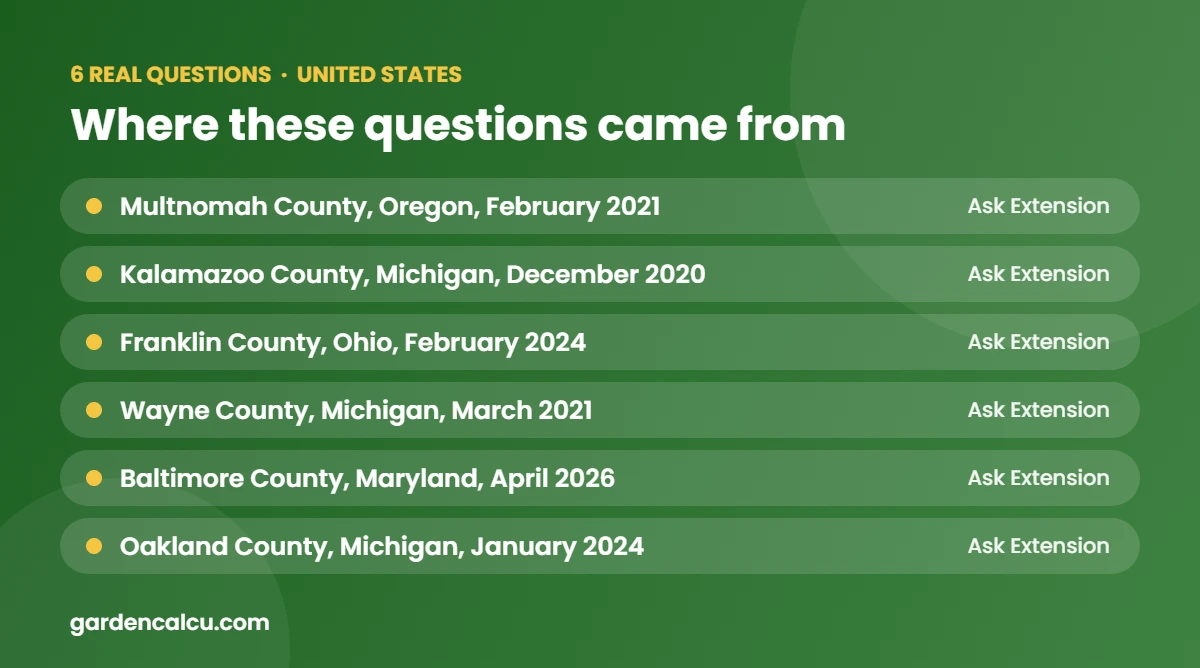
“Can seedlings stay in seed starter mix long term?”
The question: I had a light-bulb moment this morning when I realized seed starter mix is only for germination and it contains no nutrients for seedlings after they’ve grown their first set of true leaves. Is it okay to leave them in seed starting mix and add fertilizer to feed them until they are ready to go outside?
What the expert said: The expert explained that seed starting mixes are generally looser than regular potting soils so tiny roots can grow in easily, and are low in nutrients. Seeds have enough nutrients to reach the true leaf stage. After that, give dilute fertilizer at 1/4 strength about once a week. Liquid fertilizer works well for baby plants. Transplanting to moist, sterile potting soil is also an option.
“Seed starter on top of potting soil in one pot?”
The question: To avoid transplanting seedlings from pure seed-starter containers into a potting-mix container, I was wondering if I could combine the two in one container? Can I combine the two mixes in a final size container and avoid any transplanting altogether?
What the expert said: Yes, the expert said, you may start seeds in larger pots to save moving seedlings later. The advice was to use a sterile mix, either potting mix or starter mix, or blend both at about 50/50. Sterile mixes and clean pots help prevent the fungus known as damping off. Seedlings do not use fertilizer until they have grown a few true leaves.
“Mold on house-grown seedlings”
The question: Please note the brownish-orange growth on the top of the soil. I assume this is a mold or fungus? I assume it is from over-watering; I have a moisture meter, but am having trouble getting the watering correct. What steps can I take to eliminate this mold?
What the expert said: The expert agreed the starts looked overwatered and suggested small fans for air circulation and a very light spray of hydrogen peroxide diluted one part to nine parts water. Then a personal note: early tries with potting soil brought a lot of damping off and a ton of fungus gnats. The expert now uses seed starting mix or peat pellets, which are better for drainage and root development.
“White mold on peat pots”
The question: I have potting soil in peat pots that I watered in preparation for planting seeds. The outside of the peat pots have developed a white covering. It appears to be mold. Is this a problem? Is there something you would suggest to apply?
What the expert said: The expert said the mold may be unsightly but is not necessarily dangerous, and is likely caused by excess water. Too much water can cause serious problems such as damping off, which kills small seedlings, as well as root rot. Other than watering correctly, nothing needed to be applied.
“Tomato seedlings struggling in plain seed starter”
The question: I have tomato seedlings in a little greenhouse-type setup indoors that I planted March 29 in seedling starter. They did well for a while but now the leaves are curling, and some leaves are yellow or purple. I thought I was overwatering when I saw algae on top of the soil mix, so I cut back on the water, but now I wonder whether I’m not watering enough.
What the expert said: The expert saw signs of stress from cold and inconsistent watering, and added that plants may be low in phosphorus in plain seed starter, which can be a factor in purpling. When potting up from cells to cups, a higher nutrient mix is usually added. The reply also warned that a seed starting mix high in peat can start to repel water if it is not kept consistently moist.
“What matters most for seed starting?”
The question: I am planning for a vegetable garden (twelve 4 x 8 beds) and am having trouble finding clear advice on how to start seeds.
What the expert said: An expert who had started vegetable seeds indoors for more than 20 years listed the growing medium first: it should be a soilless, sterile seed starting mixture, and the containers should be sterilized too, because organisms in the medium or on the containers can cause infections that kill seedlings. Since these media contain no natural nutrients, a dilute liquid fertilizer gives a much stronger transplant.
Seed Starting Mix vs Potting Soil: What Is the Difference?
Both products are soilless in most cases, which means they are blends of materials such as peat or coir with perlite or vermiculite, and contain no actual garden dirt. The difference is in texture, sterility and food.
Feature | Seed starting mix | Potting soil or potting mix |
|---|---|---|
Texture | Very fine and loose | Coarser, with bark or larger particles |
Sterile? | Normally yes | Depends on the product; read the bag |
Fertilizer | Little or none (some brands add a starter charge) | Often included; may feed for weeks |
Best for | Germination and the first weeks | Potting up and growing on |
Main risk | Seedlings run out of food | Damping off and fungus gnats if not sterile |
The Oregon expert put the reason for the fine texture simply. Seed starting mixes are looser than regular potting soils so the tiny roots can more easily grow into them.
The Michigan answer explains why you cannot treat all potting soil as one thing. Seed starting medium is a sterile mix that sometimes contains fertilizer. Potting soil may be a similar mix, or it may be a non-sterile soil, and it may or may not have fertilizer in it. The bag will tell you which, so read it before you buy.
Watch out: Do not fill seed trays with soil dug from the garden. It packs hard in a small cell, drains badly indoors, and brings in the very organisms a sterile mix is meant to keep out.
Rule 1: Start With a Sterile Mix and Clean Pots
This is the rule every expert repeated. The 20-year grower in Oakland County, Michigan listed it first of all the factors that decide success: a soilless, sterile seed starting mixture, in sterilized containers.
The reason is damping off. It is a fungal problem in which a healthy-looking seedling pinches in at the soil line and falls over, often overnight. The Ohio expert described it from personal experience as seedlings that just fall over, and blamed early attempts with potting soil. The Kalamazoo answer made the same link: sterile mixes and clean pots help prevent fungus from growing on young seedlings.
Practical steps:
Rule 2: Yes, You Can Start Seeds in Potting Soil
The Kalamazoo gardener wanted to skip transplanting by sowing straight into bigger pots of potting mix. The answer was yes. Use a sterile potting mix, a starter mix, or the two mixed together at about 50/50.
There is a catch, and the expert named it. With a large pot you have to keep the whole pot moist, and keep it close enough to the grow lights while the seedlings are tiny. Bigger pots also take more room under the lights. That is why most growers start in small cells and move up.
If you do sow in a coarse potting mix, a thin layer of fine seed starting mix on top gives small seeds better contact. Large seeds such as squash, beans and sunflowers are less fussy and sprout well in ordinary sterile potting mix.
Tip: Moisten the mix before you fill the cells. Dry peat-based mix sheds water. Stir in warm water until it feels like a wrung-out sponge, then fill and sow.
Rule 3: Feed After True Leaves, at Quarter Strength
The Oregon beginner worried that seed starter has no nutrients. That is true, and it is fine for the first couple of weeks. As the expert explained, seeds have enough nutrients to get their seedlings to the true leaf stage. The first pair of leaves, the cotyledons, hold the seed’s own food supply.
Once true leaves appear, the plant needs feeding. The advice was dilute fertilizer at 1/4 strength about once a week, in liquid form so it reaches all the roots.
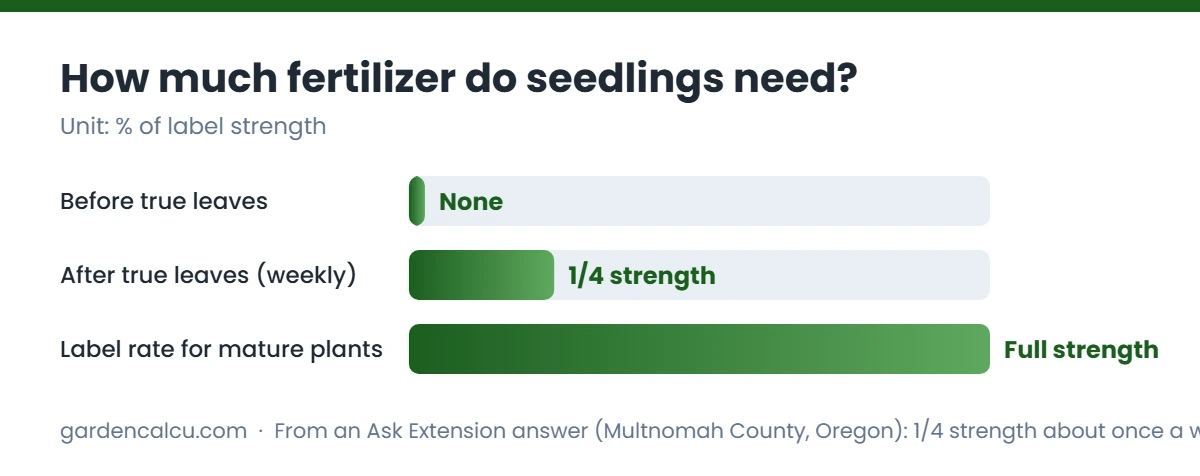
Fertilizer strength for seedlings in seed starting mix, as advised in an Ask Extension answer to an Oregon gardener.
The Michigan answers agree. Seedlings do not use fertilizer until they have grown a few true leaves, and because sterile mixes often have no nutritional value, fertilizer matters after that. If your mix already includes fertilizer, read the label. Products with fertilizer typically feed young plants for 6 weeks to 3 months after germination, so you may not need to add any.
Watch the plants. The Kalamazoo expert said to monitor for poor growth or yellowing leaves. In the Baltimore County case, purple leaves on tomatoes in plain seed starter were partly put down to low phosphorus, and the expert suggested feeding more often or using a starter fertilizer with more phosphorus. Our guide to what fertilizer numbers mean explains how to read those labels.
Rule 4: Pot Up Into Richer Mix as Seedlings Grow
Can seedlings live in seed starting mix until planting day? With weekly feeding, yes. The Oregon gardener had sown into 2-inch cells and 3 to 4 inch pots and was told that feeding in place would work.
Most growers still pot up once, because a bigger root ball in a richer mix makes a sturdier transplant. The Maryland expert noted that when you move from cells to cups, a higher nutrient mix is usually added to the seed starter to give the plants something to work with.
How to move small seedlings, following the Oregon answer:
Tomatoes can be set deeper each time, which also fixes stretched stems. See leggy seedlings for that rescue.
Work Out How Many Seeds You Need
Before you fill your trays, use the free Seed Calculator to see how many seeds or packets your rows and beds need, so you sow the right number of cells.
Rule 5: Water From the Bottom and Let the Top Dry a Little
More seedlings die from watering mistakes than from anything else. The Maryland expert said it plainly: seedlings often die from either underwatering, or overwatering with poor drainage leading to root rot.
Peat-based seed starting mix makes this harder because of how it behaves when it dries. A mix high in peat can start to repel water, the expert warned, and then water just runs over the top and down the inside of the cup while the root ball stays dry.
Rule 6: Treat Mold as a Watering Signal
Fuzz, algae or tiny mushrooms on the surface look alarming. Both mold questions above got calm answers. The Michigan expert said the mold may be unsightly but is not necessarily dangerous, and is likely caused by excess water. The Ohio expert said not all molds are harmful and that the growth might not harm the plants at all.
What to do about it:
Surface mold is a warning, not the disease itself. The real danger is damping off, and the conditions are the same: wet mix, still air, crowded seedlings. Fix the conditions and both problems fade.
A Note on Peat Pots
Peat pots hold moisture on their walls, which is why the Wayne County gardener’s pots turned white. The expert added a planting tip: make sure no part of the pot shows above ground after planting. Break off the rim or bury it completely, because an exposed rim wicks moisture away from the young plant. For seedlings that transplant well, such as tomatoes, peppers and broccoli, breaking the pot open or removing it altogether may be a good idea.
Which Mix Should You Buy?
Your situation | Good choice |
|---|---|
Tiny seeds: lettuce, petunia, celery, herbs | Seed starting mix |
Tomatoes, peppers, cabbage family in cell trays | Seed starting mix, then pot up into potting mix |
Large seeds in 3 to 4 inch pots: squash, sunflower | Sterile potting mix, or a 50/50 blend |
One pot from sowing to planting out | 50/50 blend of starter and sterile potting mix |
You have had damping off before | Fresh seed starting mix and washed containers |
Whichever you choose, time your sowing so seedlings do not sit in small cells for too long. When to start seeds indoors gives the count-back dates, and how long do seeds last shows how to check an old packet before you fill a tray with it.
Frequently asked questions
Short answers to the questions that come up most often.
Quick recap
In the seed starting mix vs potting soil question, the label matters more than the name. What seedlings need at the start is a fine, sterile, well-drained medium in a clean container. A bagged seed starting mix delivers that reliably. A sterile potting mix, or a 50/50 blend, can do the job too.
After that it is routine. Feed at quarter strength once true leaves show, water from below, keep the air moving, and pot up into richer mix as the plants grow. Follow those rules and damping off, mold and hungry yellow seedlings become rare problems.
Get your exact number
Plan how many seeds and packets you need with the free Seed Calculator.
Related guides
Sources
The facts in this guide to “seed starting mix” come from these university Extension pages and public questions: