When to Harvest Winter Squash: 5 Easy Signs Before Frost
When to harvest winter squash: once the rind is too hard to dent with a fingernail, the color is deep and solid, the stem has turned dry and corky, and the curly tendril nearest the fruit is brown and crisp. Whatever the signs say, get every squash in before a hard freeze.
First-time growers get stuck because the instructions seem to disagree. One source says wait until the vines die. Another gives a number of days. A third says go by color. Then October arrives with green stems and a frost warning, and the question becomes urgent.
This guide is built from five real questions sent to university Extension services in Oregon and Minnesota by gardeners in exactly that position. The experts’ answers fit together into a short checklist and one firm deadline.
Key takeaways
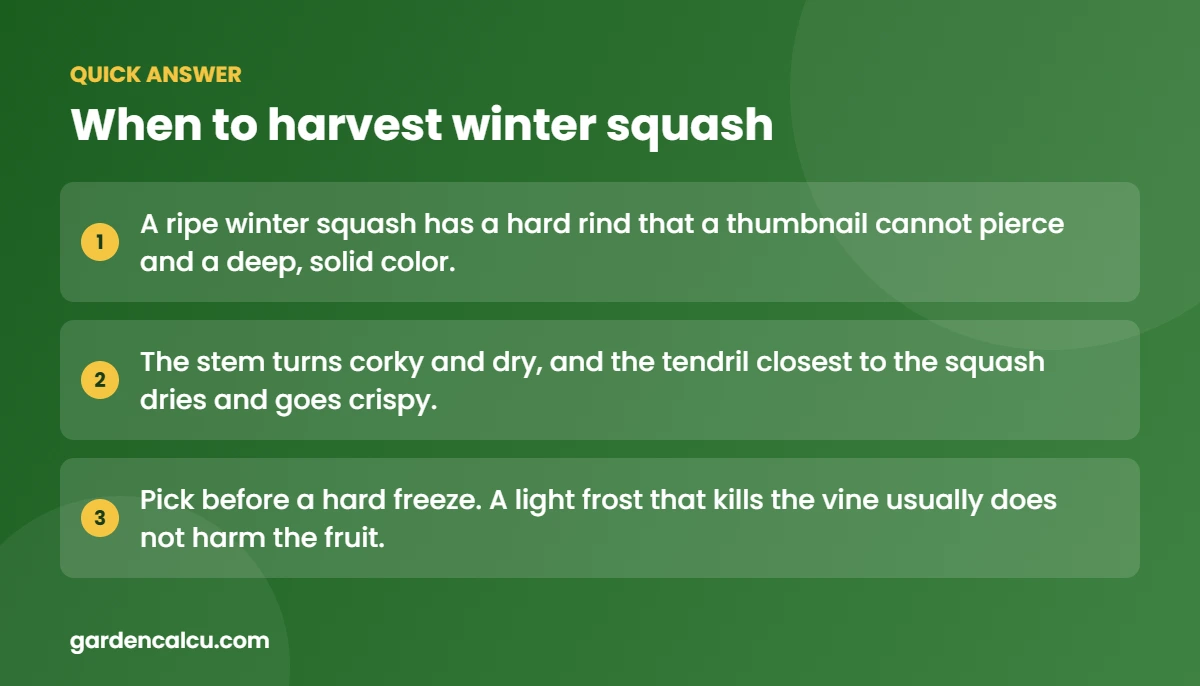
Quick answer to “when to harvest winter squash” in three points.
Real questions gardeners asked
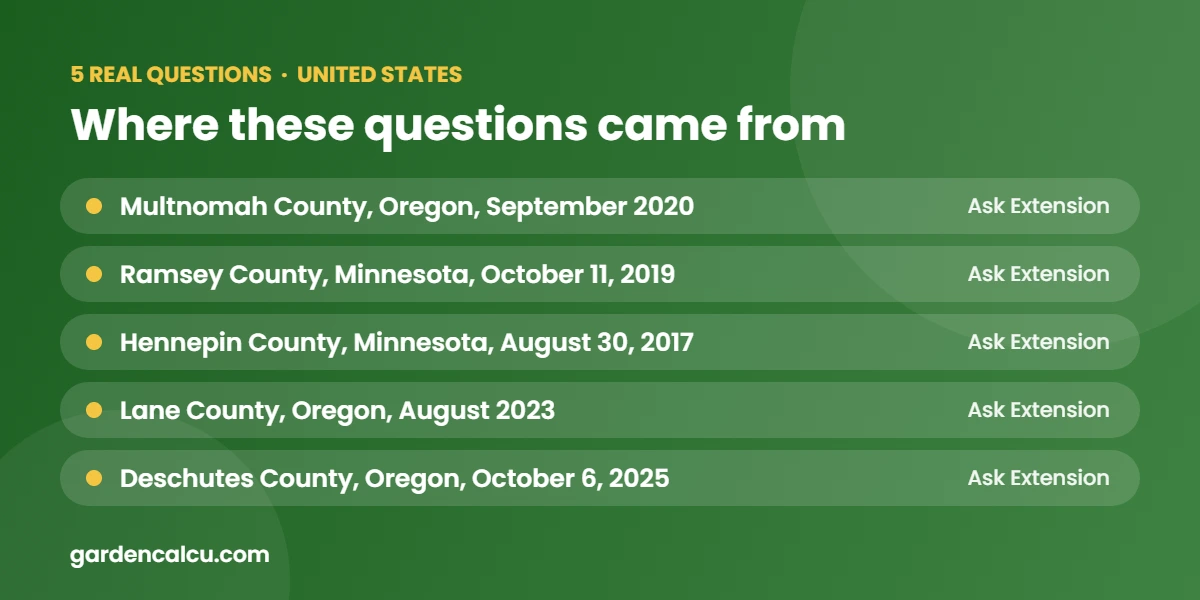
Gardeners ask when to harvest winter squash in two waves: in early September when the fruit looks ready but the vines are green, and in October when frost is forecast. We read five real questions from both groups. Here is each in our own words, with a link to the original.
“When to harvest winter squash?”
The question: A first-time grower had butternut, spaghetti and delicata squash with skins that could not be dented by a fingernail and store-like color, but the vines were still mainly green. Some sources said wait for brown vines and others gave a number of days.
What the expert said: A great rule of thumb for squash meant for storage is the curly tendril, the expert said. When the tendril closest to the squash is dry and crispy, it is ready. Once the fruit looks mature, you can stop irrigating, which helps the stems dry.
“Harvesting spaghetti and butternut squash”
The question: A St. Paul gardener had read to wait until the stems turn brown, but they were still green and cold rain, snow and lows of 33 to 34 degrees were forecast for the weekend.
What the expert said: Pick winter squash before a hard freeze, the Master Gardener said. A light frost that kills the vine will usually not harm the fruit. Squash can be harvested whenever the fruits have turned a deep, solid color and the rind is hard. Cut them from the vine carefully and leave two inches of stem attached if possible.
“HARVESTING BUTTERNUT SQUASH”
The question: A first try at butternut had produced fruit the color of the ones in the store by late August. The grower asked whether ripe squash would be fine left on the vine for another month.
What the expert said: Butternut is typically harvested at the end of the growing season when the vines start to dry up and brown, the Master Gardener said, usually late September or early October before frost. Do not leave squash out in a frost, which causes rapid breakdown. After harvest, keep them in a cool, dry place for the longest storage.
“picking butternut squash and watermelon”
The question: A gardener asked how to tell when butternut squash is ready to pick.
What the expert said: Winter squash such as butternut, kabocha and pumpkin are ripe when the stem is corky and dry and you cannot penetrate the rind with your thumbnail, the expert said. Leave the stem attached. Cure the squash for 10 days to 2 weeks in a warm and humid place, which converts starches to natural sweetness and improves quality.
“how to harvest winter squash and pumpkins after freezing nights”
The question: After several cold nights, squash and pumpkin plants northwest of Redmond had turned black. The fruit did not look mature and the stems were still green. Could it be brought to maturity?
What the expert said: It may be too late for this season’s crop, the expert said. Squash should be harvested before the first freeze. In a short-season area, choose varieties with 65 to 75 days to maturity and add 14 days to allow for cool summer nights.
When to harvest winter squash: the 5 signs
Put the answers together and you have a checklist. A squash that passes most of these is ready.
Sign | What to look for | Source |
|---|---|---|
Hard rind | A thumbnail will not pierce or dent it | Oregon and Minnesota answers |
Full color | Deep, solid color for the variety, with no green streaks on butternut | Minnesota answer, 2019 |
Corky stem | The stem is dry, tan and woody, not green and juicy | Oregon answer, 2023 |
Dry tendril | The curly tendril nearest the fruit is brown and crisp | Oregon answer, 2020 |
Vines dying back | Leaves yellow and vines begin to brown | Minnesota answer, 2017 |
The rind test is the most reliable single check. Press a thumbnail into the skin near the stem end. On a ripe squash it leaves no mark. On an immature one it cuts in easily.
Why the advice seems to conflict
The Portland grower had squash that passed the rind and color tests while the vines were still green. That is common, especially in a long, warm season. The fruit can be mature before the plant gives up.
“Wait for the vines to die” is a calendar shortcut, not a requirement. The Hennepin County answer describes it as typical timing, late September to early October. The St. Paul answer gives the real rule: harvest whenever the fruits have turned a deep, solid color and the rind is hard.
So if the fruit passes the tests, it is ready, whatever the vines are doing.
Tip: Stop watering once the squash look mature. The Oregon expert said this helps the stems dry down, and dry stems store better.
The frost deadline
Every answer mentions frost, because cold is what ruins a stored squash.
The practical rule is to harvest everything mature before the first hard freeze, even if the stems are still green. A squash picked a little early with a hard rind keeps far better than one that has been frozen.
Look up your first frost date and plan the main harvest for the week or two before it. If a cold night arrives early, a sheet or tarp over the patch buys time, as described in protect plants from frost.
Watch out: Squash that have been through a hard freeze should be used first and not stored. The same goes for any with soft spots, cuts or a missing stem.
How to harvest without ruining storage life
The two inches of stem is in both the Minnesota and Oregon answers. It seals the top of the fruit.
Curing: the step that makes squash sweet
The Lane County answer explains what curing is for. Ten days to two weeks in a warm and humid place converts starches to natural sugars and improves the quality of the squash. It also hardens the skin and heals small scratches.
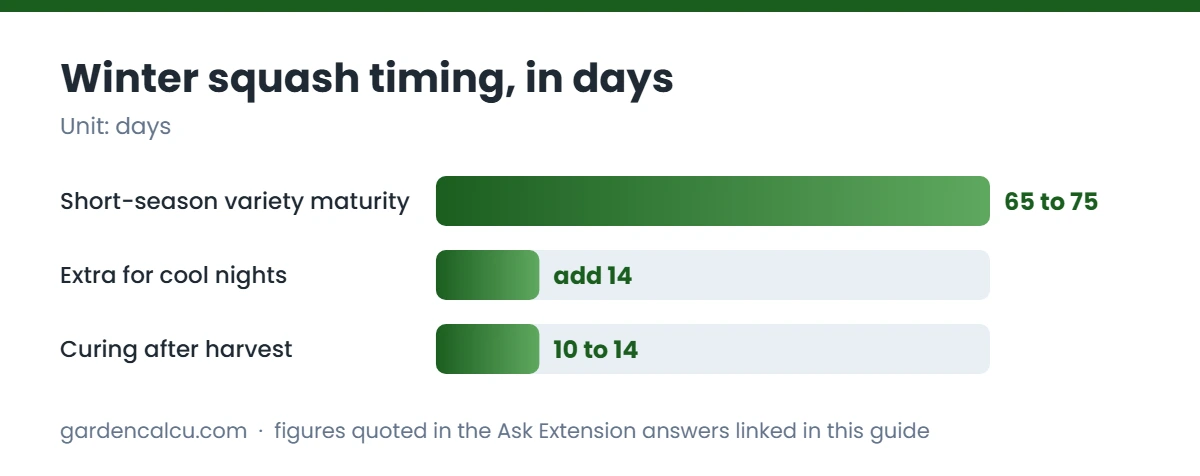
Chart for “when to harvest winter squash”: days to maturity to look for in a short season, the allowance for cool nights and curing time.
Not every type needs it. Butternut, Hubbard, kabocha, spaghetti squash and pumpkins benefit from curing. Acorn and delicata have thinner skins, do not improve with curing and are best eaten within a couple of months.
What if frost is coming and the squash are not ripe?
This is the Redmond situation, and the honest answer is that immature winter squash do not finish ripening off the vine the way tomatoes do.
Choosing varieties that ripen in time
The Deschutes County expert turned the lost crop into advice for next year. In a short season, choose varieties with 65 to 75 days to maturity, then add 14 days because cool nights slow growth.
Worked example: a 75-day variety plus 14 days is 89 days. If your first fall frost comes around September 25, count back 89 days and the plants need to be in the ground and growing by June 28. Squash also need warm soil to start, so in a cold-summer area that leaves a narrow window, and transplants help.
Days to maturity on the packet | Plus 14 days for cool nights | Latest planting for a September 25 frost |
|---|---|---|
65 days | 79 days | July 8 |
75 days | 89 days | June 28 |
90 days | 104 days | June 13 |
110 days | 124 days | May 24 |
In warm regions with long seasons you do not need the 14-day allowance, but the same count-back shows which varieties fit. A 110-day Hubbard is a poor bet where frost comes in September.
Estimate your harvest
Enter the crop and number of plants, and the calculator estimates how much you can expect to harvest, so you can plan what to grow and store.
How much squash to expect
Yield depends on type and season. Large-fruited kinds such as Hubbard may ripen only a few fruits per plant, while small types such as delicata and acorn set more. Planning how many plants to grow is easier with numbers in front of you.
The Harvest Yield Calculator estimates the harvest from a given number of plants or area, so you can decide how many hills to plant for the squash your household will actually eat through winter.
Vines need room. Give them the spacing on the packet, and use the Plant Spacing Calculator to see how many fit your bed.
Common mistakes
Frequently asked questions
Short answers to the questions that come up most often.
Quick recap
When to harvest winter squash: when the rind resists a thumbnail, the color is full, the stem is corky and the nearest tendril is dry. Do not wait for the vines if the fruit is ready, and do not let a hard freeze reach it.
Cut with two inches of stem, cure butternut and pumpkins for 10 to 14 days, then store them cool and dry.
Get your exact number
Use the calculator to estimate yield per plant and plan how many squash to grow next year.
Related guides
Sources
The facts in this guide to “when to harvest winter squash” come from these university Extension pages and public questions: