

What to Plant in October: 9 Best Crops, Bulbs and Shrubs
If you are wondering what to plant in October, start with garlic, spring-flowering bulbs, trees and shrubs. In mild-winter states you can add hardy greens under a row cover, and in the South you can still set out broccoli, cabbage and chard transplants.
October is a month of two halves. In Oregon’s high country it is already freezing at night. In North Carolina it is still fine planting weather at the end of the month. The same crop can be a great idea in one state and a waste of seed in another.
This guide is built from five real questions that gardeners sent to university Extension services in October and the weeks around it. Each answer shows where the line falls between “go ahead” and “wait for spring”.
Key takeaways
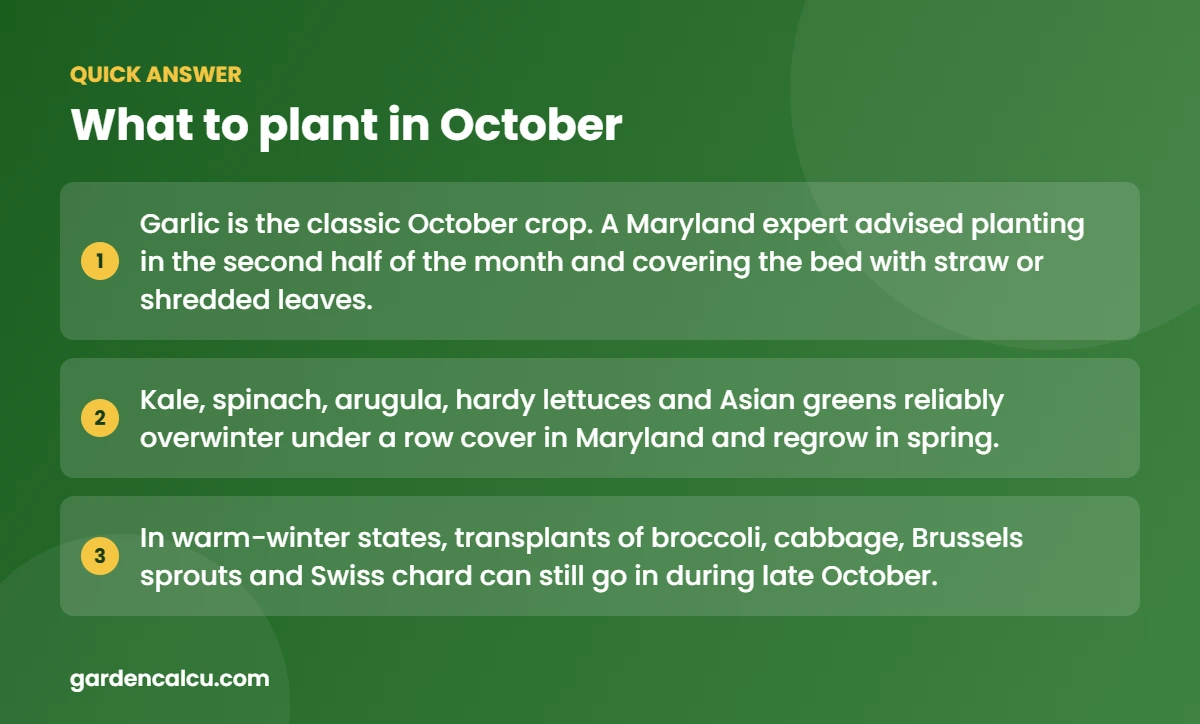
Quick answer to “what to plant in October” in three points.
Real questions gardeners asked
People who ask what to plant in October usually have an empty bed and a feeling that the season is over. These five questions came from Maryland, North Carolina and Oregon. We have summarized each one in our own words, with the expert’s reply and a link to the original.

“Plant garlic now or wait?”
The question: With a mild winter predicted, a gardener worried that garlic planted in early October would think it was too warm. They asked whether to plant now or wait a month, and what soil temperature to aim for.
What the expert said: The University of Maryland Extension expert suggested waiting a couple of weeks, possibly until the end of the month. If planting sooner suits you better, some top growth is fine. Garlic simply needs enough cold for good bulbs. A mulch of straw or shredded leaves over the bed helps through winter.
“fall outdoor planting”
The question: A homeowner wanted to improve some flower beds for curb appeal and asked if anything could go in the ground right then, such as rosemary, small shrubs or winter vegetables.
What the expert said: The expert said any shrubs can be planted now, along with perennials, and pansies for color. Winter cole crops bought as transplants, such as Swiss chard, Brussels sprouts, cabbage and broccoli, can also go in. From transplants, there is still time.
“fall planting”
The question: A raised bed gardener asked what could be planted alongside garlic for harvest in the winter months, and was thinking of beets.
What the expert said: Probably too late. Below-freezing nights were forecast all week. Lettuce, spinach and arugula tolerate frost only once they are established, so they need to be planted in late August or early September. Seedlings started indoors would need covering every afternoon, with a much reduced chance of a harvest.
“Brussel Sprout transplants in October”
The question: A gardener had Brussels sprout seedlings just emerging in the garage, plus broccoli, cauliflower and collards, with first frost expected November 1. Should they go outside or be tossed until spring?
What the expert said: The expert said Brussels sprouts are unlikely to overwinter and crop, though it can be tried under a floating row cover. Kale, spinach, arugula, some hardy lettuces and Asian greens will reliably overwinter with a row cover and regrow in spring. Broccoli is less reliable and collards are iffy.
“GARLIC, Late Planting”
The question: A church garden delayed its garlic because of a late soil delivery. By December the temperature had dropped to 26°F and the ground had frozen. Could garlic still be planted for a crop next year?
What the expert said: Yes, as soon as possible. The expert pointed out that only the top inch or two of soil was frozen, so a hoe or trowel could dig through it. Late garlic is better than no garlic.
What to plant in October: the quick list
Here is the short list, drawn from the answers above. The right column tells you where each one makes sense.
What to plant | How | Where it works in October |
|---|---|---|
Garlic | Cloves | Almost everywhere. Late October in the Mid-Atlantic. |
Tulips, daffodils and other spring bulbs | Bulbs | Anywhere the ground is not frozen |
Trees and shrubs | Container or bare-root plants | Anywhere the soil is workable |
Perennials and pansies | Plants | Mild and warm states |
Kale, spinach, arugula | Seed or transplants under row cover | Mid-Atlantic and similar climates, early in the month |
Hardy lettuce and Asian greens | Transplants under row cover | Mid-Atlantic and similar climates |
Broccoli, cabbage, Brussels sprouts | Transplants only | North Carolina and warmer |
Swiss chard | Transplants | North Carolina and warmer |
Radishes | Seed | Mild states, early in the month |
Notice how many of these are transplants. By October there is rarely enough warm weather left to raise vegetables from seed. The North Carolina expert was specific: from transplants, you still have time.
Garlic: the one crop almost everyone can plant
Garlic is planted in fall, sits through winter and is harvested the following summer. It needs a spell of cold to form a proper bulb, which is why it goes in now and not in spring.
The Maryland answer from October 2026 gives a useful rule for timing. Early October is a little early there, and the second half of the month is better. But the expert was relaxed about it. If the cloves send up green shoots before winter, that is fine.
And if you miss the window, plant anyway. A Baltimore church garden was told on December 2 to plant as soon as possible, because only the top inch or two of soil had frozen. In Oregon, a gardener who still had unplanted bulbs in February was told the same thing, since garlic will not keep through summer.
Our garlic planting guide covers varieties, depth and harvest in detail. For the mulch layer, see how to use leaves as mulch.
Greens that overwinter under a row cover
The Charles County answer is the most useful one for gardeners in the middle of the country. It names the crops that reliably survive a Maryland winter under a floating row cover and start growing again in spring:
A row cover is a light fabric draped over the plants and held down at the edges. It traps a little warmth and keeps wind off the leaves. University of Maryland Extension has a full page on how to use it, linked in the sources below.
Timing matters more than the cover. The Oregon expert explained that leafy greens only become hardy once they are mature and have met the cold gradually. Seedlings that sprout into freezing nights do not get that chance. In a cold climate, the planting date for winter greens is late August or early September, not October.
Tip: If your October is mild, sow spinach early in the month. It may only reach a few inches before winter, but under a cover it often survives and gives a very early spring harvest. See the spinach planting guide for spacing.
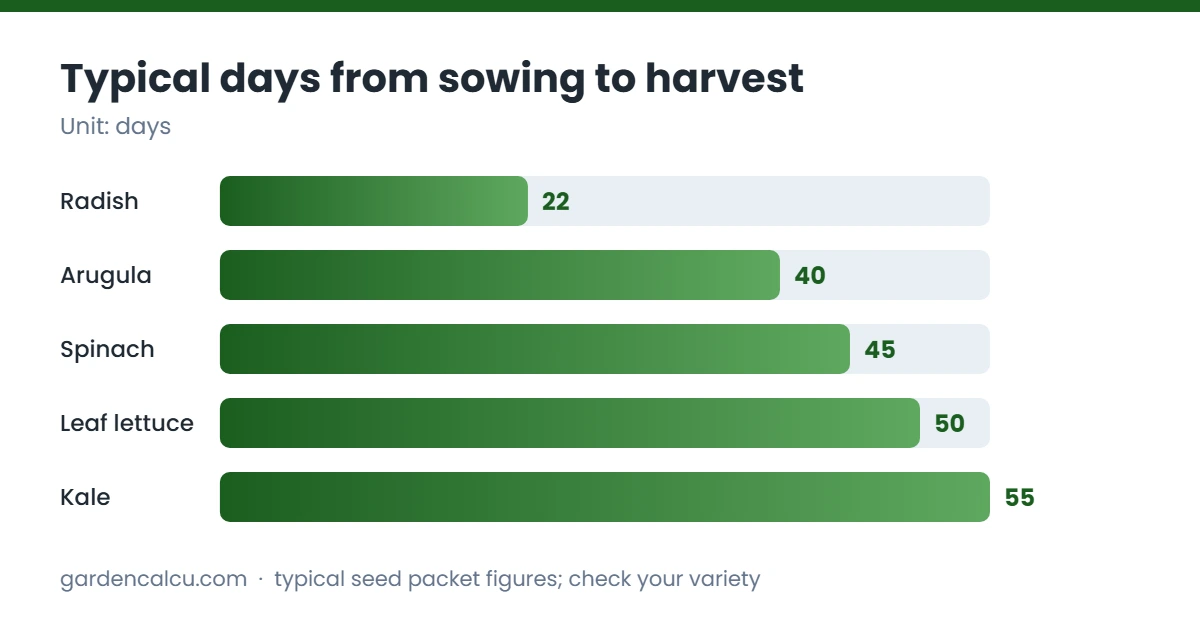
Chart for “what to plant in October”: typical days to harvest for fast fall crops. Radish figure from an Ohio Extension answer; others are common seed packet ranges.
Fast crops are the only ones worth sowing from seed this late. An Ohio Extension answer noted that Cherry Belle radishes are ready about 22 days after sowing. Count the days on your seed packet against the days left before your first hard freeze, and remember that growth slows as days shorten.
Warm-state planting: cole crops and color
In North Carolina, late October is still planting season. The expert’s list for the homeowner in Orange County was long: any shrubs, perennials, rosemary, pansies for color, and winter cole crops as transplants.
Cole crops are the cabbage family: broccoli, cabbage, Brussels sprouts, cauliflower, collards and kale. They prefer cool weather and shrug off light frost once they are growing. If you can find healthy transplants at a garden center, they can go in. Our guide on how to grow broccoli explains spacing and feeding.
North Carolina State Extension publishes a vegetable planting calendar with the last safe dates for each crop. Most state Extension services have one, and it is the best way to check a date for your own county.
Trees, shrubs, bulbs and lawns
October is one of the best months to plant woody plants. The soil is still warm, the air is cool, and rain is usually more regular than in summer. Roots keep growing after the leaves drop.
When it is too late: what to do with an empty bed
The Klamath County answer is a reminder that some Octobers are simply too late for vegetables. When nights are below freezing, new seedlings will not establish.
That does not mean the bed should sit bare. Plant garlic, then cover the rest of the soil with shredded leaves or straw. The mulch protects the soil from winter rain and gives you a head start in spring.
Watch out: Do not judge by a warm afternoon. The Oregon expert looked at night temperatures for the coming week, not the daytime high. A forecast of freezing nights means the window for tender seedlings has closed.
Find your planting dates
Open the planting calendar to see frost dates and planting windows, then count back from your first frost to see what still fits this fall.
How to decide what to plant in October where you live
Worked example: the Charles County gardener expected first frost on November 1 and asked on October 19. That left 13 days. Thirteen days is not enough for Brussels sprouts, which is what the expert said, but it is enough to get kale and spinach transplants settled under a row cover.
Frequently asked questions
Short answers to the questions that come up most often.
Quick recap
Deciding what to plant in October comes down to how close you are to a hard freeze. Garlic, bulbs, trees and shrubs suit nearly every garden. Hardy greens under a row cover suit mild-winter areas. Cole crop transplants suit the South.
If freezing nights have already arrived, plant the garlic, mulch the empty beds and use the quiet months to plan next year’s layout.
Plan next season now
Check frost dates and planting windows for the crops you want to grow, so the next round of seeds goes in on time.
Related guides
Sources
The facts in this guide to “what to plant in October” come from these university Extension pages and public questions: