Zucchini Planting Guide: How to Grow Zucchini at Home (Beginner Friendly)
If you’ve never grown vegetables before and you want to start somewhere easy, start with zucchini. Seriously. Zucchini is one of the most forgiving, most productive, and most satisfying vegetables you can grow in a home garden. You plant it, you water it, you give it some sun — and it just goes. A few weeks later, you’re picking zucchini faster than you can eat it.
That’s not an exaggeration either. Experienced gardeners always joke that in August, you have to lock your car doors so your neighbors don’t leave bags of zucchini on your seat. Once these plants get going, they produce like crazy.
But even with an easy vegetable like zucchini, there are things you can do right and things you can do wrong. This guide covers all of it — from picking the right spot in your yard to harvesting at the perfect time. Whether you have a big garden, a small raised bed, or just a few containers on a deck, this guide will walk you through everything step by step.
Let’s get growing.
Why Grow Zucchini at Home?
The answer is simple: zucchini you grow yourself tastes so much better than anything you’ll find at a store. Homegrown zucchini picked when it’s young and tender has a mild, slightly sweet flavor and a satisfying crunch. Store-bought zucchini is often picked too large and too late, which makes it watery and a little bland.
Beyond the taste, zucchini is just ridiculously easy. It grows fast, it grows big, and it grows a lot. One or two plants can easily feed a family of four throughout the summer. And the plants are tough — they bounce back from minor setbacks better than most vegetables.
It’s also a great plant for kids. Kids love watching zucchini grow because the change is so dramatic and fast. A small flower one day becomes a full-sized zucchini in just a few days. That kind of visible progress is exciting for young gardeners.
Benefits of Growing Zucchini at Home
Zucchini is genuinely good for you. It’s low in calories, high in water content, and packed with vitamins — especially vitamin C, vitamin A, potassium, and manganese. The skin is loaded with fiber and antioxidants, so don’t peel it.
Growing your own means:
You know exactly what went into the soil and onto the plant. No mystery sprays or wax coatings like you sometimes find on store produce.
You save real money. Organic zucchini at a grocery store can be pricey, but seeds cost almost nothing and one packet gives you more than enough plants for a whole season.
You reduce waste. When you grow your own, you pick what you need when you need it. Nothing goes bad in the fridge because you forgot you bought it.
You also get the mental health boost that comes with gardening. Spending time outside, working with soil, watching something you planted grow — it’s genuinely good for your mood and your stress levels. Science backs this up.
Types of Zucchini You Can Grow
Most people think zucchini is just that long, dark green vegetable they see in every grocery store. But there are actually quite a few varieties, and some of them might surprise you.
Black Beauty
This is the classic. Long, dark green, smooth skin. It’s the variety most people picture when they think of zucchini. It produces heavily and is very reliable. Great for beginners.
Costata Romanesco
An Italian heirloom variety with a ridged, pale green skin and a rich, nutty flavor. Many gardeners who grow this say it’s the best-tasting zucchini they’ve ever had. The plants are a little bigger than Black Beauty but not hard to grow.
Yellow Zucchini (Golden Zucchini)
Same shape as green zucchini but bright yellow. The flavor is slightly sweeter and milder. It’s a beautiful addition to a garden because of the color. Golden Dawn and Yellow Crookneck are popular choices.
Round Zucchini (Eight Ball)
These grow into round, baseball-sized spheres instead of long cylinders. They’re great for stuffing — hollow them out, fill with rice and cheese, and bake. The Cue Ball and Eight Ball varieties are most popular.
Patio Star and Bush Baby
These are compact, bush-type varieties specifically bred for container growing. They don’t sprawl like regular zucchini and are perfect if you have a small space.
For most beginners, Black Beauty or a standard yellow zucchini is the way to go. They’re easy to find, reliable, and heavy producers.
Best Climate and Planting Time
Zucchini loves warmth. It’s a summer vegetable through and through. Cold soil and cold nights slow it down or stop it completely. Frost will kill it outright.
Ideal Temperatures
Zucchini grows best when daytime temperatures are between 65°F and 90°F (18°C to 32°C). It needs soil that’s at least 60°F (15°C) to germinate properly. Below that, seeds just sit in the ground and rot rather than sprouting.
Nighttime temperatures should be consistently above 50°F (10°C) before you plant outdoors.
When to Plant
Start seeds indoors: 2 to 4 weeks before your last expected frost date. Zucchini doesn’t need a long indoor period like peppers or tomatoes — it grows so fast that starting too early indoors actually causes problems (more on that later).
Direct sow outdoors: Right after your last frost date, once soil temperature has reached at least 60°F. This is actually the preferred method for zucchini.
In warm climates (zones 9–11): You can plant in early spring and again in late summer for a fall crop. In tropical areas, zucchini can sometimes be grown almost year-round.
In cooler climates (zones 4–6): Focus on getting the timing right. Plant too early and cold soil stalls growth. Most gardeners in cooler zones plant outdoors from late May to mid-June.
Not sure of your last frost date? A quick search online by your zip code or location will tell you in seconds.
Choosing the Right Location
Where you put your zucchini plants matters a lot. Get the location right and everything else becomes easier.
Zucchini needs full sun — at least 6 to 8 hours of direct sunlight per day. More is better. Plants in partial shade will grow, but they’ll be slower, weaker, and more prone to fungal diseases like powdery mildew.
Pick a spot that:
- Gets direct sun for most of the day
- Has good drainage (no puddles after rain)
- Has room to spread — zucchini plants can get 3 to 4 feet wide
- Is not too close to tall trees or fences that cast shade
If you’re gardening in a very hot climate where summer temps regularly go over 95°F, a little afternoon shade (from a nearby trellis or light shade cloth) can actually help. Extreme heat can slow pollination and cause fruit to drop.
Also think about airflow. Zucchini is prone to powdery mildew (a fungal disease), and planting in a spot with good air circulation helps prevent it. Don’t tuck plants into a tight corner between walls or fences.
Soil Preparation — This Is Where the Magic Starts
Good soil is the foundation of a great zucchini plant. Zucchini can grow in average soil, but it thrives in rich, well-prepared soil. Put in the effort here and your plants will reward you all season.
What Zucchini Needs in Its Soil
Zucchini likes soil that:
- Is loose and easy to dig into (roots need room to spread)
- Drains well (standing water causes root rot)
- Holds some moisture (but not too much)
- Is rich in organic matter
- Has a pH between 6.0 and 7.0
Heavy clay soil is problematic because it compacts and holds too much water. Pure sandy soil drains too fast and doesn’t hold nutrients. You want something in between — dark, crumbly, loamy soil that feels rich in your hands.
How to Prepare Your Bed
Start by loosening the soil to a depth of at least 12 inches (30 cm) using a garden fork or spade. Zucchini has deep roots, and hard, compacted soil limits how deep they can go.
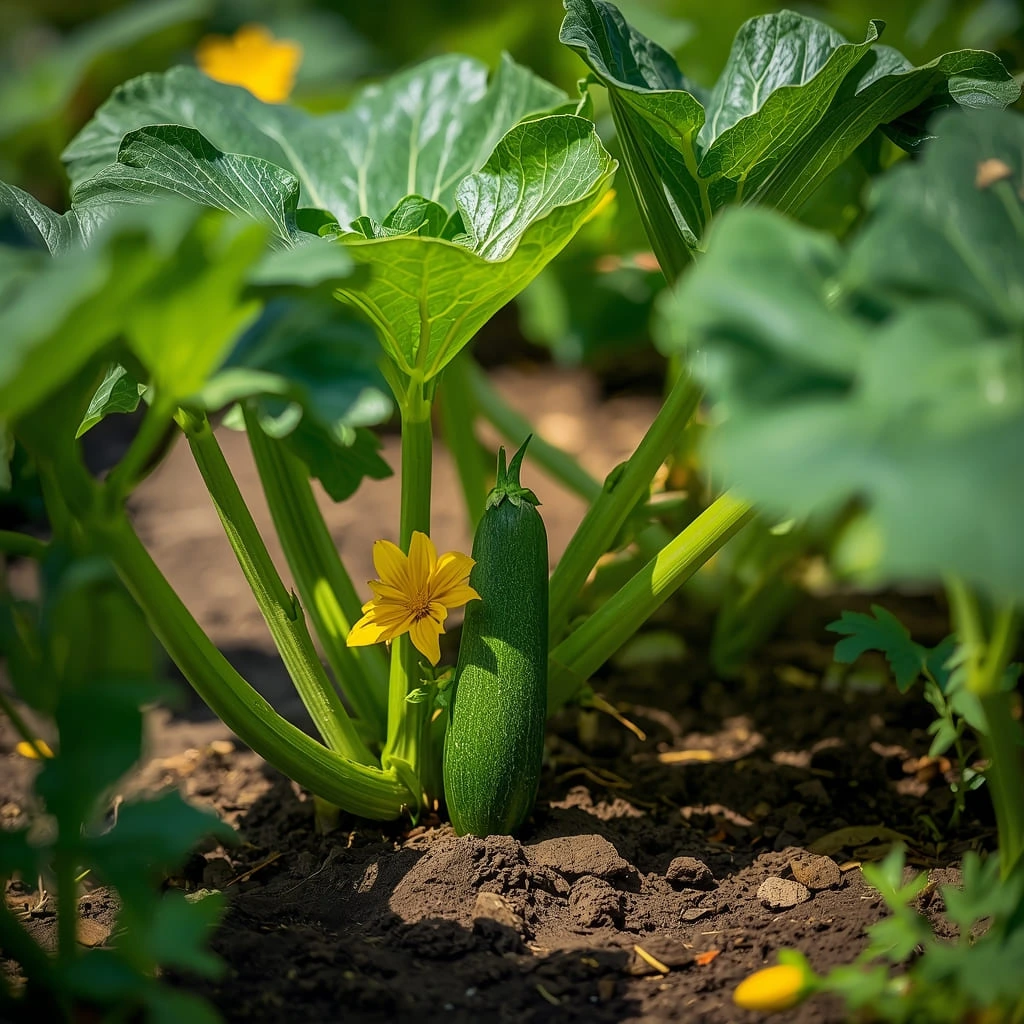
Once loosened, add a generous amount of compost. Work 3 to 4 inches of compost into the top 8 to 10 inches of soil. Compost does so much — it adds nutrients, improves drainage in clay soils, helps sandy soils hold water, and feeds the beneficial microorganisms that help plants absorb food.
If your soil is very heavy or clay-like, mix in some perlite or coarse sand to help it drain.
Soil pH
A pH of 6.0 to 7.0 is ideal. Pick up a cheap pH test kit at any garden center — they’re a few dollars and take about 5 minutes to use. If soil is too acidic (below 6.0), add garden lime. Too alkaline (above 7.0), add sulfur. Getting pH right means your plant can actually absorb the nutrients that are in the soil.
Pre-Plant Fertilizer
Before planting, mix a balanced slow-release granular fertilizer or a good aged compost into the soil. A 10-10-10 fertilizer is a solid choice. Follow the label for how much to use — more is not better with fertilizer.
Some gardeners like to dig a “planting hill” — a slightly mounded, raised area of extra-enriched soil about 12 inches across. Traditional zucchini planting often uses this method because it improves drainage and warms up faster in spring.
How to Plant Zucchini Seeds Directly in Soil
Direct sowing is the most common and usually the best way to grow zucchini. These plants don’t love having their roots disturbed, so planting straight into the garden avoids that issue entirely.
Step-by-Step
Step 1: Wait until after your last frost and soil temp is at least 60°F. This is not optional — cold soil means seeds rot instead of sprouting.
Step 2: Prepare your planting spot as described above. If using the hill method, mound the soil about 4 to 6 inches high and 12 to 18 inches wide.
Step 3: Plant seeds 1 inch (2.5 cm) deep. If planting in hills, put 3 to 4 seeds per hill in a small cluster. If planting in rows, space seeds 2 to 3 feet apart.
Step 4: Water gently after planting. You want the soil moist but not waterlogged.
Step 5: Seeds usually sprout in 5 to 10 days in warm soil. Once seedlings have 2 to 3 true leaves, thin to the strongest 1 to 2 plants per hill. Don’t pull the extras — snip them at soil level with scissors so you don’t disturb the roots of the keepers.
Step 6: Mulch around the base with 2 to 3 inches of straw or wood chips. This keeps moisture in and weeds out.
That’s really all there is to it. Zucchini is one of the easiest seeds to direct sow in a garden.
Starting Seeds Indoors (Optional Method)
Most gardeners direct sow zucchini, but if you have a short growing season or want to get a few weeks head start, you can start seeds indoors.
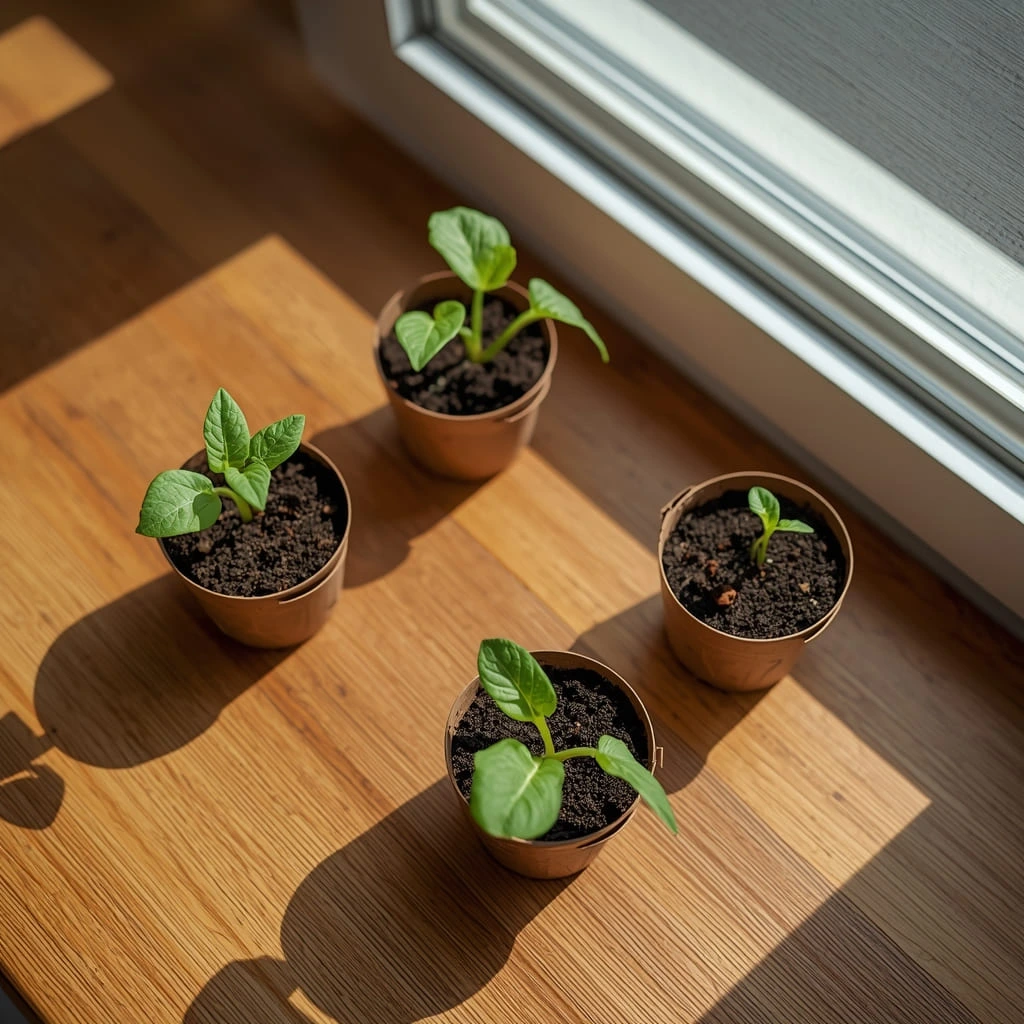
The key thing to know: don’t start too early. Unlike tomatoes and peppers, zucchini grows really fast. Seeds started more than 4 weeks before transplant time will become too large and root-bound in their pots before you can get them outside. 2 to 3 weeks before your last frost is ideal.
How to Start Indoors
Use individual 3 to 4-inch pots rather than small seed trays. Zucchini doesn’t like having its roots disturbed, so giving each seed its own pot reduces transplant shock.
Fill with moist seed starting mix. Plant one seed per pot about 1 inch deep.
Keep warm — ideally 70°F to 85°F (21°C to 29°C). A heat mat helps a lot. Seeds sprout in 3 to 7 days in warm conditions.
Once sprouted, move them to your sunniest window or under grow lights for 14 to 16 hours a day. Seedlings that don’t get enough light become leggy and weak.
Hardening Off
Before transplanting outdoors, spend about a week hardening off your seedlings. Put them outside in a sheltered, shady spot for an hour on the first day, two hours the next, and so on — gradually increasing their time in sun and wind. Skip this step and your seedlings will go into shock when moved to the garden.
Transplanting
Transplant carefully — try not to disturb the root ball. Plant at the same depth they were in the pot. Water right after transplanting with a gentle stream.
Spacing Requirements
Zucchini plants are big. Like, bigger than most beginners expect. A mature zucchini plant can easily spread 3 to 4 feet (90 to 120 cm) in all directions. Planting too close together is one of the most common beginner mistakes.
Standard bush varieties: Space plants 24 to 36 inches (60 to 90 cm) apart in rows, with rows 3 to 4 feet apart.
Vining varieties: These need even more room — some can sprawl 6 to 8 feet. Give them 4 to 5 feet of space.
Container varieties (Patio Star, Bush Baby): These are bred to be compact and can be grown in large pots 18 to 24 inches apart or individually in their own containers.
Crowded plants compete for water, nutrients, and light. They also have poor air circulation, which leads to disease. Spacing properly pays off big time.
Watering Guide
Zucchini needs consistent moisture — especially when it’s flowering and producing fruit. Inconsistent watering leads to problems like misshapen fruit, blossom end rot, and stressed plants that attract pests.
How Much and How Often
In an average summer, zucchini in garden beds needs about 1 to 2 inches of water per week. During hot weather, you may need to water more often.
Deep, infrequent watering is better than shallow, frequent watering. Aim to water deeply so moisture reaches at least 6 inches into the soil. This encourages roots to grow deeper, making the plant more drought-tolerant.
How to Water
Always water at the base of the plant, not on the leaves. Wet leaves are an open invitation for fungal diseases, especially powdery mildew and downy mildew.
A drip irrigation system or soaker hose is ideal — it delivers water right to the roots and keeps leaves dry. If you’re watering by hand, direct the water at the soil around the base of the plant, not overhead.
Water in the morning when possible. Any moisture that does splash on leaves will dry off during the day.
Checking Soil Moisture
Stick your finger 2 inches into the soil near the plant. If it feels dry, water. If it still feels moist, wait another day. In containers, check daily — they dry out much faster than garden beds.
Signs of Overwatering
- Yellowing lower leaves
- Soggy soil that smells slightly off
- Plant wilting even though soil is wet (root rot)
Signs of Underwatering
- Plant wilts in the afternoon but doesn’t recover by evening
- Leaves look dull and dry
- Soil bone dry an inch below the surface
Mulching around your plants — straw, wood chips, or shredded leaves — reduces water evaporation dramatically and can cut your watering needs by 30 to 50%.
Fertilizing and Feeding Zucchini
Zucchini is a hungry plant. It grows fast and produces a lot of fruit, and it needs regular feeding to keep up that pace.
Before Planting
Mix compost and a balanced slow-release fertilizer into the soil before planting, as described in the soil prep section. This gives the plant its initial nutrient base.
During Early Growth
For the first few weeks after plants are established, a fertilizer with more nitrogen supports leafy growth and strong stems. A 10-10-10 balanced fertilizer or a liquid fertilizer like fish emulsion applied every 2 weeks works well.
Once Flowering Starts
When you see flowers forming, switch to a fertilizer with lower nitrogen and higher phosphorus and potassium. This shifts the plant’s energy toward fruit production rather than more leaves. A tomato fertilizer or something like 5-10-10 is perfect at this stage.
Mid-Season Boost
Halfway through the season, you can side-dress your plants by sprinkling a handful of compost around the base of each plant and lightly working it into the soil. This gives them a nutrient boost for the second half of the season.
What to Avoid
Don’t over-fertilize. Too much nitrogen makes plants grow huge and leafy but produces fewer fruits. Always follow the label instructions. More fertilizer is not always better.
Sunlight Requirements
Zucchini is not shy about its sunlight needs. It wants full sun — a minimum of 6 hours per day, but 8 or more hours is ideal.
Plants grown in partial shade will produce some fruit, but they’ll be slower, weaker, and much more prone to fungal diseases. Powdery mildew in particular loves shaded, humid conditions.
If you’re in an extremely hot climate where temperatures consistently exceed 95°F, a little light afternoon shade (from a shade cloth or nearby trellis) can help the plant during the hottest part of the day without hurting overall production.
There’s no substitute for sunlight when it comes to zucchini. If your garden doesn’t have a full-sun spot, containers on a sunny patio or rooftop will work better than a shaded garden bed.
Growing Zucchini in Containers
No yard? No problem. Zucchini grows very well in containers, as long as you give the plant enough room and stay on top of watering.
Container Size
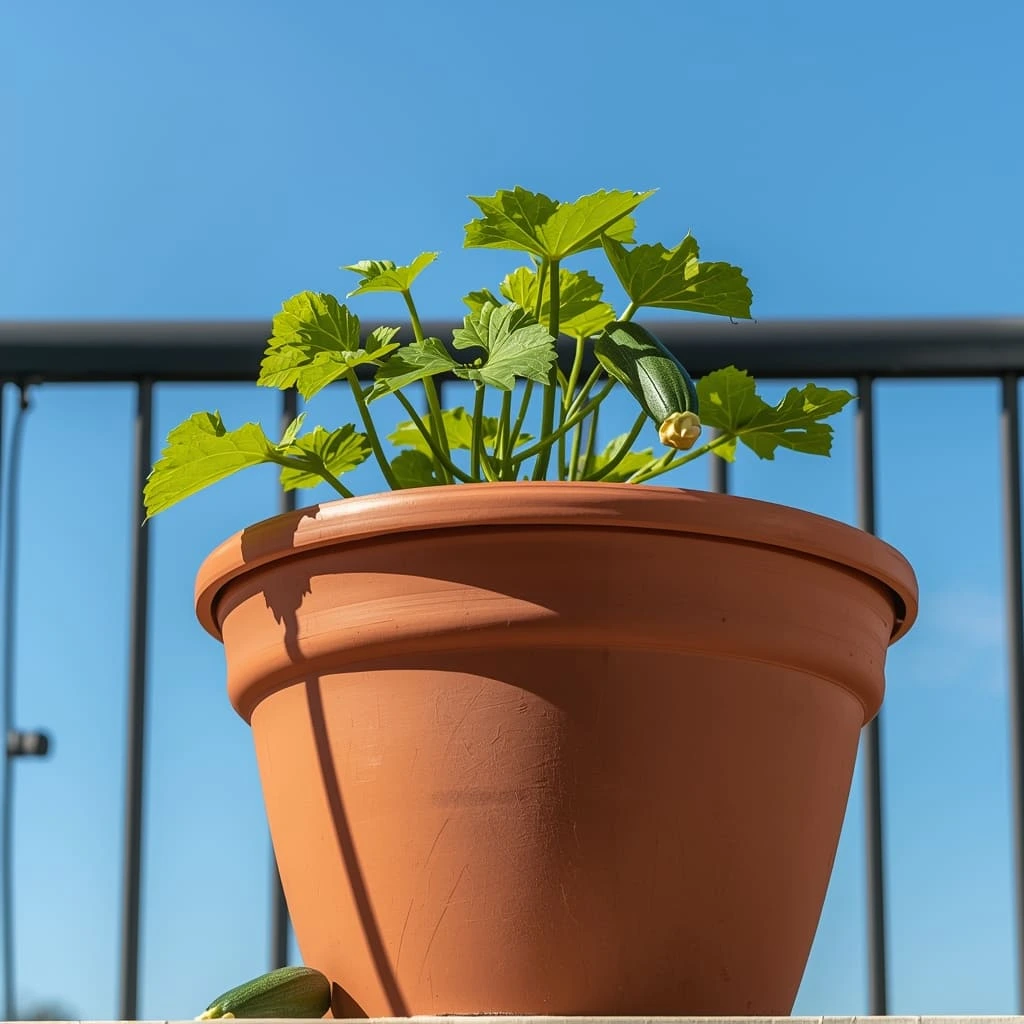
This is where a lot of people go wrong. Zucchini has big roots and needs space. Use at least a 10-gallon pot — 15 to 20 gallons is even better for standard varieties. Compact bush varieties like Patio Star can work in 5 to 10-gallon containers.
Too small a pot = stressed plant, fewer fruits, and constant watering.
Drainage
Make sure your container has drainage holes at the bottom. No exceptions. Zucchini roots sitting in standing water will rot quickly. If you love a decorative pot without holes, place a plain plastic pot with holes inside it.
Potting Mix
Never use garden soil in containers — it compacts and doesn’t drain well. Use a high-quality potting mix. Add a slow-release fertilizer to the mix at planting time.
Watering in Containers
Container plants dry out much faster than in-ground plants, especially in summer heat. Check daily and water when the top inch of soil is dry. Always water until it drains from the bottom.
Placement
Put containers where they get the most sun. The beauty of containers is that you can move them — chase the sun if you need to, or bring them in if a surprise cold night comes.
Supporting Zucchini Plants
Most bush-type zucchini doesn’t need support. The plants stay relatively compact and hold themselves up well.
However, if you’re growing a vining variety or a plant that’s gotten very large and top-heavy with fruit, a simple stake or small tomato cage can help support the stems and prevent them from breaking under the weight.
Some gardeners choose to train vining zucchini varieties up a trellis to save space. You’ll need to gently guide the vines as they grow and may need to support heavy fruits in small cloth slings tied to the trellis.
For most home gardeners growing standard bush varieties, you won’t need to worry about support at all.
Pollination Tips — This Is Really Important
This section can make or break your zucchini harvest, and it’s something a lot of beginners don’t know about.
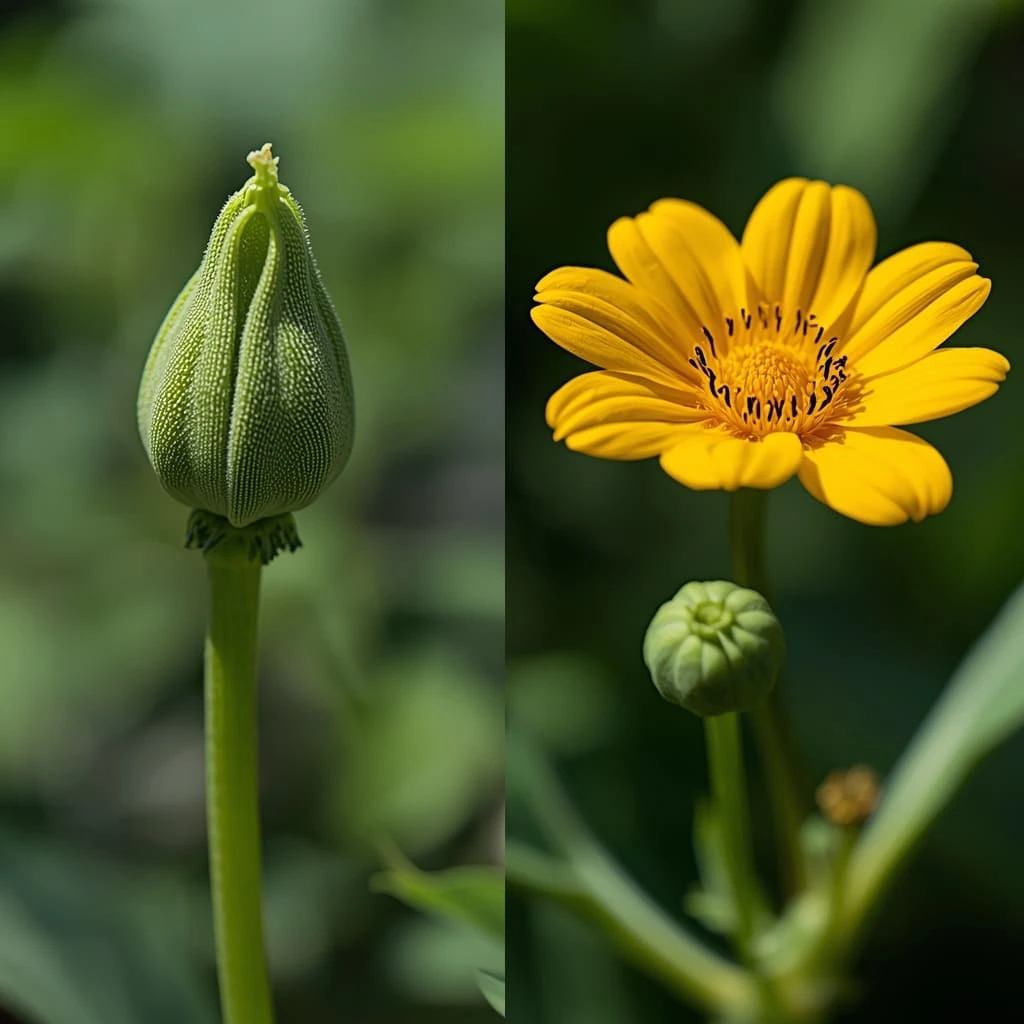
Zucchini plants produce two types of flowers — male flowers and female flowers. Male flowers appear first, usually about a week before female flowers. They’re on long, thin stems.
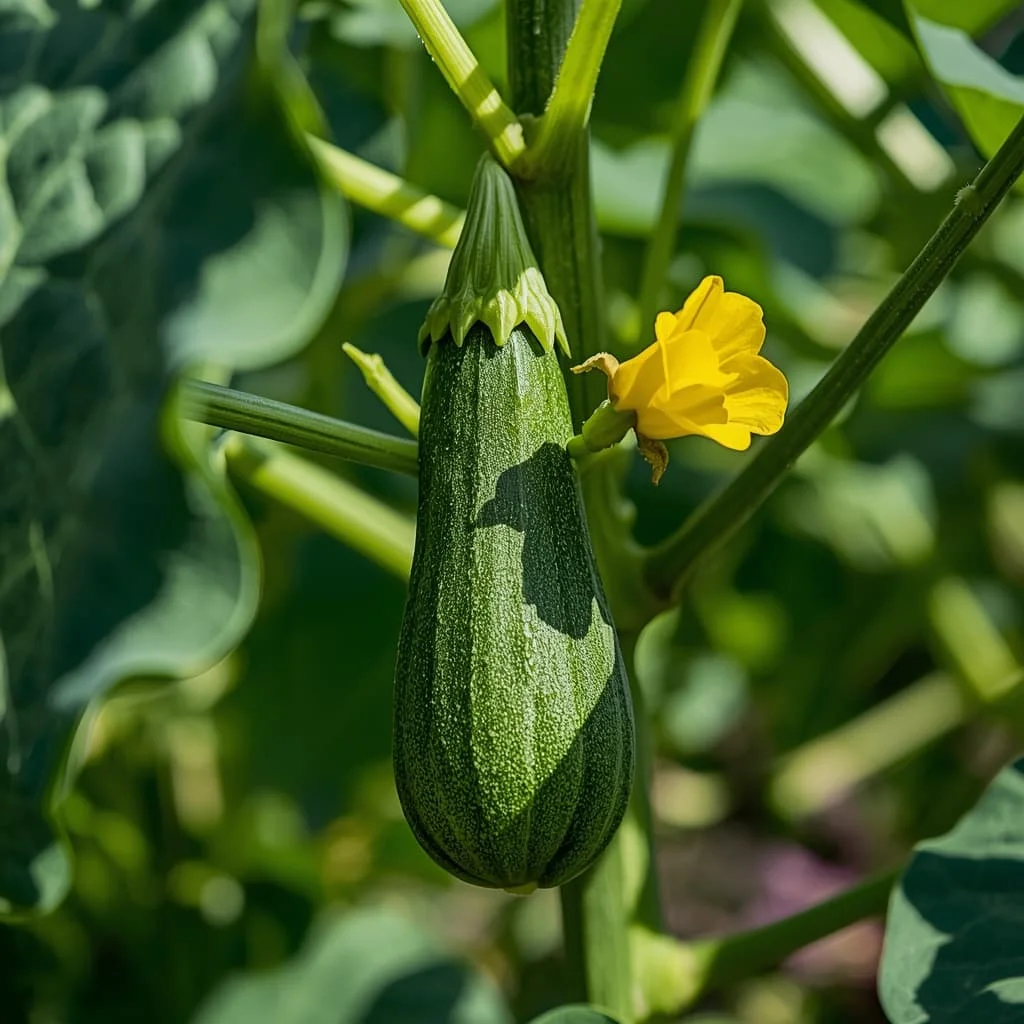
Female flowers appear a bit later. You can tell them apart because female flowers have a tiny immature zucchini at their base, right behind the petals. That tiny green bump is the future fruit.
For a zucchini to develop, pollen from a male flower has to get to a female flower. In a healthy garden with bees and other pollinators, this happens naturally. But if pollination doesn’t happen, the female flower will open, then wilt, and the tiny fruit behind it will turn yellow and rot. This is not a disease — it’s a pollination failure.
Why Pollination Fails
- Too few pollinators in your area
- Rain or extreme heat keeping bees away during the short window when flowers are open
- Flowers opening too early or late in the day (zucchini flowers are generally open in the morning)
- Only one type of flower open at a time (early in the season, you may only have males for a while)
Hand Pollination
If you’re seeing lots of female flowers turn yellow and die without making a fruit, you can hand-pollinate. It’s easier than it sounds.
In the morning, find an open male flower. Use a small, soft paintbrush or a cotton swab to collect the yellow pollen from the center of the male flower. Then take that pollen and gently dab it onto the sticky center (stigma) of an open female flower.
You can also just pick a male flower, peel back the petals, and rub it directly against the center of a female flower like a little pollen paintbrush.
Do this in the morning when flowers are fully open. Problem solved.
Common Pests and Diseases
Zucchini is tough, but it’s not invincible. Here are the most common problems and what to do about them.
Squash Vine Borer
This is one of the most destructive zucchini pests in North America. A moth lays eggs at the base of the plant stem. The larvae hatch and bore inside the stem, eating it from the inside. Plants often collapse suddenly with no warning.
Signs: Wilting that doesn’t improve even after watering. Sawdust-like frass at the base of the stem.
Prevention: Cover young plants with row cover fabric until they start flowering. Remove the cover when flowers appear so bees can pollinate.
Treatment: If you catch it early, you can cut the stem lengthwise above where the larva is hiding, remove the worm, and bury that part of the stem so it can re-root.
Squash Bugs
Flat, gray-brown bugs that suck sap from the plant. They lay clusters of bronze-colored eggs on the undersides of leaves. They can kill young plants and weaken older ones.
Prevention and treatment: Check the undersides of leaves regularly. Scrape off egg clusters and drop adult bugs into a container of soapy water. Neem oil spray also helps. Keeping the garden clean of debris removes hiding spots.
Aphids
Small, soft-bodied insects that cluster on new growth and undersides of leaves. They weaken plants and can spread diseases.
Treatment: Blast them off with a strong stream of water, or use insecticidal soap spray. Ladybugs and other beneficial insects eat aphids — attract them by planting flowers nearby.
Cucumber Beetles
Striped or spotted beetles that chew on leaves and can spread bacterial wilt disease. Yellow sticky traps can help catch adults. Row covers early in the season prevent them from reaching young plants.
Powdery Mildew
White powdery coating on leaves. It’s fungal, very common in late summer, and made worse by poor air circulation and humidity. It rarely kills plants but weakens them and reduces production.
Treatment: Neem oil spray works well. A homemade spray of 1 tablespoon baking soda + a few drops of dish soap in a quart of water also helps slow it down. Make sure plants are well-spaced for good airflow.
Blossom End Rot
Dark, sunken patch on the bottom of the fruit. Not a disease — it’s a calcium deficiency caused by inconsistent watering. Keep watering regular and even. Mulching helps maintain consistent soil moisture.
Downy Mildew
Yellow spots on leaves that turn brown underneath. Caused by a water mold, made worse by wet, humid conditions. Water at the base of plants, not overhead. Remove affected leaves.
How to Harvest Zucchini Properly
Harvesting zucchini at the right time is key to both quality and continued production.
When to Harvest
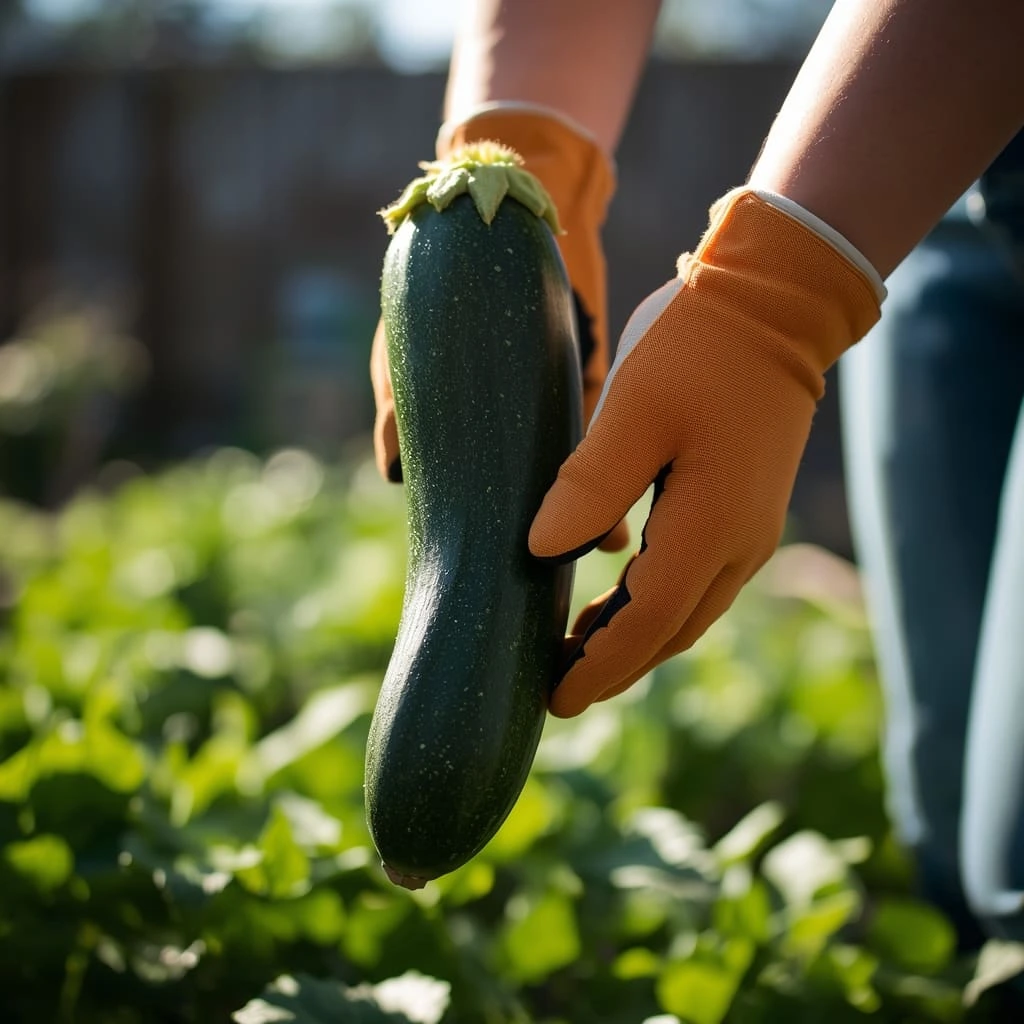
The best time to pick zucchini is when it’s small to medium-sized — about 6 to 8 inches (15 to 20 cm) long. At this size, the skin is tender, the seeds are small, and the flavor is at its best.
Left on the plant too long, zucchini balloons into a giant, seedy, tough-skinned monster. You’ve probably seen them at farmers markets — those huge zucchinis the size of a baseball bat. They still taste okay when cooked but aren’t nearly as good as smaller ones.
Don’t wait for a “sign” that it’s ready. The sign is simply size. Pick at 6 to 8 inches for the best eating.
How to Harvest
Use a sharp knife or pruning shears. Cut the stem about 1 inch above the fruit. Don’t twist or pull the zucchini off — you can damage the plant and tear off a main stem.
Keep Picking
The more you pick, the more the plant produces. This is one of the most important things to know about zucchini. If you leave a large zucchini on the plant, it signals to the plant that it’s done its job. Production slows down. Check your plants every 1 to 2 days during peak season — zucchini grows shockingly fast in warm weather.
A hidden zucchini that you missed for a week becomes a zucchini the size of a club. It’s funny the first time, but it does slow the plant down.
Storage Tips After Harvest
Once you’ve harvested your zucchini, here’s how to keep it fresh:
In the refrigerator: Unwashed zucchini keeps for 1 to 2 weeks in the vegetable drawer. Don’t wash until you’re ready to use it — moisture speeds up spoiling.
Room temperature: If you plan to use it within 2 to 3 days, zucchini is fine on the counter. Don’t store near ethylene-producing fruits like apples or bananas — they speed up ripening and softening.
Freezing: Zucchini freezes well. Wash, trim the ends, and cut into slices or cubes. Blanch in boiling water for 2 minutes, then transfer immediately to ice water for 2 minutes. Drain, dry, spread on a baking sheet to freeze individually, then bag and seal. Frozen zucchini lasts up to 12 months and is great for soups, stews, and baking (zucchini bread!).
Shredded and frozen: Grate raw zucchini, squeeze out excess moisture with a towel, pack into freezer bags in 1 to 2 cup portions, and freeze. Perfect for zucchini bread all winter long.
Very large zucchini: If a zucchini got away from you and grew huge, it’s still usable. Scoop out the seeds and use the flesh in soups, fritters, or stuffed and baked like a boat.
Tips to Increase Yield
Want more zucchini from your plants? These tips really work:
Plant at the right time. Warm soil at planting time means fast, healthy germination. Cold soil leads to slow, stunted starts.
Improve your soil. Rich, well-composted soil produces plants that are bigger, healthier, and more productive than plants in poor soil.
Water consistently. Stressed plants produce less. Keep moisture even throughout the season with mulch and regular watering.
Feed throughout the season. Don’t just fertilize at planting and forget it. Feed every 2 weeks with a liquid fertilizer.
Hand-pollinate when needed. If you’re seeing flowers drop without making fruit, take 5 minutes to hand-pollinate in the morning.
Pick often. Keep picking young fruits every 1 to 2 days. This is the single best way to maximize your total harvest.
Plant 2 to 3 plants. One plant alone can struggle with pollination. Two or three plants means more male and female flowers open at the same time, and bees have more to work with.
Attract pollinators. Plant flowers nearby — marigolds, borage, nasturtiums, and sunflowers all attract bees and beneficial insects. More pollinators = more fruit set.
Use black plastic mulch in cool climates. It warms the soil earlier in spring and keeps it warm longer, giving your plants a longer productive season.
Common Beginner Mistakes
Knowing what not to do saves you a lot of frustration:
Planting too early. Cold soil stalls everything and can lead to seed rot. Wait until the soil is warm.
Planting too close together. Zucchini needs space. Crowded plants get diseased and produce less.
Watering the leaves. Wet leaves cause fungal disease. Always water at the base of the plant.
Letting zucchini get too big before harvesting. Pick at 6 to 8 inches. Leaving large fruit on the plant slows down production.
Ignoring pollination problems. If fruit is rotting at the base of every flower, you have a pollination problem, not a disease problem. Hand-pollinate.
Over-fertilizing with nitrogen. Big green plants with no fruit usually means too much nitrogen. Switch to a lower-nitrogen, higher-potassium fertilizer once flowers appear.
Skipping mulch. Mulch is one of the most helpful things you can do for your zucchini. It holds moisture, suppresses weeds, and keeps soil temperature even. Don’t skip it.
Not checking plants often enough. Zucchini grows fast. Check every day or two. Catching pests, disease, or hidden fruits early makes a huge difference.
Extra Tips for Success
A few more things that make growing zucchini easier and more fun:
Try companion planting. Marigolds planted nearby repel squash bugs and other pests. Nasturtiums attract aphids away from your zucchini (they act as a trap crop). Borage improves flavor and attracts pollinators.
Rotate your crops. Don’t plant zucchini in the same spot two years in a row. Rotating to a new spot each year breaks pest and disease cycles in the soil.
Keep a gardening journal. Write down your planting dates, varieties, problems, and harvest dates. This makes every following year easier because you know what worked and what didn’t.
Don’t skip the thin. If you planted multiple seeds in one spot, thin to the strongest plant. Two plants competing in the same hole is worse than one plant with room to breathe.
Try a second planting. In long-summer climates, you can plant a second batch of seeds in midsummer (about 60 days before your first expected fall frost) for a fresh fall crop. Old plants often slow down toward late summer, so a second batch keeps production going.
FAQ Section: 12 Frequently Asked Questions About Growing Zucchini
1. How long does zucchini take to grow from seed to harvest?
From seed to first harvest, zucchini typically takes 50 to 65 days. That’s one of the reasons it’s so satisfying for beginners — it’s a fast-growing vegetable. Seeds sprout in 5 to 10 days in warm soil, the plant grows quickly, and you’ll usually start seeing your first small fruits within 6 to 8 weeks of germination. Keep picking regularly and the plant will keep producing until frost.
2. How many zucchini plants do I need for one family?
For a family of 4, 2 to 3 plants is plenty — sometimes even too many. A single healthy zucchini plant can produce 6 to 10 fruits per week at peak season. Most first-time growers plant too many and end up overwhelmed. Start with 2 plants, see how it goes, and expand next year if you want more.
3. Why are my zucchini flowers falling off without making fruit?
This is almost always a pollination problem. Zucchini needs bees or other insects to transfer pollen from male flowers to female flowers. If there aren’t enough pollinators visiting, or if rain and heat are keeping bees away, flowers drop without producing fruit. Try hand-pollinating in the morning using a soft brush or by picking a male flower and rubbing it against the center of a female flower. You’ll likely see results within a few days.
4. What’s the difference between male and female zucchini flowers?
Male flowers appear on long, thin stems with no swelling at the base. Female flowers are on shorter stems and have a tiny, immature zucchini-shaped bump right behind the petals. That bump is the future fruit. Male flowers usually appear first, about a week before females. Both flowers are edible — stuffed and fried zucchini blossoms are a classic Italian dish.
5. Why is my zucchini plant wilting even though I watered it?
Sudden wilting that doesn’t respond to watering is often a sign of squash vine borer damage. The larvae of this moth bore inside the stem and eat it from the inside, cutting off the plant’s water supply. Look at the base of the stem for small holes and sawdust-like frass. If you catch it early, you may be able to cut out the larva and save the plant. Prevention with row covers on young plants is the best defense.
6. Can I grow zucchini in a pot on my balcony?
Yes, absolutely — but you need a big pot. Use at least a 10-gallon container, and 15 to 20 gallons is better. Choose a compact bush variety like Patio Star or Bush Baby. Make sure the pot has drainage holes, use quality potting mix, and be prepared to water daily in hot weather. Balcony growing also means fewer pollinators, so you may need to hand-pollinate regularly.
7. My zucchini has a dark, sunken patch on the bottom of the fruit. What is that?
That’s blossom end rot. It’s a calcium deficiency in the fruit caused by inconsistent watering — when soil moisture fluctuates too much, the plant can’t move calcium to developing fruits efficiently. It’s not a disease. Fix it by keeping watering consistent and adding a layer of mulch to stabilize soil moisture. Make sure your soil pH is in the right range (6.0 to 7.0) so the plant can absorb the calcium that’s available.
8. How often should I water zucchini?
In a garden bed, watering deeply 2 to 3 times per week is usually enough in average summer heat. In containers or during a heat wave, daily watering may be needed. The key is consistency — never let the soil go bone dry, but don’t keep it constantly soggy either. Stick your finger 2 inches into the soil near the plant; if it’s dry, water deeply. Add mulch to stretch the time between waterings.
9. Can I save seeds from my zucchini to plant next year?
Yes, if the variety is open-pollinated or heirloom (like Costata Romanesco or Black Beauty). Let a fruit fully mature on the plant — leave it until the skin hardens and turns yellow or orange. Cut it open, scoop out the seeds, rinse and dry them for 2 to 3 weeks on a paper towel, then store in an envelope in a cool, dry place. Don’t save seeds from hybrid varieties — the plants from saved hybrid seeds often don’t grow true to the parent.
10. What do I do with a massive zucchini that got too big?
First, don’t panic — it still has plenty of uses. Large zucchini are great for soups, stews, stir-fries, and zucchini bread (grate it, seeds and all). You can also hollow out the middle, stuff it with ground meat, rice, tomatoes, and cheese, then bake it like a stuffed pepper. The important thing going forward is to check your plants every 1 to 2 days so you don’t miss another one hiding under the leaves.
11. Why does my zucchini plant have tons of flowers but no fruit?
If you’re only seeing male flowers, the plant may just be too young — female flowers come a bit later. Be patient. If you’re seeing both types of flowers but no fruit is setting, it’s a pollination problem. Check if the female flowers (the ones with a tiny fruit bump at the base) are opening. If they open and then wilt and the bump turns yellow and rots, hand-pollination is your solution. Make sure you’re doing it in the morning when flowers are fully open.
12. Can I eat the zucchini leaves and flowers?
Yes to both. Zucchini flowers are edible and actually quite popular in Italian and Mexican cooking. Male flowers are usually harvested for eating since there are more of them and removing some doesn’t affect your fruit production. They can be stuffed with ricotta and fried, added to pasta, or used in quesadillas. Young zucchini leaves are technically edible too but are very rough and prickly — they’re rarely eaten in Western cooking, though they’re used in some African cuisines.
Go Ahead, Plant Something
If you made it to the end of this guide, you now know more about growing zucchini than most people who’ve been gardening for years. And honestly, all that knowledge comes down to a few simple things: warm soil, good sun, consistent water, and regular picking.
Zucchini is one of those vegetables that makes you feel like a real gardener because it responds so visibly and so quickly to the care you give it. There’s nothing quite like looking out at your garden in late summer and seeing big, beautiful plants loaded with green and yellow zucchini that you grew yourself from a tiny seed.
Don’t overthink it. Get a packet of seeds, find your sunniest spot, prep your soil with some compost, and plant them once the weather warms up. You’re going to do great.
Your garden is waiting.
Helpful Growing Guides
- Bell Pepper Planting Guide
- Onion Planting Guide
- Spinach Planting Guide
- Garlic Planting Guide
- Broccoli Planting Guide